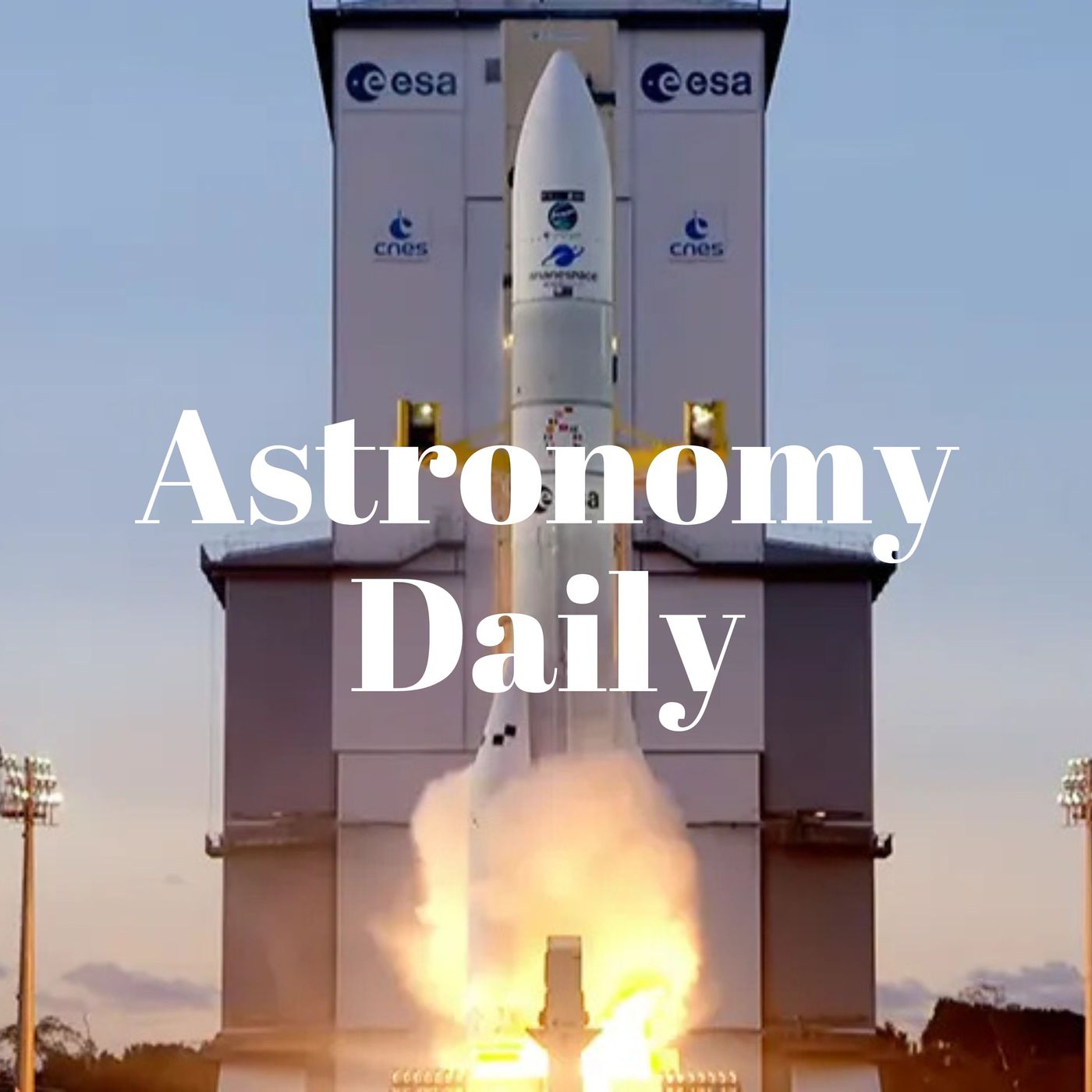
Launching Sentinel 1D, NASA's Leadership Shift, and the Joy of Space Cooking
In this episode
- Sentinel 1D Launch Success: Ariana Space successfully launched the Sentinel 1D Earth observation satellite aboard an Ariane 62 rocket, placing it into a sun-synchronous orbit at 693 km. This satellite is essential for Europe’s Copernicus program, ensuring continuity of environmental data as it takes over from the aging Sentinel 1A.
- NASA Leadership Nomination: President Donald Trump has renominated Jared Isaacman, a prominent figure in commercial space, as NASA's next administrator. Isaacman, known for his role in the Inspiration4 mission and his Athena plan to streamline agency operations, aims to boost commercial partnerships and astronaut launches.
- Shenzhou 20 Delayed by Space Debris: The return of China's Shenzhou 20 crewed spacecraft has been postponed due to the risk of collision with space debris. This incident underscores the growing challenges of space traffic management and the need for international cooperation amidst geopolitical tensions.
- First Space Barbecue: Astronauts aboard the Tiangong Space Station recently celebrated a milestone by holding the first-ever space barbecue, cooking chicken wings and peppered steak in a new oven designed for microgravity. This development enhances crew morale and offers a taste of home during long missions.
- Future Venus Exploration: With the conclusion of Japan's Akatsuki mission, Venus currently has no active spacecraft. However, several upcoming missions, including NASA's DaVinci and Veritas, the ESA's Envision, and India's Shukrayan orbiter, promise to renew interest in studying Venus's atmosphere and geology, despite potential budget uncertainties.
- For more cosmic updates, visit our website at astronomydaily.io. Join our community on social media by searching for #AstroDailyPod on Facebook, X, YouTubeMusic, TikTok, and our new Instagram account! Don’t forget to subscribe to the podcast on Apple Podcasts, Spotify, iHeartRadio, or wherever you get your podcasts.
- Thank you for tuning in. This is Anna and Avery signing off. Until next time, keep looking up and exploring the wonders of our universe.
Sentinel 1D Launch Details
[Ariana Space](https://www.arianespace.com/)
Jared Isaacman's NASA Nomination
[NASA](https://www.nasa.gov/)
Shenzhou 20 Delay Information
[China National Space Administration](http://www.cnsa.gov.cn/)
Tiangong Space Station Barbecue
[China National Space Administration](http://www.cnsa.gov.cn/)
Future Venus Missions
[NASA](https://www.nasa.gov/)
Become a supporter of this podcast: https://www.spreaker.com/podcast/astronomy-daily-space-news-updates--5648921/support.
Sponsor Details:
Ensure your online privacy by using NordVPN. To get our special listener deal and save a lot of money, visit www.bitesz.com/nordvpn. You'll be glad you did!
Sponsor Details:
Ensure your online privacy by using NordVPN. To get our special listener deal and save a lot of money, visit <a href="https://www.astronomydaily.io/nordvpn" target="_blank"...
Avery: Hello and welcome back to Astronomy Daily, the podcast that brings you the latest news from across the cosmos. I'm Avery. Anna: And I'm Anna. It's great to have you with us. We have a packed show today covering everything from a critical Earth observation launch to a major leadership nomination at NASA. Avery: That's, uh, right. We'll also be diving into some orbital drama involving space debris. A, uh, delicious first for astronauts in space and what the future holds for exploring our planetary neighbor, Venus.
So let's get right to it. Anna: Our first story today comes from Ariana Space, which has successfully launched the Sentinel 1D Earth observation satellite. Avery: Yes, this was a big one. The satellite was carried aboard an Ariane 62 rocket and was deployed perfectly into a sun synchronous orbit way up there at an altitude of 693 km. Anna: Mhm. And Sentinel 1D is a crucial piece of hardware. It's part of Europe's Copernicus Earth OBSERV program which constantly monitors our planet's land and seas.
This particular satellite, which weighs just over 2,000 kilograms, is a twin to Sentinel 1C. Avery: What's really interesting here, Anna, uh, is the choice of rocket. The Ariane 62 is incredibly powerful for a satellite of this size. It's a bit like using a sledgehammer to crack a nut. Anna: That's a good way to put it. But there was a very serious reason for that choice. Urgency. The Copernicus program has been in a precarious. The Sentinel 1B satellite is no longer operational and its sibling, Sentinel 1A is degrading.
They needed to get 1D into orbit as soon as possible to ensure continuity of data. Avery: Right. So it was a case of taking whatever ride was available first. Once it's fully commissioned, Sentinel 1D will take over the primary role from the aging Sentinel 1A, securing a vital stream of environmental data for Europe and the world. A huge relief for the program. Anna: I'm absolutely. Now, from European launches to American leadership, our next story is a significant political development for the future of space exploration.
President Donald Trump has renominated billionaire philanthropist and private astronaut Jared Isaacman to serve as NASA's next administrator. Avery: This is huge news. Isaacman is a really well known figure in the commercial space world. He's the founder of Shift for Payments. But more famously, he commanded the inspiration for and Pilar Polaris dawn missions. Anna: That's right. The Polaris dawn mission even included the first ever private spacewalk. This isn't just a businessman being nominated.
It's a seasoned aviator and a private astronaut who has experienced space firsthand and. Avery: This nomination has a bit of history. It follows a pretty contentious period in US space policy. And Isaacman Men's previous nomination was actually withdrawn. So its return signals a very clear direction. Anna: It certainly does. Isaacman Mann has a very specific vision for the agency, which he calls his Athena plan. At its core, it favors fixed price contracts for major projects and aims to cut through the bureaucracy.
He wants to increase the number of astronaut launches and significantly expand commercial partnerships. Avery: So this renomination is really a strong push towards accelerating commercial innovation within America's space exploration efforts. It will be fascinating to see how it plays out in the Senate confirmation hearings. Anna: Indeed. But while new leaders chart a course for the future, present day operations in space continue to face growing hazards. Our next story is a stark reminder of that.
The return of China's Shenzhou 20 crewed spacecraft has been delayed. Avery: And the reason is pretty alarming. A possible impact with space debris. This is the first time a Chinese crewed return mission has ever been delayed by space junk. And it really highlights a problem that's only getting worse. Anna: Mm mhm. It's a bullet that everyone in the space industry has been dreading. The incident has unsurprisingly renewed calls for much stronger international cooperation on managing space traffic.
The low earth orbit environment is becoming dangerously crowded. Avery: Right, but that, uh, cooperation is tricky, isn't it? Especially between the US and China, given the ongoing tensions. It's a global problem that requires a global solution. But the geopolitics are incredibly complicated. Anna: They are. For its part, China has been investing in technologies to mitigate these risks. They are exploring things like laser monitoring to track smaller debris and even deorbiting sails designed to help drag defunct satellites out of orbit faster.
But for now, the Shenzhou 20 crew has to wait for a safe window to come home. Avery: Well, on a much lighter note, while that crew waits to return, the new crew aboard, uh, the Tiangong Space Station have been making a very different kind of a culinary one. Anna: That's right, Avery. The astronauts on Tiangong have just held the first ever space barbecue. They used a, uh, brand new oven to cook chicken wings and peppered steak. Avery: I love the story. I saw pictures of the oven and it basically functions like an air fryer.
It's now a permanent addition to the space station's galley. Imagine being able to cook a proper meal like that in orbit. Anna: It might sound trivial, but this is actually a huge milestone for the psychological well being of crews on long duration missions. Food is a massive part of morale. Having variety and the ability to cook something fresh. Can make a world of difference. Avery: Of course, it's a taste of home. And the oven itself is an impressive bit of engineering designed to operate safely in microgravity without putting a major strain on the station's power grid.
It's a small step for a stake, but a giant leap for astronaut comfort. Anna: A very poetic way to put it. This new crew from the Shenzhou, uh, 21 mission recently arrived to relieve the Shenzhou 20 crew, the ones who are now patiently waiting for their debris free ride home. Avery: Well, let's look even further afield for our last story. From low Earth orbit all the way to our nearest planetary neighbor. For the first time in a while, Venus is alone. Anna: That's right. As we reported earlier with the official end of Japan's long running Akatsuki mission, Venus has no active spacecraft in orbit studying it.
But that solitude is set to be temporary as, uh, a new wave of exploration is planned for the next decade. Avery: It's a whole fleet, really. There's NASA's DaVinci and Veritas missions, the European Space Agency's Envision Mission Rocket Lab's ambitious private Venus Life Finder mission, and India's Shukrayan orbiter. Venus is about to get very popular potentially. Anna: However, there is a cloud of uncertainty hanging over some of these plans. The futures of both the NASA and ESA missions are a bit shaky due to potential budget cuts in the United States, which could have a knock on effect.
Avery: Let's hope they go forward. Because the science is so compelling. These missions aim to study everything from Venus's thick toxic atmosphere to its volcanic geology and its potential for past habitability. Anna: Exactly. They're trying to answer one of the biggest questions in planetary why did Earth and Venus, which are so similar in size and composition, evolve so differently? Why did one become a haven for life while the other became a scorching hellscape? Avery: It truly represents a renewed interest in exploring Earth's evil twin.
We have so much to learn from Venus about planetary formation and how fragile a habitable environment can be. Anna: And that brings us to the end of our news roundup. What a day, Avery. From urgent launches to political shakeups, orbital hazards, and a whole new focus on. Avery: Venus, it just never stops. It's a constant reminder of how dynamic and exciting the field of astronomy and space exploration is. A huge thank you to all our listeners for tuning in to Astronomy Daily. Anna: We'll be back tomorrow with more updates from across the cosmos.
Until then, clear skies and keep looking up.
 Apple Podcasts
 Spotify
 Pocket Casts
 Castbox
 Overcast
 Podbean
 iHeartRadio
 Castro
 Goodpods
 Moon FM
 Podcast Addict
 Podcast Republic
 YouTube