In this episode
In this episode, we embark on an exhilarating journey through the cosmos, exploring groundbreaking discoveries and developments that could reshape our understanding of the universe. We begin with a revelation about red giant stars, challenging long-held beliefs about how they spread life's essential elements across galaxies. New research on the star R Doradus suggests that powerful forces, rather than simple starlight pressure, are responsible for driving stellar winds, prompting a reconsideration of how galaxies are enriched.Next, we delve into the enigmatic world of hot Jupiters—gas giants that orbit perilously close to their stars. Recent studies indicate that many of these planets may have formed through a calmer process known as disk migration, providing insight into the evolution of planetary systems.Transitioning back to Earth, we provide a roundup of recent rocket launches, highlighting China's active role in space exploration and SpaceX's successful deployment of the CSG 3 satellite. As we shift our focus to Mars, we uncover the discovery of potential karst caves, which could harbor signs of ancient life, preserved from the planet's harsh surface conditions.We also celebrate the fourth anniversary of the James Webb Space Telescope, showcasing a stunning new video that offers an immersive tour of the cosmos, highlighting its remarkable contributions to astronomy. (https://youtu.be/lFiOZqyymUY?si=lOCkdIoMU5aRKuIB) Finally, we report on Iran's significant advancements in its space program, with the successful launch of three domestically built Earth observation satellites, marking a strategic collaboration with Russia.Join us as we traverse these captivating stories and more in this episode of Astronomy Daily!00:00 – **This week's podcast features a look at how giant stars might spread life00:38 – **New study could rewrite our understanding of how stars seed the cosmos
02:04 – **New research suggests 30 hot Jupiters likely formed through disk migration
03:23 – **China has been particularly active with two recent launches
04:12 – **Chinese researchers have identified eight potential karst caves on Mars
05:27 – **The James Webb Space Telescope recently celebrated its fourth anniversary
06:20 – **Iran successfully launched three of its domestically built earth observation satellites
07:11 – **This is the last Astronomy Daily podcast of 2017### Sources & Further Reading1. NASA2. European Space Agency3. Space.com### Follow & ContactX/Twitter: @AstroDailyPod
Instagram: @astrodailypod
Email: [email protected]
Website: astronomydaily.io
Clear skies and see you next time! 🌟Become a supporter of this podcast: Support Us.Sponsor Details:
Ensure your online privacy by using NordVPN. To get our special listener deal and save a lot of money, visit www.bitesz.com/nordvpn. You'll be glad you did!
Sponsor Details:
Ensure your online privacy by using NordVPN. To get our special listener deal and save a lot of money, visit www.astronomydaily.io/nordvpn. You'll be glad you did!
Get the best...
Avery: Welcome to Astronomy Daily, the podcast that brings you the universe one story at a time. I'm Avery. Anna: And I'm Anna. It's great to have you with us today. We've got a packed episode. We'll be looking at how giant stars might be spreading life's building blocks in a way we never expected. Avery: We'll also dive into the mysterious origins of hot Jupiters, check out some newly discovered caves on Mars that could be hiding signs of life, and take a breathtaking tour of the cosmos, courtesy of the James Webb Space Telescop.
Anna: Plus a roundup of rocket launches this week, and a significant step forward for Iran's space program. So let's get started with our first story, which could rewrite our understanding of how stars seed the cosmos. Avery: I'm intrigued. What's the latest? Anna: Well, for a long time, astronomers believed that the winds from red giant stars were driven by a simple mechanism. The pressure of starlight pushing on tiny grains of dust. Avery: Right. Like a solar sail. But on a microscopic scale. This process was thought to be responsible for spreading heavy elements, like the carbon in our bodies across the galaxy.
Anna: Exactly. But a, uh, new study focusing on the red giant star R Doradus is challenging that entire idea. After careful observation, researchers found that the dust grains forming around this star are simply too small. Avery: Too small. So the push from the star's light isn't strong enough to drive the stellar wind out into space. Anna: Precisely. The physics just doesn't add up. This suggests other more powerful forces must be at play. The study points to possibilities like giant convective bubbles, similar to water boiling in a pot, or powerful stellar pulsations that physically throw material outwards.
Avery: Wow. So it's less of a gentle push and more of a cosmic eruption. That's a huge shift in thinking. Anna: It is. It means we have to reconsider one of the fundamental processes of how galaxies are enriched with the elements necessary for plan planets and ultimately for life itself. Avery: From the end of a star's life, let's jump to the formation of planets. We're talking about one of the strangest types of exoplanets out there. The hot Jupiters. Anna: Mm mhm. These are gas giants, much like our own Jupiter.
But they orbit incredibly close to their host stars, completing a full year in just a few Earth days. The big question has always been, how did they get there? Avery: One popular theory was called high eccentricity migration. It's a pretty chaotic process where a planet gets knocked around by other objects in the system, eventually flinging it into a tight, close orbit. Anna: It Sounds very violent. But new research looking at over 500 of these hot Jupiters suggests a much gentler path for many of them.
The study found that about 30 of these worlds likely formed through a process called disk migration. Avery: Disk migration. So what does that entail? Is it calmer? Anna: Much calmer. In this scenario, the planet forms much farther out in the protoplanetary disk, that big swirl of gas and dust a star is born from. And then it slowly spirals inward, migrating through the disk material until it settles into a close orbit. Avery: That makes sense. So it's not always a game of planetary pinball. This really adds another important layer to our understanding of how planetary systems can evolve.
Anna: Now, let's bring our focus a little closer to home with a quick roundup of recent and upcoming rocket launches. It's been a busy period as we close out 2025 and head into 2026. Avery: Absolutely. China has been particularly active with two recent launches. A, uh, Chong Zhang 4B rocket took flight, as did a Chong Zhang 7AMeanwhile. Anna: SpaceX has been wrapping up its year. A Falcon 9 mission successfully deployed the CSG 3 satellite for the Italian space Agency, which officially mark company's final mission for 2025.
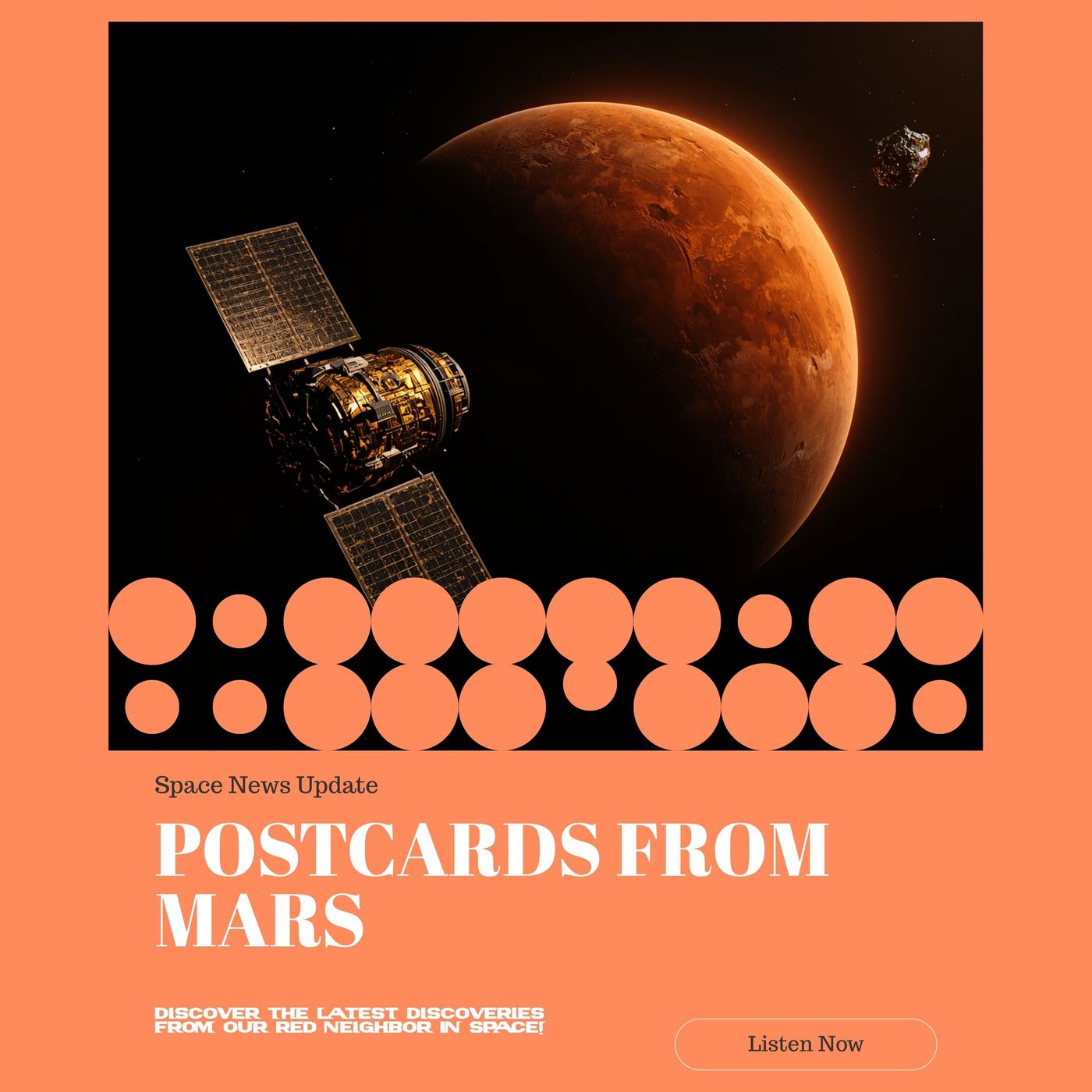
Avery: Right, and they're not wasting any time in the new year. The very first launch scheduled for 2026 is another Falcon 9, this time carrying a fresh batch of Starlink satellites into orbit. The pace just never seems to slow down. Anna: It certainly doesn't. Sticking with our solar system, we have some incredible news from Mars that I'm very excited about. Avery: Oh, what's that? Anna: Chinese researchers have identified what they believe are eight potential karst caves in a region called Valis Kars Caves.
Avery: Okay, so these aren't the usual volcanic lava tubes we've talked about before on the show. Anna: Exactly, and that's what makes this so significant. Karst caves are formed when water dissolves soluble rock like limestone. This is the first time this specific type of cave has been identified on Mars. And it's a huge indicator of past water activity. Avery: Water. That's the magic word. So this is a massive deal for the search for life, isn't it? Anna: It's a potential game changer. The surface of Mars is blasted with harsh radiation, which would destroy any delicate signs of life.
But deep inside these caves, ancient biosignatures could have been preserved for billions of years perfectly shielded from that hostile environment. Avery: They're like natural time capsules. These caves must have just shot to the top of the list for places we need to explore on Mars. Absolutely fascinating stuff. Anna: It really is. And from searching for hidden life to just admiring the sheer beauty of the universe. Let's talk about the James Webb Space Telescope. Avery: Right? It's hard to believe, but it recently celebrated the fourth anniversary of its launch.
Anna: Four years of revolutionary science. To mark the occasion, the European Space Agency released a spectacular video that they're calling a fly through of the cosmos. Avery: I saw this and it is stunning. They've taken some of Webb's most iconic high resolution images and created these incredible zoo. You feel like you're actually soaring through nebulas and past distant galaxy clusters. Anna: It gives you a real sense of depth and scale that you don't always get from a static image. They take you on this immersive journey through star forming regions and ancient galaxies.
We'll be sure to put a link in the show notes because it's something you really have to see to believe. Avery: Definitely. It's a fantastic reminder of just how much this incredible observatory has shown us in only four years. For a final story today, we turn our attention back to Earth orbit. Anna: That's right. Iran has made a significant advancement in its national space program. The country successfully launched three of its domestically built earth observation satellites. Avery: Mhm. The satellites are named PIA, Zafar 2 and Casar.
And what's also notable here is how they got to orbit. Anna: The launch was conducted on a Russian Soyuz rocket taking off from the Vostochny Cosmodrome in Russia. Avery: This really highlights the growing space collaboration between the two nations. It provides Iran with reliable access to orb. Russia gains a partner in various space activities. Anna: It's a major milestone for Iran's ambitions in space, allowing them to gather their own data for environmental monitoring, agriculture and other national applications.
It's a very strategic development. Avery: And, um, that's all the time we have for today on Astronomy Daily. From the winds of red giants to hidden caves on Mars, the universe truly never fails to surprise us. Anna: We hope you've enjoyed the journey. You can find links to some of the things we discussed, including that incredible James Webb anniversary video on [email protected] we'd. Avery: Love it if you'd subscribe. Wherever you get your podcasts, thanks so much for tuning in. Anna: Until next time, keep looking up.



 Apple Podcasts
 Spotify
 Pocket Casts
 Castbox
 Overcast
 Podbean
 iHeartRadio
 Castro
 Goodpods
 Moon FM
 Podcast Addict
 Podcast Republic
 YouTube