In this episode
Astronomy Daily S05E156 — Weekend Space & Astronomy News Wrap. Saturday, 1 August 2026. In this episode • The first “self-driving” telescope — a SkAI deep-learning system (Northwestern / UChicago / Fermilab) schedules and re-plans observations in real time on the Dark Energy Camera at the Blanco 4-m, Cerro Tololo, Chile — matching human schedulers across two runs. • Betelgeuse's companion imaged — ESO's VLT delivers the clearest view yet of likely “Betelgeuse B,” ending a century-long search (recap, E153). • (44) Nysa — first known three-lobed (trilobate) asteroid, plus a ~1 km moon, from LBT + VLT high-contrast imaging (recap, E155). • A black hole's 300,000-light-year reach — XRISM traces quasar-driven winds from H1821+643 reshaping an entire galaxy cluster (recap, E154). • August skywatch — Comet 10P/Tempel 2 at perihelion (2 Aug); total solar eclipse crossing Greenland, Iceland, Spain & Portugal (12 Aug) paired with a moonless Perseid peak (12–13 Aug); a six-planet line-up through the month. Sources • SkAI / self-driving telescope: Northwestern University news release, 31 July 2026; phys.org, 31 July 2026 (Blanco 4-m / DECam / Cerro Tololo). • Betelgeuse companion: ESO / VLT; Montargès et al., Astronomy & Astrophysics (covered in E153). • (44) Nysa: Large Binocular Telescope (SHARK-VIS) + VLT high-contrast imaging; Lowell Observatory release (covered in E155). • Black-hole feedback: XRISM observations of quasar H1821+643 (covered in E154). • Skywatch: timeanddate.com and Space.com August 2026 sky guides; Royal Observatory Greenwich 2026 highlights (eclipse path and Perseid peak details). astronomydaily.io · @AstroDailyPod · Part of the Bitesz.com Podcast NetworkBecome a supporter of this podcast: https://www.spreaker.com/podcast/astronomy-daily-latest-space-news--5648921/support.
Sponsor Details:
Ensure your online privacy by using NordVPN. To get our special listener deal and save a lot of money, visit www.astronomydaily.io/nordvpn. You'll be glad you did!
Get the best secure and private email on the planet. Stop your Government, google and who knows who else spying on every email you write. Do what we did and use ProtonMail. They beleive in privacy and there are no ads in their business model...yet they still provide a free forever service. Check them out and get out special deal at www.astronomydaily.io/protonmail
Become a supporter of Astronomy Daily by joining our Supporters Club. Commercial free episodes daily are only a click way... Click Here
This episode includes AI-generated content.
Anna: Happy horse's birthday. Yes. Today the 1st of August, every horse in the Southern hemisphere is officially a year older, whether it was born yesterday or a decade ago. And in the spirit of a fresh start, our lead story today is a telescope that's learning to drive itself. Avery: A telescope that decides all on its own where to point next. In real time, reading the weather and the moonlight high in the Chilean Andes, we'll get into exactly what that means and whether we should be thrilled or a little bit nervous about it on, Anna: um, the three of the biggest stories from the week just gone.
Beetlejuice finally caught with a companion. A bizarre three lobed asteroid with its own little moon and a black hole flexing its muscle across 300,000 light years. Avery: And a, uh, look ahead at what is frankly a blockbuster August in the sky. This is the weekend wrap. Let's go. Anna: So picture the job of an observing astronomer for a moment. You've got one night on a world class telescope. The clock is ticking and every hour is precious. But the sky doesn't sit still for you. Clouds roll in, the moon rises and washes out the faint stuff, the air steadies or turns turbulent and you're constantly making judgment calls.
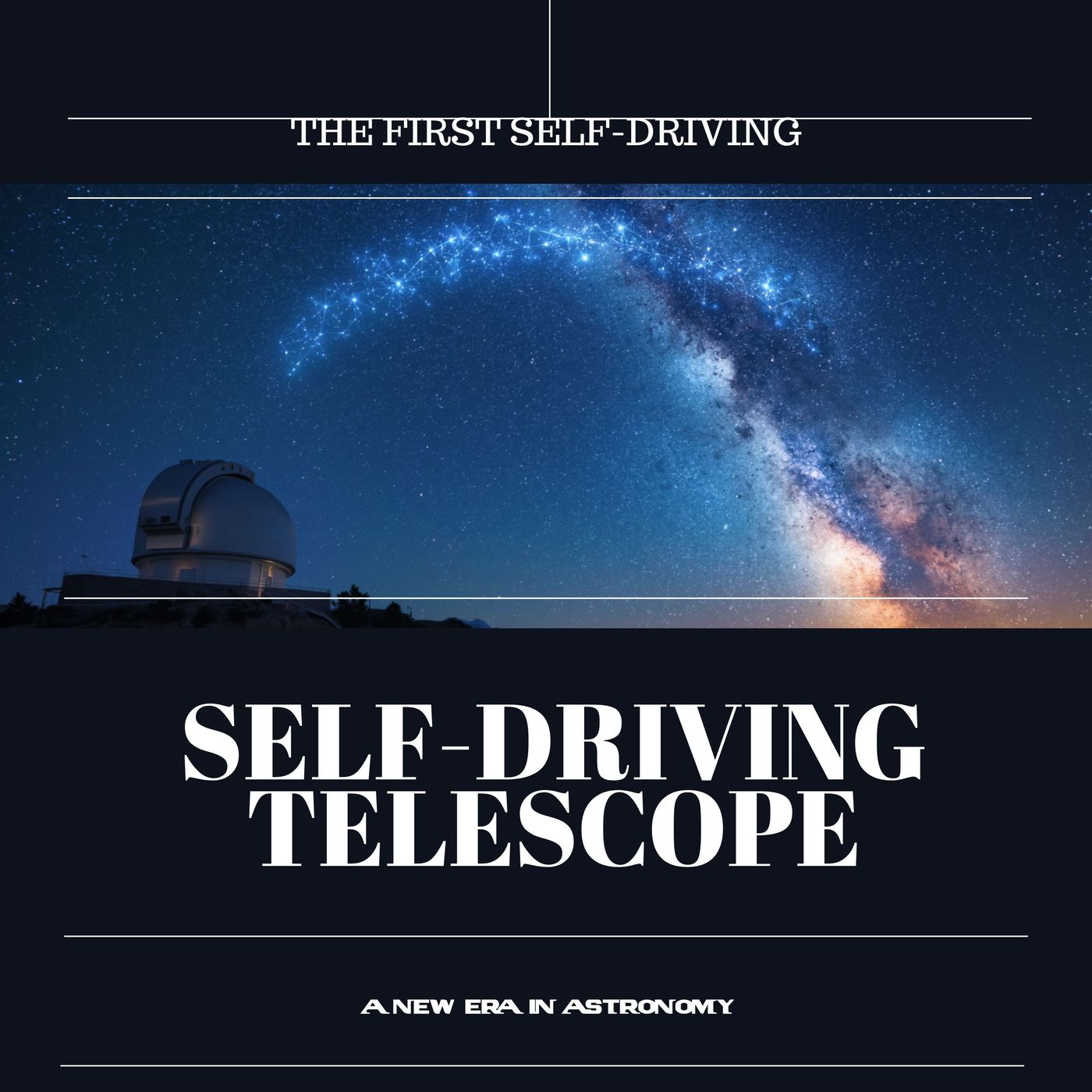
Point here now, save that target for later. Skip this one entirely. It's a balancing act astronomers have honed over decades. Avery: And it's exactly the kind of judgment we tend to assume needs a human. Which is what makes this story land. A team from Northwestern University, the University of Chicago and Firma Lab working through a research center with the rather lovely name of the AI Institute for the sky sky, pronounced sky, have built a deep learning system that makes those calls itself in real time.
Anna: And they didn't test it on a toy. They put it in charge of scheduling for the dark energy camera. That's a 570 megapixel monster of an instrument mounted on the Victor M. Blanco 4 meter telescope at the Cerro Tololo Inter American Observatory in Chile. That's one of the great observing sites on Earth up in the Andes, far from city light. Avery: And this is the part I want to sit on because it's the leap the, the AI didn't just generate a plan for the night in advance and hand it over. It adapted that plan on the fly as uh, the conditions changed around it, the weather shifts, the moonlight changes and the system redecides where to look next.
Anna: They didn't sit down and program in. All the rules astronomers have worked out over the years. Don't point near the Moon, prioritize this when the seeing is Good. And so on. They let the model learn on its own. Alex Drelica Wagner at UH UChicago, who co led the project, described the method really simply. They trained it on years of historical observations from the Dark Energy Survey, showing it where the telescope was pointing at one moment and asking it to predict Avery: the next move and then correcting it.
So it's the classic learning loop guess compared to what the human astronomers actually did. Adjust. Do that across years of real observing nights and you end up with a system that's absorbed the craft rather than being told the recipe and the headline result. Anna: Across two full observing runs, it performed comparably to human schedulers. It implicitly accounted for the atmospheric conditions and the moonlight without anyone ever writing those as explicit rules. Drelika Wagner called it an important milestone towards more autonomous observatories and noted the real achievement was setting up all the infrastructure to actually deploy it on a national observatory.
That's the difference between a nice demo and a working tool. Avery: So let's talk about why this matters beyond the neat M headline, because I think it's genuinely a sign of where astronomy is heading. We're entering the era of survey astronomy at a scale that's honestly hard to picture. The Vera Rubin Observatory, also in Chile, is going to image the entire southern sky every few nights, over, over and over for a decade. Anna: And the data volume from that is staggering. The kind of fire hose where you simply cannot have a human hand tuning every decision fast enough to keep up.
If you want to catch the things that change. A supernova flaring, an asteroid drifting through something that wasn't there last night. The telescope has to be nimble. It has to react. Avery: Which is exactly what a self scheduling system buys you. Speed and consistency and the ability to respond to the sky as it actually is on the night, rather than as you guessed it would be a week ago when you wrote your plan. Anna: There's a workload angle too, and I don't want to skate past it. Observing runs are exhausting.
Astronomers up all night making hundreds of small decisions under pressure, automating the routine scheduling frees people up for the science, the interpretation, the creative questions that machines are nowhere near touching. Avery: Now, the honest tension, because whenever we say self driving anything, a reasonable person's eyebrows go up. Are we handing the keys to the machine? And I think the fair answer here is not really. Not in the way that phrase suggests. This is a system deciding the order and targeting of observations.
Which patch of sky in which filter when within goals that humans set, the scientists still decide what the survey is for. Anna: That's the key distinction. The why stays human. The where next right now is what's being handed over. And it's being handed over to something that learned from the very astronomers it's now standing in for. So it's less a replacement and more a, uh, very fast, very tireless apprentice. Avery: And for our listeners who observe themselves, and I know a lot of you do, there's something quietly relatable in this.
Every one of you has stood in the backyard doing this same calculation. Is it worth setting up tonight? Is that haze going to clear? Should I chase the faint galaxy now or wait for it to climb higher? This AI is doing your backyard math just, uh, at 4 meters of aperture and a few hundred megapixels. Anna: And I love that it's happening in the southern hemisphere at Cerro Tololo on a telescope that's been a workhorse of southern sky astronomy for decades. The Blanco helped make the original dark energy discovery.
Now it's helping pioneer how the next generation of telescopes will run themselves. That's a nice bit of continuity. Avery: It is. So the first self driving telescope has gone stargazing, and it drove well. Keep an eye on this one, because the observatories of the2030s are going to be built around exactly this idea. Now into our three highlights from the week. And if you missed Wednesday's episode, this was a big one. Betelgeuse, that famous red orange shoulder of Orion, turns out not to be alone.
Anna: And for a century, people have suspected a companion star tugging at it. Because Betelgeuse has this long, slow rhythm in its brightness that a single star struggles to explain. But nobody had ever seen the companion directly. It's lost in the glare of a supergiant that could swallow the orbit of Jupiter. Avery: Until now, a team led by Miguel Montajes, using the European Southern Observatory's Very Large Telescope in Chile, got the clearest image yet of what's very likely Betelgeuse B, a faint companion riding close.
Montarge called it, uh, the conclusion of a century long quest, which is not a phrase astronomers throw around lightly. Anna: And it's a lovely reminder that even the stars we think we know best still have secrets. Betelgeuse is one of the most studied stars in the sky, and it was quietly hiding a partner in plain sight. If you want the full detail, it's all in Wednesday's episode 153. Highlight 2. And this one's brand new. We ran it just yesterday. Say hello to asteroid 44 Nisa, which has turned out to be genuinely strange in the best way.
Avery: Strange how? Give people the picture. Anna: So most asteroids we imagine as a single lump or maybe a two part contact binary, like a peanut. NISA is the first known tri lobe asteroid. Three distinct lobes joined together by narrow necks, three connected blobs, and sophisticated high contrast imaging from the Large Binocular Telescope in Arizona and the VLT in Chile is what pulled the shape out of the glare. Avery: And it's not traveling alone either, is it? Anna: Uh, it is not. They also spotted a small moon roughly a kilometer across, orbiting it.
And that little moon is scientifically gold because watching how it orbits lets you weigh the asteroid. You get its mass, and from the shape, you get its volume. And together those give you density, which tells you what it's actually made of. So a weird shape plus a handy moon equals a real physics windfall. Full stories in yesterday's episode 155 and Avery: highlight three takes us right up in scale from a kilometer wide moon to something spanning 300,000 light years. On Thursday, we covered new X ray observations of a quasar called H 1821643 Anna: and a quasar for anyone just joining us is a supermassive black hole in the middle of a galaxy, feeding so voraciously that the surrounding material blazes brighter than the whole galaxy around it.
Avery: Exactly. And using the Xrism M X ray telescope, astronomers traced winds driven by that black hole, reshaping the gas across an entire galaxy cluster. Turbulence stirred up over hundreds of thousands of light years. One black hole at the center, setting the weather for a whole cluster of galaxies. Anna: It's one of those numbers that resets your sense of scale. The reach of a single object from a point out across a distance that three times the width of our entire galaxy. And it's a nice Xrism callback.
That telescope keeps earning its keep. That was Thursday's episode 154. Quick Community Note before we look up. If you're enjoying the wrap, the new astronomydaily IO is the place to live. The full back catalog's there. A, uh, news feed that updates through the day and night. Listener reviews and a, uh, newsletter sign up. So the day's stories land in your Avery: inbox and it's a contact facility on the site now. So if there's a story you think we've missed or a bit of sky you want us to talk about, tell us directly.
We do read them. And that brings us to the sky. And August is a genuine blockbuster. So this is a preview of the whole month, not just tonight. Anna: Start with a comet. Comet 10P Tempel 2 reaches perihelion its closest approach to the sun on 2 August, and it's near its peak brightness in early August. It's a binocular object rather than a naked eye showpiece. So find dark sky and sweep for it for us in the Southern Hemisphere. It's reasonably placed Northern Hemisphere observers. You can catch it too, just lower.
Check a sky app for your exact Avery: local rise time and the headline event of the month. And it's a northern hemisphere one. A uh, total solar eclipse on the 12th of August. The path of totality crosses Greenland, Iceland, Spain and Portugal. If you're anywhere in Europe, you'll likely get at least a partial. And I have to say it every single time, never look at the sun without proper certified eclipse glasses. No exceptions. Anna: And here's the beautiful coincidence. That Same night, the 12th into the 13th, the Perseid meteor shower peaks.
And this year it peaks under a new moon. No moonlight to wash them out at a good dark site. The Perseids enthro well over 100 meteors an hour at their best with bright fireballs. Avery: Now the honest Southern hemisphere notes because we always give it to you straight, the Perseids are a northern hemisphere shower. The radiance up in Perseus barely clears the horizon for much of the south, so we get far fewer. The Northern hemisphere gets the real show this time our northern listeners get to dark sky after Midnight on the 12th.
Look up, be patient and let your eyes adapt. Anna: And building through the month. A six planet lineup strung along the sky. A lovely reason to learn the ecliptic. The best pairings shift week to week. The pre dawn sky is where a lot of the action is with the brighter planets. We'll give you the night by night detail in the daily episodes as each event sharpens up. Avery: So a comet at the start, an eclipse and meteor double bill in the middle. Planets all month. Whichever hemisphere you're in, August has something for you.
Anna: That's the weekend wrap for Saturday 1st August. A self driving telescope in the Andes. A companion for Beetlejuice. A three lobed asteroid with a moon and a black hole reaching across a cluster. Not a bad week. Avery: We're back Monday with a fresh episode. Until then, from Anna and me and happy birthday to every horse listening. Anna: Clear skies,
Wow.
Avery: Story soul.
 Apple Podcasts
 Spotify
 Pocket Casts
 Castbox
 Overcast
 Podbean
 iHeartRadio
 Castro
 Goodpods
 Moon FM
 Podcast Addict
 Podcast Republic
 YouTube