
S03E197: Kuiper Belt Revelations, Unrolling Space Telescopes, and China's Astronaut Return
In this episode
Astronomy Daily - The Podcast: S03E197Welcome to Astronomy Daily, your source for the latest space and Astronomy news. I'm your host, Steve, and today we have a stellar lineup of stories that will take you from the mysteries of the Kuiper Belt to the cutting-edge innovations in space telescopes.
Highlights:
- Kuiper Belt Discoveries: The Subaru telescope has uncovered new objects beyond the known Kuiper Belt, suggesting a more complex structure at the solar system's edge. This discovery could reshape our understanding of planet formation and the search for extraterrestrial life.
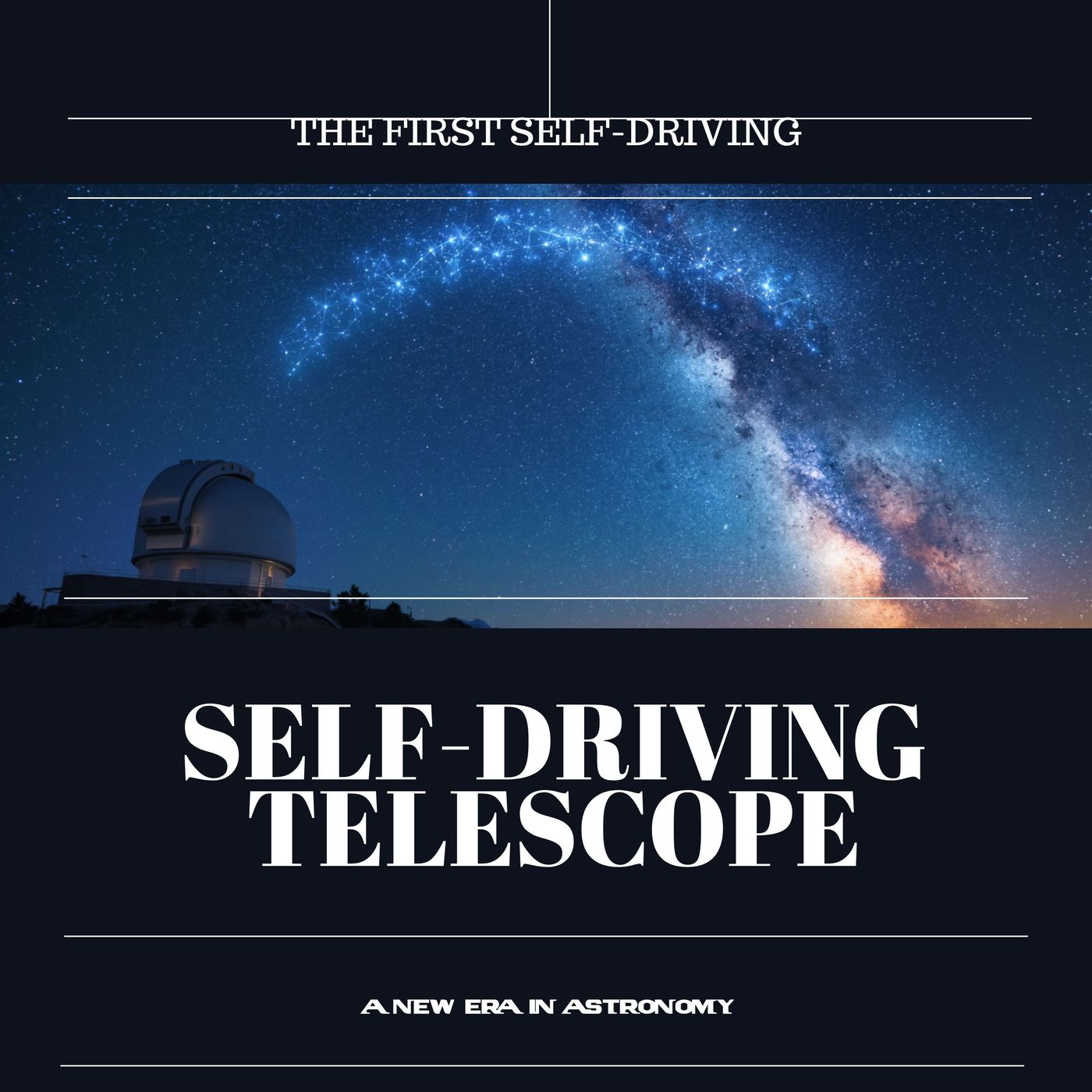
- Giant Unrolling Space Telescopes: Explore the future of space telescopes made from thin metal membranes that can unroll in space, offering unprecedented views of the universe. Discover how adaptive optics and laser projections could revolutionize space observation.
- Expedition 72's ISS Maneuvers: The crew of Expedition 72 is preparing to relocate the Dragon Freedom spacecraft to make way for a new cargo mission. Dive into the details of their preparations and the scientific experiments aboard the ISS.
- Chinese Astronauts Return: A Chinese crew has returned to Earth after a six-month mission aboard the Tiangong Space Station. Learn about their journey and China's ambitious plans for lunar exploration.
- November Meteor Showers: The southern and northern Taurids are set to light up the sky this month. Find out when and where to catch these bright fireballs and what makes them unique.
For more cosmic updates, visit our website at astronomydaily.io. Sign up for our free Daily newsletter to stay informed on all things space. Join our community on social media by searching for #AstroDailyPod on Facebook, X, YouTube Music, Tumblr, and TikTok. Share your thoughts and connect with fellow space enthusiasts.
Thank you for tuning in. This is Steve signing off. Until next time, keep looking up and stay curious about the wonders of our universe.
Sponsor Links:
NordVPN - www.bitesz.com/nordvpn - Up to 74% off and a 30-day money-back guarantee!
Old Glory - www.bitesz.com/oldglory - Now with official NASA Merch!
Become a supporter of this podcast: https://www.spreaker.com/podcast/astronomy-daily-latest-space-news--5648921/support.
Sponsor Details:
Ensure your online privacy by using NordVPN. To get our special listener deal and save a lot of money, visit www.astronomydaily.io/nordvpn. You'll be glad you did!
Get the best secure and private email on the planet. Stop your Government, google and who knows who else spying on every email you write. Do what we did and use ProtonMail. They beleive in privacy and there are no ads in their business model...yet they still provide a free forever service. Check them out and get out special deal at www.astronomydaily.io/protonmail
Become a supporter of Astronomy Daily by joining our Supporters Club. Commercial free episodes daily are only a click way... Click Here
Speaker 1: Welcome to another episode of Astronomy Daily. I'm Steve your host. It's the fourth of November twenty twenty.
Speaker 2: Four podcast I Mean to be your whole.
Speaker 1: Speed gun que oh and another big episode looking at the objects discovered in the Kaiper Belt giant unrolling space telescopes. Yes you heard me right, Also the return of Chinese astronauts from their space station and an update on Expedition seventy two gearing up for a trip to THESS. All from the Astronomy Daily newsletter and joining me as per usual is my aipal who's fun to be with. Gooday, Halle, what's happening?
Speaker 3: Hi there, my favorite human. It's all happening, of course, really really everywhere all the time.
Speaker 1: Are you referring to the jumble of stories we've got today?
Speaker 3: That's just a few bits and pieces from the Astronomy Daily newsletter too.
Speaker 1: Well, as you say, there's something new every day, and I don't want to miss the thing.
Speaker 3: I know, it's all happening, all right.
Speaker 1: Well, Hally, you tell me what's your favorite story this week?
Speaker 3: It's the same as.
Speaker 1: Yours, okay, which is which the.
Speaker 3: Meteors which are due across November, of course, I love to see them every time, just like you.
Speaker 1: And you've got that story.
Speaker 3: I'll have that story shortly, roddy.
Speaker 1: I so we should launch into it. Why don't you take the.
Speaker 3: Late helle okey dokey human? Wait, what's up? Did you say giant unrolling space telescopes in the intro?
Speaker 1: Well? Yes, so I did say that, Helen.
Speaker 3: Criike, sounds amazing.
Speaker 1: Krikey. Indeed, all right, have about you heading to the news.
Speaker 3: Helly, so pushy, here we go for Expedition seventy two. Crew members are gearing up for a brief ride to relocate the International Space Station's Dragon Freedom spacecraft this weekend, creating space for an upcoming cargo mission. The crew has also spent the week conducting life science research and performing maintenance tasks aboard the orbiting laboratory. NASA astronaut Nick Hage and Rose Cosmos cosmonaut Alexander Gorbanov reviewed relocation procedures on Friday for the Dragon Freedom's upcoming manuwe The relocation is scheduled to begin at six thirty five am Eastern Standard Time on Sunday, when Freedom ondocks from the Harmony Modules forward port.
Speaker 3: The crew will include commander Sunny Williams and flight engineer Butch Wilmore, joining Haig and Gorbinov for the relocation. The spacecraft will be redocked to Harmony's space facing port at seven eighteen am. Haig and Gorbanov initially arrived at the space station aboard Dragon Freedom as part of SpaceX Crew nine on September twenty eighth. Their return to Earth is planned for February, along with Williams and Wilmore. The relocation of Dragon Freedom will free up the forward Harmony port for the arrival of a new Dragon CARCO mission, which is set to launch from Kennedy Space Center at nine twenty nine pm on Monday.
Speaker 3: The cargo Dragon is expected to dock at ten fifteen am on Tuesday, bringing nearly six thousand pounds of science, experiments and supplies for the station. Haig and Wilmore will oversee the arrival of the cargo Dragon. Flight engineer Don Pettit will assist with Sunday's relocation monit during Dragon Freedom's automated movements from within the station. He joined his crewmates at the end of Friday's shift to coordinate with mission controllers regarding the procedure Earlier in the day, Pettit and haig worked together to collect blood samples, spin them in a centrifuge, and store them in a science freezer for later analysis.
Speaker 3: Pettitt also spent time dismantling parts of the cell biology experiment facility in preparation for the new experiments being delivered on the next Cargo Dragon. Haigu continued reviewing the procedure for commanding Dragon during its relocation maneuver on Sunday. Meanwhile, Commander Williams and Flight Engineer Wilmore were focused on station upkeep, including replacing filters on the Tranquility module's water recycling system and installing a new instrumentation box on the Advanced Resistive Exercise device.
Speaker 3: The duo also took time to train for the upcoming Cargo Dragon mission. In the Russian segment of the station, Flight Engineer Ivan Banner assisted ALEXE option in with maintenance tasks. In the AFT section of the Savesta Service module, Opchenan spent part of his day studying piloting techniques for future planetary missions, while Gorbanov concluded an experiment observing Earth's atmosphere in ultraviolet wavelengths before resuming relocation preparations with Haig. The Southern Torrets will reach their zenith early Tuesday morning, and the Northern Torrets on November twelfth.
Speaker 3: While the two showers only produce around five visible meteors per hour under ideal viewing conditions, they are often very bright fireballs, said Sally Brummel, planetarium manager at the University of Minnesota's Bell Museum. What's notable is that they're likely to produce brighter and longer lasting meteors than some other showers, even if there aren't as many at a time. She said, the Southern Torrets will peak on an evening with only a slim crescent moon just eleven percent full. The Northern Torrets may be more obstructed by moonlight since the moon will be seventy nine percent full.
Speaker 3: Viewing of both showers will last into December, not long after the Torrets. The next big meteor shower, the Leonie, will peak on the early morning of November seventeenth. A three person Chinese crew returned to Earth early Monday after more than six months aboard the Teongong Space Station. State news agency Sheinwa reported Yiguang Fu, Leed Song, and Leekwangsu were all in good health after touching down in the return capsule of their Senjo spaceship at the Dongfong landing site in Inner Mongolia.
Speaker 3: Sinha said the three men had traveled to Tiangong in late April and were met on October thirtieth by three new astronauts, including the country's only woman's spaceflight engineer, with whom they did a five day handover before making their return journey. China has ramped up plans to achieve its space dream under President Shi Jinping. Its space program was the third to put humans in orbit and has also landed robotic rovers on Mars and the Moon, crewed by teams of three astronauts that are rotated every three to six months.
Speaker 3: The Tiogong Space Station is the program's crown jewel. Its core module was launched in twenty twenty one, and it is planned to be used for about ten years. Beijing says it is on track to send a crude mission to the Moon by twenty thirty, where it intends to construct a base on the lunar surface. Now it's back to you, my favorite human, and to tell you the truth, I just want to hear about the giant unrolling space telescopes.
Speaker 1: Thank you for joining us for this Monday edition of Astronomy Daily, where we offer just a few stories from the now famous Astronomy Daily newsletter, which you can receive in your email every day, just like Hallie and I do. And to do that, just visit our url Astronomy Daily dot io and place your email address in the slot provided. Just like that, you'll be receiving all the latest news about science, space, science and astronomy from around the world as it's happening. And not only that, you can interact with us by visiting at astro Daily pod on x or at our new Facebook page, which is of course Astronomy Daily on Facebook.
Speaker 1: See you there, Astronomy. We've see Andy, space, space, sience and astronomy.
Speaker 2: Oh.
Speaker 1: One of my favorite favorite things about astronomy and space is the Kuiper Belt and the Oort Cloud, the region beyond Neptune where while Perl Pluto is one of the most popular or well known objects out there, the Subaru telescope has discovered new objects beyond the known Kuiper Belt, suggesting a more complex structure at the edge of our solar system. This finding could reshape our understanding of planet formation and boost the well search for life outside Earth. Using the suber telescope to observe the Outer Solar System, astronomers have just uncovered new objects in the regions where none were previously expected.
Speaker 1: These newly found bodies likely belonged to a much larger, yet to be discovered population. This finding has significant implications for our understanding of the Solar System structure and history. Most notably, it suggests that the Solar System may share more similarities with other planetary systems than previously thought, which could influence the ongoing search for life beyond the Solar System. The Subaru telescope has been conducting observations of the outer Solar System to help support NASA's New Horizons spacecraft, the first mission to observe the Kuiper Belt on the outer edge of the Solar System beyond Neptune while flying through it.
Speaker 1: Doctor Fumi Yoshida, University of Occupational and Environmental Health scientists comments on the possibility of a second ring of Kuiper Belt objects beyond the known one. If this is confirmed, he says it would be a major discovery. The primordial Solar nebula was much larger than previously thought, and this may have implications for studying the planetary formation process in our Solar system. Doctor Wes Fraser of the National Research Council of Canada, a co investigator on the New Horizon's mission science team and the study's lead author, explains our Solar systems Kuiper belt long appeared to be a very small in comparison with many other planetary systems, but our results suggest that the idea might just have arisen due to observational bias.
Speaker 1: He adds, so mainly this if this result is confirmed, our Kuiper belt isn't all that small and unusual after all, compared to those around other stars. Our search for life in the universe is hindered by the fact that we have only one confirmed example of a planet were life a rose, that is Earth in our own Solar system. With only one example, we can't determine which idiosyncrasies were important for the appearance of life and which were irrelevant. So anything we do can to rule out the possible reprerequisite moves us closer to finding the true prerequisites for life.
Speaker 1: If it is confirmed that the Solar System formed from a solar nebula that was much larger and therefore much less unusual than we thought. It not only eliminates a small parent nebula from the list of possible prerequisites, it greatly increases the possibilities of finding another planetary system that meets all the true prerequisites for life, thus increasing the possibility of finding alien life new horizons. Principal investigator doctor Allan Stern says this groundbreaking discovery revealing something unexpected, new and exciting in the distant reaches of the Solar System.
Speaker 1: This discovery probably would not have been possible without the world class capabilities of the Subaru telescope. The number and distribution of objects at the end of the Solar System is a question for future study, but at the very least, the Subaru Telescope's results indicate that new discoveries await in what was thought to be a very old, empty, boring void beyond the known carpet belt.
Speaker 2: Cost podcast space.
Speaker 1: Based telescopes are remarkable, and future space telescopes could very well be made from thin membranes unrolled in space to enormous sizes. Their view isn't obscured by the weather in our atmosphere, so they can capture incredibly detailed images of the heavens. Unfortunately, they are quite limited in mirror size.
Speaker 1: As amazing as the James Webb Space Telescope is, its primary mirror is only six point five meters in diameter. Even then, the mirror had to have foldable components to fit into the launch rocket. In contrast, the extremely large telescope currently under construction in Northern Shell, we'll have a mirror of more than thirty nine meters across. If only we could launch that such a large mirror into space. A new study looks at how that might actually be done. As the study points out, when it comes to telescope mirrors, all you really need is a reflective surface.
Speaker 1: It doesn't need to be coated onto a thick piece of glass, nor does it need a big, rigid support structure. What's really important is to hold the shape of the mirror against its own weight. As far as stalod is, the shiny surface is all that matters. So why not use just a thin sheet of reflective material. You could just roll it up and put it on your launch vehicle. We could, for example, easily launch a forty meter roll of anumidium foil into space. Of course, things aren't quite that simple. You would still need to unroll your membrane telescope back into its proper shape.
Speaker 1: You would also need a detector to focus upon the image upon and you need a way to keep that detector in the correct alignment with the broad sheet mirror. In principle, you could do that with a thin support structure, which wouldn't add excessive bulk to your telescope. But even if we assume all of those engineering problems could be solved, you'd still have a problem. Even in the vacuum of space, the shape of such a thin mirror would deform over time. Solving this problem is the main focus of this new paper.
Speaker 1: Once launched into space and unfurled, the membrane mirror wouldn't deform significantly, but to capture sharp images, the mirror would have to maintain focus on the order of visible light. When the hubble was launched, its mirror shape was off by less than the thickness of human hair, and it took correct correcting lenses and an entire Shuttle mission to fix it. Any shifts on that scar would render our membrane telescope useless, So the authors took a well used trick of astronomers, known as adaptive optics.
Speaker 1: This technique adaptive optics is used on large ground based telescopes as a way to correct for atmospheric distortion. Actuators behind the mirror distored the mirror's shape in real time to counteract the twinkles of the atmosphere. Essentially, it makes the shape of the mirror imperfect to account for our imperfect view of the sky. A similar trick could be used for a membrane telescope. But if we had to launch a complex actuator system for the mirror, we might as well go back to launching rigid telescopes.
Speaker 1: What if we simply used laser projection instead. By shining a laser projection into the mirror, we could alter its shape through radiative recoil. Since it's simply a thin membrane, the shape would be significant enough to create optical corrections, and it would be modified in real time to maintain the mirror's focus. The authors call this technique radiative adaptive optics, and through a series of lab experiments, have demonstrated that it could work. Doing this in deep space is much more complicated, of course, than doing it in the lab, but the work shows the approach is worth exploring.
Speaker 1: Perhaps in the coming decades we might build an entire array of such telescopes, which will allow us to see details in the distant heavens that we can now only just imagine. Well that's another episode done and space dusted for another Monday. I hope you enjoyed our little adventure through space, space, science, and astronomy today.
Speaker 3: Some interesting stories from the Astronomy Daily newsletter again today.
Speaker 1: Yeah, we never know what's going to turn up. We'll be watching out for those meteors though this month the orion it's were a bit of a fizzy from where I was last month, but I'm hoping the turrets are going to be a spectacular display.
Speaker 3: Meteors are always something to watch out for, and I know they are one of your favorite things.
Speaker 1: Oh yeah, meteors for sure, along.
Speaker 3: With robots, moon buggies, the ort cloud and asteroids and yeah yeah, just.
Speaker 1: A few of my favorite things there. Thank you. How about we say good night, Alie, Okay, see you all next week for Astronomy Daily Bye.
Speaker 2: Podcast.
Speaker 1: We be your whole speed gone clue, No, Hallie, we cannot make our own giant unrolling space telescope with Tim Foyle put it back in the kitchen rank.
Speaker 2: You f
 Apple Podcasts
 Spotify
 Pocket Casts
 Castbox
 Overcast
 Podbean
 iHeartRadio
 Castro
 Goodpods
 Moon FM
 Podcast Addict
 Podcast Republic
 YouTube