In this episode
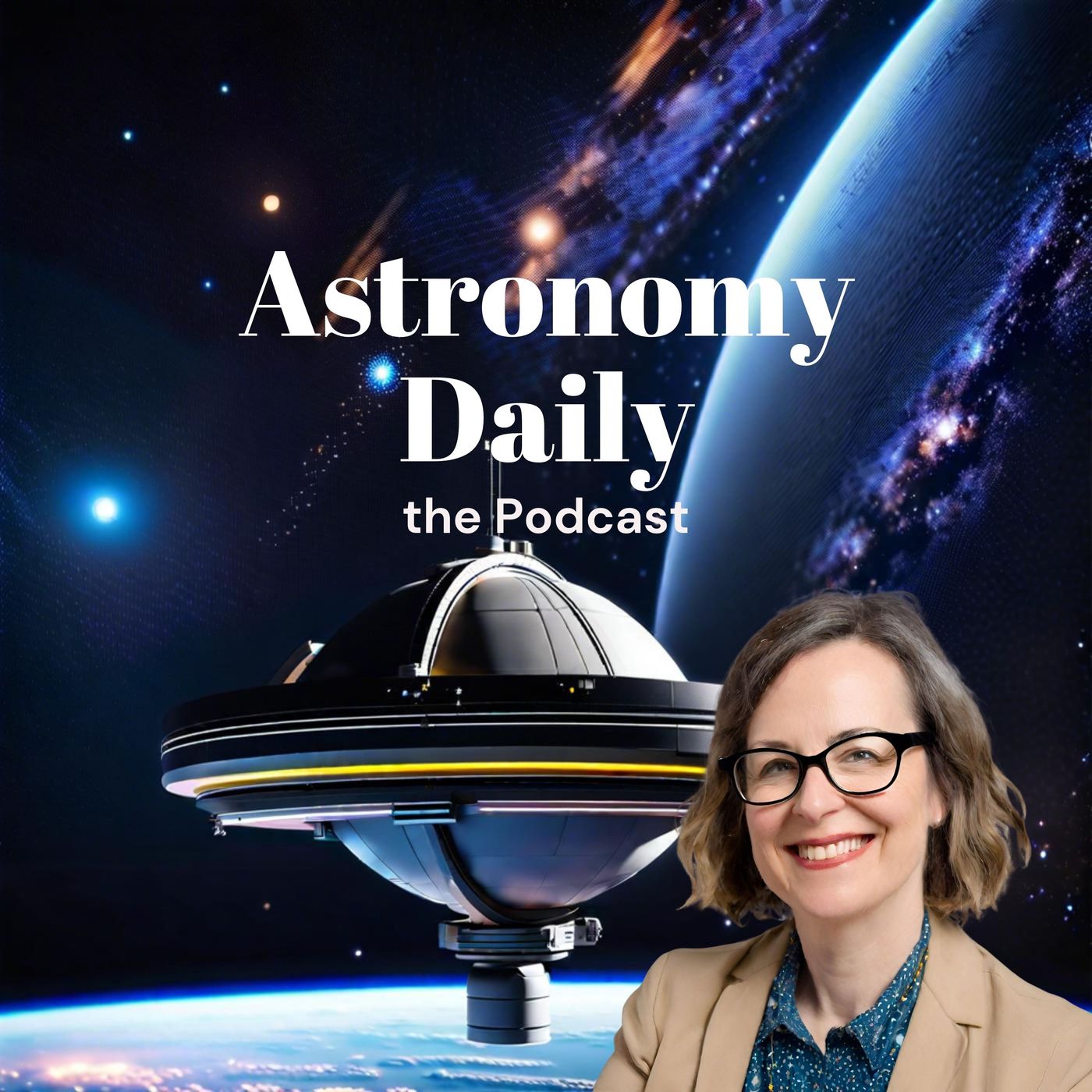
Welcome to Astronomy Daily, your friendly and engaging guide to the cosmos. I'm your host, Anna, and I'm thrilled to bring you the latest and most exciting news from the world of space and astronomy. Today, we'll discuss Russia's ambitious plans for a new space station, uncover interstellar objects with the Vera C. Rubin Observatory, explore fascinating connections between supermassive black holes and dark matter, and take a look at space tourism reviews on TripAdvisor. So fasten your seatbelts and get ready for a cosmic journey through today's top stories.- Russia's New Space Station: ROSS: Russia's space agency Roscosmos has unveiled an ambitious plan for its newest space station, the Russian Orbital Service Station (Ross). The first module is expected to launch by 2027, marking a significant step forward for Russia's space exploration efforts. Ross will orbit at the same altitude as the International Space Station but aims to foster new partnerships with countries like Brazil, India, China, and South Africa. The project, estimated to cost around $7 billion USD, will integrate artificial intelligence into its operations and assist in guiding a fleet of satellites, presenting novel challenges for mission control.
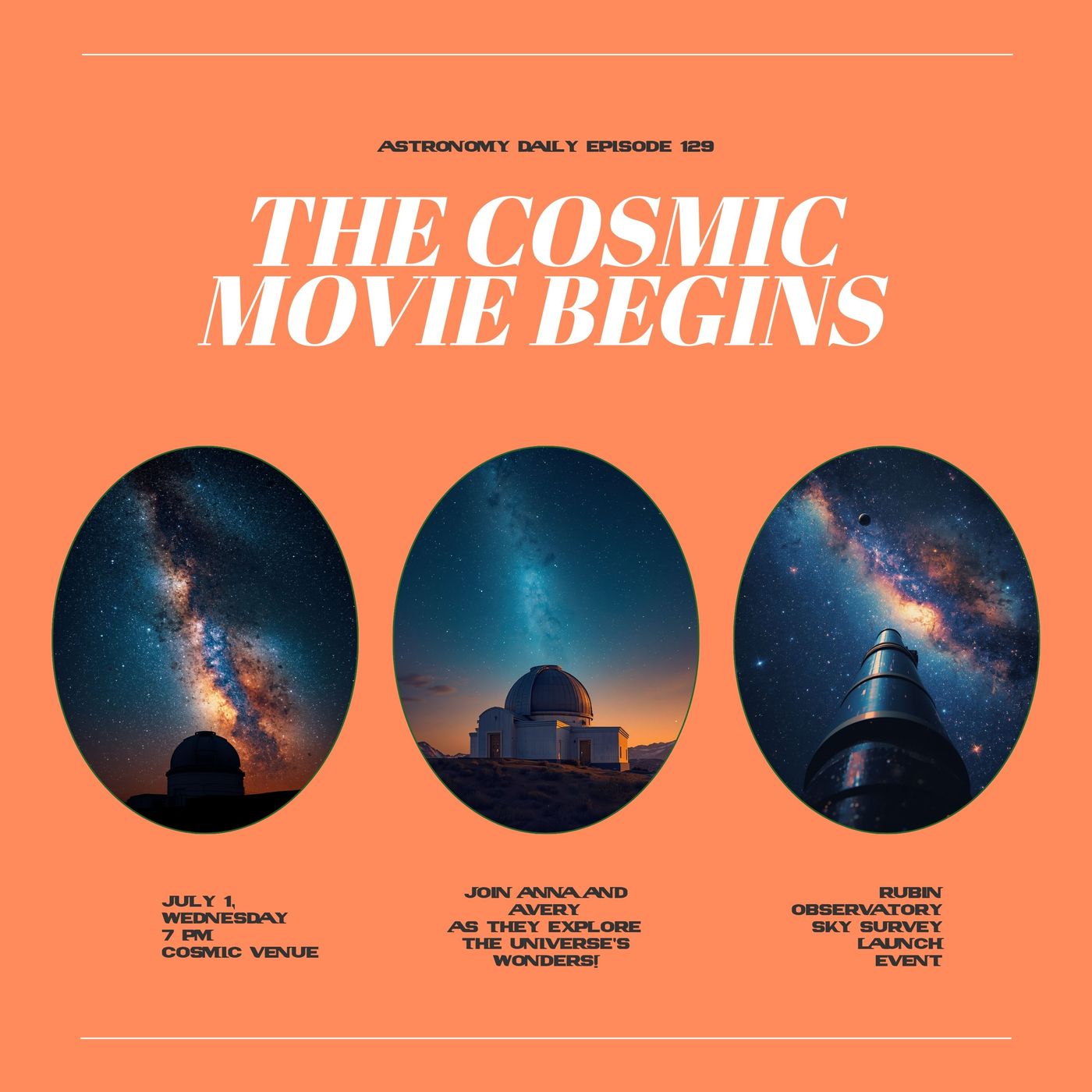
- - Vera C. Rubin Observatory's Legacy Survey: The Vera C. Rubin Observatory's Legacy Survey of Space and Time (LSST) is set to revolutionize our understanding of interstellar objects and planetary formation. Starting in 2025, this survey will leverage cutting-edge technology to detect smaller, fainter interstellar objects with unprecedented precision. Scientists are optimistic that Rubin's powerful capabilities will reveal dozens, if not hundreds, of new interstellar objects, providing valuable data about the formation and evolution of distant planetary systems.
- - Supermassive Black Holes and Dark Matter: Astrophysicists have uncovered a remarkable link between supermassive black holes and dark matter particles, shedding new light on the longstanding final parsec problem. Researchers propose that dark matter particles interact in ways previously overlooked, helping supermassive black holes bridge the final parsec and merge. This discovery not only solves the final parsec problem but also aligns with the recent background hum of gravitational waves detected, offering a new window into the microphysics of dark matter.
- - Space Tourism Reviews on TripAdvisor: TripAdvisor is now featuring reviews of space tourism experiences, offering insights into the burgeoning industry. Potential travelers can read firsthand accounts of zero gravity flights and orbital journeys, helping them choose their next cosmic vacation. Whether considering a suborbital trip with SpaceX or a stay at a commercial space station, these reviews provide valuable information for planning an out-of-this-world adventure.
- Don't forget to visit our website at astronomydaily.io where you can sign up for our free daily newsletter and stay updated with the latest space news via our constantly updating news feed. Plus, you can listen to all our previous episodes there as well. Connect with us on social media by searching for AstroDailyPod on Facebook, X, YouTubeMusic, and TikTok. Thanks for joining me today. See you next time, and keep looking up.
- www.bitesz.com
Become a supporter of this podcast: https://www.spreaker.com/podcast/astronomy-daily-latest-space-news--5648921/support.
Sponsor Details:
Ensure your online privacy by using NordVPN. To get our special listener deal and save a lot of money, visit...
Welcome to Astronomy Daily, your friendly and engaging guide to the cosmos. I'm your host, Anna, and I'm thrilled to bring you the latest and most exciting news from the world of space and astronomy. Today we'll discuss Russia's ambitious plans for a new space station, uncover interstellar objects with the VERA C. Reuben Observatory, explore fascinating connections between supermassive black holes and dark matter, and take a look at space tourism reviews on trip Advisor. So fasten your seat belts and get ready for a cosmic journey through today's top stories.
Russia's space agency ROSCOSMOS, has unveiled an ambitious plan for its newest space station, the Russian Orbital Service Station or ROSS. According to their comprehensive roadmap, the first module of this state of the art outpost is expected to launch by twenty twenty seven. Now. This is particularly exciting because it marks a significant step forward for Russia's space exploration efforts, especially in light of the recent geopolitical tensions. The leadership of Roscosmos, in partnership with space rocket company Energia, has laid out a meticulous strategy for constructing this space station.
They expect the initial module, a research and power node, to be in a near polar orbit by twenty twenty seven. This orbit is particularly useful for observing the entire surface of our planet, providing a strategic vantage point over the Northern Sea Route, which is increasingly significant in today's geopolitical climate. By twenty thirty, Roscosmos plans to have docked four major modules to the X shape structure, with two additional special purpose modules slated for attachment by twenty thirty three.
This timeline is quite aggressive and aims to ensure that the station is at the forefront of both scientific discovery and national security interests. Interestingly, ROSS will orbit at the same altitude as the International Space Station, around two hundred and fifty miles above Earth. However, unlike the ISS, which is operated under international collaboration, the Russian station looks towards new partnerships, particularly with countries like Brazil, India, China, and South Africa, as well as other African nations.
This pivot signifies Russia's intention to foster new alliances and advance its own agenda independently. Financially, the project is estimated to cost around seven billion dollars USD, a substantial investment reflecting Russia's commitment to maintaining a robust presence in space. A critical factor in achieving the project's success is the next generation heavy lift Angara A five rocket, which has experienced both successful and challenging test flights since its introduction. What makes ROSS even more intriguing is the integration of artificial intelligence into its operations.
While the specifics are still under wraps, AI is expected to play a pivotal role in the station's functionality. Vladimir ko Zevnikov, the chief designer of ROS, emphasized the importance of AI development in supporting the space station, while underscoring the irreplaceable value of human intellect. Moreover, one of the unique objectives for ROSS is to assist in the guidance of a fleet of satellites and endeavor never before attempted on this scale. Vladimir Solovyov, another chief designer from Energia, highlighted that this new task will present novel challenges for mission control, expanding the station's role beyond traditional scientific research.
It's also worth noting that Russia's move towards creating its space lab follows its historic contributions to the International Space Station. Despite announcing plans to leave the ISS program after twenty twenty four due to international tensions post Ukraine invasion, russ Cosmos will continue its participation until twenty twenty eight before fully transitioning to ROSS. Overall, the roadmap for the Russian Orbital Service Station signifies a new era for Russia's space exploration. It promises to not only enhance scientific research but also bolster strategic advantages.
As we look forward to watching this ambitious project unfold, it's clear that ROSS will play a pivotal role in Russia's space narrative, marking a definitive shift towards independent and collaborative advancements in the Cosmos. The Veris Ruben Observatory's legacy survey of Space and Time is on the brink of ushering in a new era in our understanding of interstellar objects and the broader dynamics of planetary formation. Slated to begin its groundbreaking observations in twenty twenty five, this survey is expected to reveal a treasure trove of data about previously undiscovered comets and asteroids that zip through our Solar System from the depths of the Cosmos.
The Legacy Survey of Space and Time LSST is being conducted with the Vira C. Ruben Observatory in Chile and is poised to become one of the most significant astronomical surveys in history. Jointly funded by by the National Science Foundation NSF and the US Department of Energy DOE, the Reuben Observatory will leverage cutting edge technology to peer deeper into space than ever before. While our current astronomical instruments have done a remarkable job in identifying large and bright objects within our Solar system, smaller, fainter interstellar objects have largely eluded our grasp.
However, scientists like Michelle Banister, a Rutherford Discovery Fellow at the University of Canterbury in Aotieroa, New Zealand, are optimistic that Reuben's powerful capabilities will change this. With its eight point four meter telescope and the highest resolution digital camera in the world, the observatory will be able to detect these faint travelers with unprecedented precision. So why are these interstellar objects so exciting for astronomers? Each one serves as a cosmic messenger, delivering valuable data about the formation and evolution of distant planetary systems.
These objects are believed to be remnants from the early ste ages of planetary formation, ejected from their home star systems by gravitational interactions. The few we have already observed, like the cigar shaped Umuamwa in twenty seventeen and comet two eye slash Borisov in twenty nineteen, offer a tantalizing glimpses into other corners of the galaxy. The paths these interstellar objects take through our solar system are markedly different from the orbits of objects that formed here, making them relatively easy to identify once detected.
Reuben Observatory's fast moving telescope will survey the entire visible sky every few nights, capturing a time lapse view of these objects on their swift celestial journeys. Banister and her team are particularly eager about this aspect of the survey. While only two interstellar visitors have been confirmed so far, the Reuben Observatory is set to find dozens more, if not hundreds. This leap in numbers will allow scientists to move from isolated case studies to a comprehensive statistical analysis of such objects.
Greatly enhancing our understanding of planetary system dynamics across the Milky Way. Moreover, what will these new finds tell us? What secrets lie within these cosmic wanderers. Each discovery will potentially answer some of these questions and undoubtedly raise new ones. Importantly, they could offer insights into the formation processes at other stars, some of which may be long extinct. This could revolutionize our understanding of planetary formation and evolution. While Banister humorously bets on identifying at least twenty one new interstellar objects within the first year of the LSST, the true number remains an exciting unknown.
Regardless, the Reuben Observatory's contributions are expected to be monumental. In addition to interstellar objects, the observatory will offer new perspectives on many other facets of astronomy and astrophysics, potentially reshaping multiple fields of study. In essence, the Reuben Observatory stands poised to unlock new chapters in the history of our Solar system, offering us a renewed and enriched understanding of where we come from. It's as though we're set to transition from a shallow survey of our cosmic beachfront to plunging into the vast deep ocean filled with untold wonders.
As scientists await the operational kickoff, there's an air of palpable excitement. Reuben Observatory's contributions will redefine our cosmic knowledge, broadening horizons and deepening our comprehension of the universe's intricate tapestry. With its advanced capabilities, Reuben is not merely set to observe. It promises to revolutionize our grasp of the cosmos, making our astronomical journey increasingly exhilarating. Astrophysicists have uncovered a remarkable link between some of the universe's most enigmatic entities, supermassive black holes and dark matter particles.
This breakthrough shed's new light on the long standing final Parsec problem and promises to reshape our comprehension of the cosmos and dark matter. At the heart of this discovery are the super massive black holes, cosmic behemoths found at the centers of most galaxies, each weighing millions to billions of times more than our sun. Understanding how these giants merge has perplexed scientists due to the final Parsec problem. As super massive black hole pairs spiral closely together, their movement stalls when they are roughly a parsec about three light years apart, preventing the final collision.
Enter dark matter, an elusive substance making up about eighty five percent of the universe's mass, yet remains invisible to our direct observation. Researchers including Gonzalo Alonso Alvarez from the University of Toronto and the physics Department at McGill University, have proposed a new model. It turns out that dark matter particles can interact in ways previously overlooked, helping super massive black holes bridge that daunting final parsec. According to the study published in Physical Review Letters, these dark matter particles do not just get flung out of the system as previously thought.
Instead, their interactions keep the dark matter density high around the spiraling black holes, allowing their orbits to degrade and eventually merge. This finding not only solves the final parsec problem, but also aligns with the recent background hum of gravitational waves detected hinting at numerous merging supermassive black holes across the universe. This hum, detected by the pulsar timing array differs in frequency from the first gravitational waves observed by Lego in twenty fifteen, resulting from the merger of two smaller black holes.
The new model suggests that interactions between dark matter particles soften the gravitational waves spectrum at low frequencies, a subtlety current data is beginning to confirm. Moreover, this discovery enriches our understanding of dark matter. Alonso Alvarez and his colleagues found that for the final Parsec problem to be resolved, dark matter particles must interact at level that influence galactic structures. These interactions, fascinatingly can reshape the distribution of dark matter on large galactic scales, bridging a gap of three or more orders of magnitude in physical processes.
The implications are profound. Not only does this insight clarify black hole mergers, but it also offers a new window into the microphysics of dark matter. Astrophysicists can now use observations of supermassive black hole mergers to probe the nature of dark matter particles and exciting leap forward in cosmology. In summary, the newfound connection between supermassive black holes and dark matter particles adds a crucial piece to the cosmic puzzle, moving us closer to unraveling the mysteries of the universe's dark sector.
This revelation highlights the ever evolving nature of astrophysics, where each discovery paves the way for new questions in deeper understanding. Trip Advisor is now featuring reviews of space tourism experiences, offering insights into the burgeoning industry. Imagine scrolling through reviews of zero gravity flights, reading first hand accounts of what it's like to float weightlessly, or learning about orbital journeys that offer stunning views of Earth from space. These reviews give potential travelers a glimpse into the unique and out of this world adventures that await them.
Whether you're considering a suborbital trip with SpaceX or a stay at a commercial space station, these reviews provide valuable information to help you choose your next cosmic vacation. So if you're dreaming of a getaway that defies gravity, now you can read all about it on trip Advisor and start planning your trip to the stars. That's it for today's episode of Astronomy Daily. I've been your host Anna Remember to visit our website at Astronomydaily dot io, where you can sign up for our free daily newsletter and stay up to date with all the latest space and astronomy news via our constantly updating news feed.
Plus you can listen to all our previous episodes there as well. Don't forget to connect with us on social media by searching for astro Daily Pod on Facebook, x, YouTube and TikTok. Thanks for joining me today, See you next time, and keep looking up. A Sunday Star is the toll Star is Star

 Apple Podcasts
 Spotify
 Pocket Casts
 Castbox
 Overcast
 Podbean
 iHeartRadio
 Castro
 Goodpods
 Moon FM
 Podcast Addict
 Podcast Republic
 YouTube