
In this episode
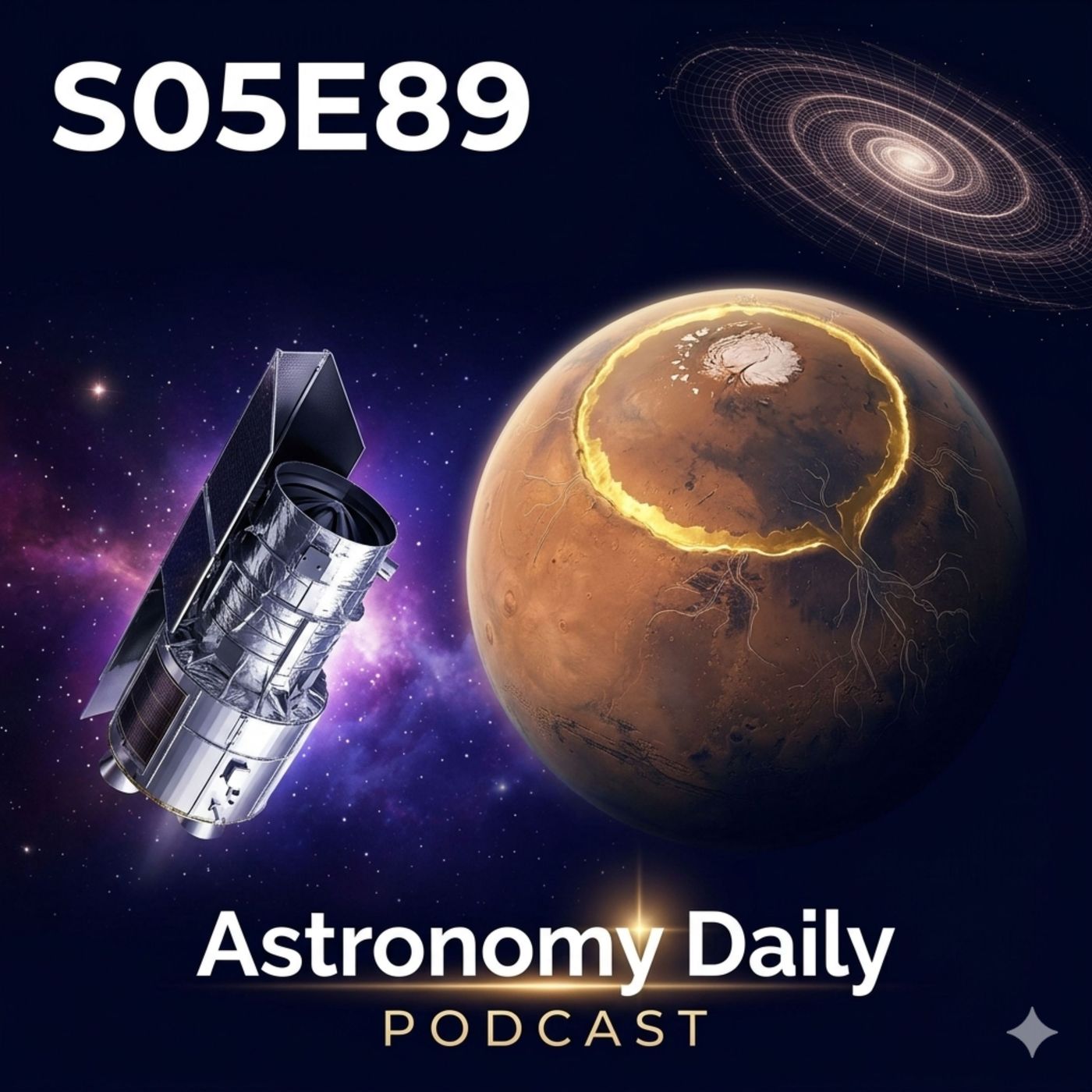
Welcome to Astronomy Daily, the podcast where we explore the latest news and discoveries in the world of space and astronomy. I'm your host, Anna, and I'm excited to guide you through some fascinating updates today. From groundbreaking missions and scientific revelations to the latest in aerospace engineering, we have a packed episode that is sure to spark your curiosity about the cosmos. So sit back, relax, and let's embark on this incredible journey through the universe together.- NASA's Chandra X-ray Observatory: 25th Anniversary: NASA's Chandra X-ray Observatory is celebrating its 25th anniversary. Launched aboard the Space Shuttle Columbia on July 23, 1999, Chandra has provided invaluable insights into black holes, dark matter, and more. Despite initial budget constraints, Chandra has exceeded expectations, thanks to innovative engineering and the dedication of its team. This observatory has opened new windows in astrophysics, offering data on galaxy formation, supermassive black holes, and gravitational wave events. As we celebrate Chandra's silver anniversary, we also honor the engineers and scientists who have ensured its long-term success.
- 10th International Conference on Mars: At the recent 10th International Conference on Mars, experts highlighted ten significant milestones that have shaped our understanding of the red planet. From the international science fleet currently operating on Mars to groundbreaking discoveries by rovers like Curiosity and InSight, these milestones include detecting methane surges, uncovering ancient lake formations, and capturing seismic activity. Each discovery builds a richer narrative of Mars' past and brings us closer to future human exploration.
- SpaceX's Starlink Collision Avoidance Maneuvers: SpaceX's Starlink satellites have performed nearly 50,000 collision avoidance maneuvers in the last six months, about double the previous period. This showcases SpaceX's commitment to space safety, but also highlights the growing complexity of managing such a vast constellation. With over 6,200 operational units and increasing solar activity, the frequency of these maneuvers is expected to rise, presenting a significant challenge for future space traffic management.
- UK Space Agency's Lunar Water Extraction Initiative: The UK Space Agency has awarded £30,000 in funding to ten innovative teams to extract and purify water from lunar ice. Among the captivating projects is one by Nacre Scientific Limited, which plans to use a modified microwave oven to melt dirty lunar ice. Other solutions include using solar rays, supercritical water, and UV light to purify water. These technologies not only aim to support lunar bases but also have potential applications on Earth, revolutionizing water resource management in remote or war-torn areas.
Don't forget to visit our website at astronomydaily.io where you can sign up for our free daily newsletter, catch up on all the latest space and astronomy news with our constantly updating news feed, and listen to all our back episodes. We'd love for you to join our community on social media too. You can find us on Facebook, X, YouTubeMusic, and TikTok by searching for AstroDailyPod. Until next time, keep looking up.
www.bitesz.com
Become a supporter of this podcast: https://www.spreaker.com/podcast/astronomy-daily-latest-space-news--5648921/support.
Sponsor Details:
Ensure your online privacy by using NordVPN. To get our special listener deal and save a lot of money, visit <a...
Welcome to Astronomy Daily, the podcast where we explore the latest news and discoveries in the world of space and astronomy. I'm your host, Anna, and I'm excited to guide you through some fascinating updates today, from groundbreaking missions and scientific revelations to the latest in aerospace engineering. We have a packed episode that is sure to spark your curiosity about the cosmos. So sit back, relax, and let's embark on this incredible journey through the universe together. NASA's Chandra X ray Observatory is celebrating its twenty fifth anniversary.
This marvel of engineering has provided us with invaluable insights into black hole's dark matter and more. Since its launch aboard the Space Shuttle Columbia on July twenty third, nineteen ninety nine, Chandra has been an exceptional source of astronomical knowledge and has managed to keep our curiosity peaked about the universe. The observatory came into being thanks to the hard work and ingenuity of a dedicated team of engineers, designers, test technicians, and analysts at NASA's Marshall Space Flight Center in Huntsville, Alabama.
Their efforts, combined with those of partners across the agency and the Chandra Operations Control Center in Burlington, Massachusetts, have allowed CHANDRA to continuously operate at the forefront of X ray astronomy. Chandra's contributions to our understanding of the cosmos are nothing short of groundbreaking. It's offered valuable data on the formation of galaxies and superstar clusters, the behavior of supermassive black holes, evidence supporting the existence of dark matter, and even insights into gravitational wave events.
This wealth of information has made Chandra an indispensable tool for scientists who seek to unravel the mysteries of the universe. When reflecting on the impact of Chandra over the last quarter century, retired NASA astrophysicist Martin Weiskoff, who led Chandra's scientific development, noted that it has opened new windows in astra physics that were scarcely imagined before its launch. The observatory's design allows it to detect X ray emissions with unprecedented clarity and sensitivity, making it possible to observe phenomena from the distant past of the universe.
Despite the challenges faced in its development, including budget revisions that meant changing the mission's original scope from a fifteen year serviceable mission to a five year unserviceable one. Chandra has outperformed expectations thanks to innovative engineering strategies, including automation of some operations and meticulous monitoring of the spacecraft's condition. Chandra has exceeded its anticipated lifespan and continues to provide valuable data. The long term success of Chandra is a testament to the capabilities and foresight of the engineering teams at Marshall Space Flight Center.
These engineers not only overcame significant technical challenges, but also created tools and conducted tests that would pave the way for future missions such as the James Webb Space Telescope. As we celebrate Chandra's silver anniversary, it's important to consider the human element behind its success. Acting Project manager Andrew Schnell highlights that Chandra is now maintained by third generation engineers who are every bit as dedicated as their predecessors. This gives us confidence that Chandra will continue to thrive and contribute to our understanding of space for years to come.
The story of Chandra is one of perseverance, innovation, and the boundless quest for knowledge. As the team on the ground prepares for new challenges ahead. Chandra's legacy will undoubtedly inspire both current and future generations of scientists and engineers in their exploration of the universe. You can learn more about the Chandra X ray Observatory and its mission by visiting NASA's website or the Smithsonian Astrophysical Observatory. Here's to another twenty five years of incredible discoveries and even more fascinating insights from this stellar observatory.
Mars has always been a subject of intrigue for scientists and space enthusiasts alike. At the recent tenth International Conference on Mars, experts gathered to highlight ten significant milestones that have shaped our understanding of the red planet and set the stage for future exploration. First on the list is the presence of an international science fleet at Mars. As of July twenty twenty four, there are nine spacecraft currently operating on and around Mars, including two surface rovers and seven orbiters.
NASA leads this fleet with its perseverance and curiosity rovers and orbiters like Maven and Mars Reconnaissance Orbiter, notably ESA, China and the United Arab Emirates also contribute to this collective effort. Reflecting a global interest in unraveling Mars mysteries. Next up, Curiosity's discovery of a mysterious methane surge in June twenty nineteen captivated the scientific community. Detected the largest amount of methane ever recorded during its mission, which then suddenly vanished. This enigmatic find only deepened the intrigue surrounding methane's role and behavior in Mars's atmosphere, driving scientists to continue their efforts and understanding this phenomenon.
In February twenty twenty three, Curiosity made another groundbreaking discovery when it uncovered the clearest evidence yet of ancient lake bottom wave ripples. These formations suggest that the region, once considered dry, was actually shaped by water many millions of years ago, offering new insights into Mars's watery past. A momentous event took place in April twenty nineteen when NASA's Mars Insit lander detected the first ever marsquake. This seismic activity officially kicked off the field of Martian seismology, providing critical data about the planet's internal dynamics and geophysical properties.
In July twenty twenty one, Insight once again made headlines by revealing previously unknown details about Mars's deep interior, confirming that the planet's core is molten. This discovery has profound implications for our understanding of Mars's geologic and thermal history. October twenty twenty two saw Insight capturing a stunning meteoroid impact that revealed subsurface ice. The Mars Reconnaissance Orbiter's cameras immortalized the impact site, where large chunks of ice were unearthed, spotlighting the potential resources for future astronauts.
Speaking of long lasting endeavors, NASA's Opportunity Rover concluded its nearly fifteen year mission in July twenty twenty one. This enduring rover not only provided invaluable data, but also set the groundwork for NASA's ongoing and future missions to Mars. Summer twenty eighteen brought one of Mars's notorious global dust storms. These massive climatic events enveloped the planet, driven by a complex series of smaller storms. Such phenomena offers scientists a rare glimpse into the atmospheric dynamics and evolution of planetary weather systems, further cementing its utility.
NASA unveiled a water ice map of Mars in October twenty twenty three. This detailed map will be instrumental in selecting future landing sites. As available water means missions can carry fewer supplies from Earth, making human exploration more sustainable. Lastly, a magnificent interactive globe of Mars was created in April twenty twenty three, using one hundred ten thousand images from NASA's Mars Reconnaissance orbiter. This tool has brought the Red planet to vivid life, allowing scientists, educators, and the general public to explore Mars's geography in mesmerizing detail.
These ten significant milestones encapsulate a thrilling period for Mars exploration. Each discovery builds a richer narrative of Mars's past and brings us closer to a future where human presence on Mars isn't just a dream, but a tangible reality. Stay tuned as we keep our eyes fixed on the Red planet, eager to uncover its remaining secrets. SpaceX's Starlink satellites have performed nearly fifty thousand collision avoidance maneuvers in the last six months. This staggering number about double the previous period showcases the meticulous efforts SpaceX puts into maintaining space safety.
Their transparency in sharing this information is commendable, but it also raises some critical concerns. Experts are lotting SpaceX for its commitment to reducing the risk of collisions in space. Each starlink satellite has autonomously dodged potential crashes thanks to onboard AI. With over six thousan two hundred operational units currently in orbit, the sheer volume of these maneuvers hints at the complexity of managing such a vast constellation. However, the increased activity is a double edged sword.
While avoiding collisions is crucial, the frequent adjustments introduce uncertainties. Post maneuver positions of satellites can deviate significantly from their predicted paths, complicating collision forecasts and space traffic management. The maneuvers themselves, though necessary, contribute to this growing challenge. The issue is further compounded by a new lower threshold for maneuvers. Starlink satellites now move to evade objects when there's even a one in a million chance of collision, a threshold one hundred times more stringent than the industry standard.
Though it heightens safety, it also accelerates the consumption of satellite propellant, potentially shortening their operational life. Adding to the concern is the backdrop of increasing solar activity. Events like coronal mass ejections can alter the density of the Earth's upper atmosphere, affecting satellite orbits. This space weather can inadvertently increase the drag on satellites, making collision avoidance even more pressing. As SpaceX continues to grow at Starlink Mega constellation projected to possibly reach forty two thousand satellites, the frequency of these maneuvers is expected only to rise.
Predictions suggests that by twenty twenty seven we might see up to eighty thousand avoidance maneuvers every half year. It paints a picture of a future where managing space traffic becomes an intricate dance of constant adjustments and high stakes precision. While SpaceX's proactive approach in space traffic management is pioneering, it also underscores the broader issue of orbital congestion. Maintaining the delicate balance of safety, sustainability, and operational efficiency in this increasingly crowded space environment will be one of the defining challenges for future satellite constellations and missions.
So while SpaceX's efforts are certainly a milestone in responsible space exploration, the broader community must adapt and innovate continuously to keep our orbital highways safe for the current and next generations of spacefarers. When it comes to setting up a sustainable lunar base, water is one of the most crucial resources. Luckily, the UK Space Agency is taking significance steps to ensure that future Moon inhabitants won't go thirsty. The agency recently awarded thirty thousand pounds in funding to ten innovative teams, challenging them to extract and purify water from the ice found in the Moon's craters, especially in the lunar South Pole.
One of the most captivating projects to come out of this initiative is by Lowland Naker of Nacre Scientific Limited. His team is looking at using something as commonplace as a microwave oven from Tesco to melt the dirty lunar ice. This might sound simple, but the science behind it is anything but. After purchasing that microwave, Niker plans to strip it down and incorporate its magnetron which is the device responsible for generating microwaves into their water extraction process. The goal is to use powerful sound waves in a sonochm system to generate millions of tiny bubbles within the lunar water.
These bubbles create high temperatures and pressures that produce free radicals highly reactive substances that break down contaminants in the water. Imagine that a kitchen appliance helping to make human life possible on the Moon. But the innovation doesn't stop there. The other teams are bringing their own unique approaches to tackle this challenge. For example, the British Interplanetary Society developed a device called Ganymede's Chalice, where a curved mirror focuses the Sun's rays to boil components within the lunar ice, allowing for the collection of purified water.
Queen Mary University of London is pushing boundaries by aiming to create supercritical water using high heat and intense pressure. This method promises to oxidize contaminants, making the water clean enough for consumption and other uses. In addition, there's Nascent Semiconductor Limited, which is working on the Titania Diamond Annular Reactor. This compact system uses a titanium dioxide catalyst activated by LED based UV light to break down impurities. It's a fine blend of practical inn engineering and cutting edge science.
Minimum Design, Limited in Suffolk has another promising solution with its cyclic volatile extractor. This innovation involves heating dirty ice in a specially designed chamber to separate different contaminants efficiently, making the system ideal for the harsh environmental conditions of the Moon. Each of these solutions presents a novel way to harness and purify the Moon's ice, and the UK Space Agency hopes to integrate the best ideas in future missions. What's more, these technologies are designed with adaptability in mind, meaning they can also be applied in areas on Earth that struggle with access to clean water, from war torn regions to rural communities lacking reliable water sources.
The implications of these lunar technologies are vast. Imagine deploying a slightly larger version of these systems on the back of a van to bring clean water to those in need, or consider the potential adaptations for discovering and utilizing water on Mars and other celestial bodies. The finalists will continue developing solutions over the next seven months, with the winner and two runners up being rewarded with additional funding to bring their projects to operational status. The promise of extracting clean water from lunar ice is not just about supporting life on the Moon.
It's a testament to human ingenuity and our ability to solve problems through innovation. These advancements could revolutionize how we think about water resource management, both in space and here on Earth, setting the stage for the next frontier in human exploration and sustainable living. Thanks for tuning in to Astronomy Daily with me Anna. I hope you enjoyed today's cosmic updates and discoveries. If you're hungry for more space news, don't forget to visit our website at Astronomy Daily dot io.
There you can sign up for our free daily newsletter, catch up on all the latest space and astronomy news with our constantly updating news feed, and listen to all our back episodes. We'd love for you to join our community on social media too. You can find us on Facebook, x, YouTube, and TikTok by searching for astro Daily Pod. Until next time, keep looking up a Sunday story is so star so
story


 Apple Podcasts
 Spotify
 Pocket Casts
 Castbox
 Overcast
 Podbean
 iHeartRadio
 Castro
 Goodpods
 Moon FM
 Podcast Addict
 Podcast Republic
 YouTube