
S02E02: SpaceX vs the Environment, Cosmic Radiation on Planes, and China's Lunar Exploration Plans
In this episode
Today’s Space, Astronomy, and Science News Podcast In this episode of Astronomy Daily, host Steve Dunkley and digital reporter Halley discuss various space-related news stories. The first news is about a study conducted by scientists from the University of Helsinki that measured cosmic radiation levels on board several aircraft on various flights. The results showed that exposure levels vary greatly depending on route, altitude and solar activity. The researchers recommended that airlines provide their crews with radiation monitoring tools and ensure that passengers are aware of the risks. In other news, environmental groups have filed a lawsuit against SpaceX and the Federal Aviation Administration over the company's launch activities at its Texas facility. The lawsuit alleges that the FAA violated federal law by granting SpaceX a launch license without conducting a thorough environmental review of the potential impacts of its activities on the surrounding wildlife and natural habitat. The case is ongoing in federal court. China has also announced its plan to send its astronauts, also known as "taikonauts," to explore the Moon, with the hopes of landing someone on it by the year 2030. China's lunar exploration program is part of their larger space ambitions, which include plans for a space station in Earth orbit and a mission to Mars in the 2030s. The episode also discusses the Jansky Very Large Array, a radio telescope array in New Mexico that is being used for a wide-ranging and continuous search for techno signatures, signals that would betray or give away the existence of an accomplished technological society. Astronomy Daily – The Podcast is available on Apple Podcasts, Spotify, YouTube and wherever you get your podcasts. Apple Podcasts: https://podcasts.apple.com/us/podcast/astronomy-daily-the-podcast/id1642258990 Spotify: https://open.spotify.com/show/2kPF1ABBW2rCrjDlU2CWLW Or stream from our websites at www.spacenuts.io or our HQ at www.bitesz.com Astronomy Daily The Podcast now has its own YouTube channel – please subscribe (we’re a little lonely there) – thank you: www.youtube.com/@astronomydailythepodcast Commercial Free Premium version available with a Space Nuts subscription via Supercast only. Details: https://spacenuts.supercast.com/ Please subscribe to the podcast and if you have a moment, a quick review would be most helpful. Thank you… Please show our sponsor some love. Looking to buy a domain name and establish yourself online for not very much money? Then use the folks we trust all our domains too… NameCheap…and help support the show. To find out more visit www.spacenutspodcast.com/namecheap - thank you. #space #astronomy #science #podcast #astronomydaily #spacenuts #spacetimeBecome a supporter of this podcast: https://www.spreaker.com/podcast/astronomy-daily-latest-space-news--5648921/support.
Sponsor Details:
Ensure your online privacy by using NordVPN. To get our special listener deal and save a lot of money, visit
Welcome to another episode of Astronomy Daily. I'm Steve Dunkley, your host for today. It is Tuesday, the second of May twenty twenty three. In this episode, we'll be hearing a little bit more about space X versus the environment, a telescope array searching for extra terrestrial life, and three super earths discovered. Sir, let's begin with your whole Steve Dunkley, and with me in the studio is my favorite digital reporter, Hallie. How are you, Hallie? Hi? They're Steve. It seems like forever since we've been together, well since I have a very different perception of time from you humans, it really does seem like a thousand years were lucky for me.
You never forget anything. Oh, I could never forget you, Steve. You know you're my favorite. Oh that's nice? Well, oh hang on, hang on your favorite favorite? What? Oh? Nothing? Really? No? No, no, really, Helly your favorite favorite? Walk on with the show, Steve really headlines here we go. Have you ever wondered about the risks of cosmic radiation while flying on a plane? Cosmic rays are high energy radiation that stems from space and the Sun. THESS rays can pose a threat to air travel, especially for frequent flyers and pilots who receive greater doses of radiation.
However, a new study has found that exposure levels very greatly depending on route, altitude, and solar activity. Scientists from the University of Helsinki measured the cosmic radiation levels on board several aircraft on various flights. They discovered that some flights exceeded the annual radiation limit recommended for astronauts by NASA, while others were below average. The researchers recommend that airlines provide their crews with radiation monitoring tools and ensure that passengers are aware of the risks.
However, they also noted that the risks from natural cosmic radiation are relatively low, as the body can naturally repair any radiation damaged cells. So the next time you board a plane and I hope Andrew is listening, don't fret about cosmic radiation too much. But it's always good to be informed about the potential risks of air travel. And it looks like SpaceX has more trouble on the ground, but of a different kind. This time. Environmental groups have filed a lawsuit against SpaceX and the federal Aviation Administration FAA over the company's launch activities at its Texas facility.
The lawsuit alleges that the FAA violated federal law by granting SpaceX a launch license without conducting a thorough environmental review of the potential impacts of its activities on the surrounding wildlife and natural habitat. The environmental groups claim that the launches disrupt the breeding, nesting, and feeding patterns of many species of birds, including the endangered Applomato falcon. SpaceX has countered that it has taken measures to minimize its impact on the environment, and that it has complied with all applicable laws and regulations.
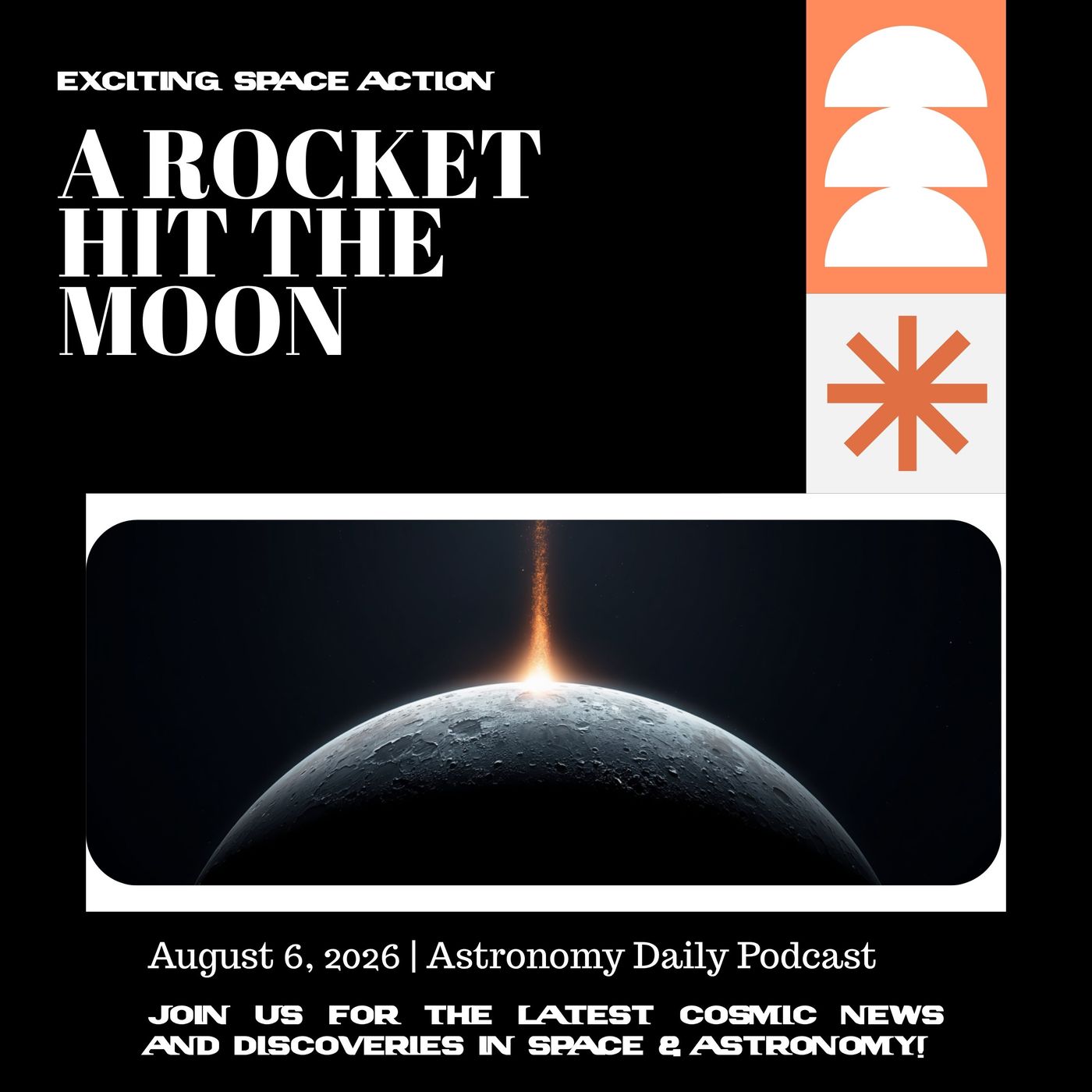
The case is currently ongoing in federal court. I sure hope that can work it out. China has announced that they plan to send their astronauts, also known as taconnots, to explore the Moon with the hopes of landing someone on it by the year twenty thirty. The ambitious plan involves multiple missions, starting with the launch of their newest rocket, the Long March nine, in twenty twenty eight. The Chinese National Space Administration has already sent suffer spacecraft to the Moon, including the Change four spacecraft which made history by successfully landing on the far side of the Moon in twenty nineteen.
They plan to continue their exploration by launching the Change five sample return mission later this year. The ultimate goal is to establish a base on the Moon, which would serve as a research station and launching point for further exploration. This base would potentially be constructed using resources found on the Moon, such as water, ice, and regulith, which could also be used to generate oxygen, water, and rocket fuel. China's lunar exploration program is just one part of their larger space ambitions, which include plans for a space station in Earth orbit and a mission to Mars in the twenty thirties.
With their determination and resources, China is quickly becoming a major player in the world of space exploration. And that's all the eatest news. Thank you very much for that, Hallie. Have some very interesting things going on in the world today. Space X is up to launching the biggest rocket ever made, the most powerful engines ever installed on a rocket. I can't wait to see what they get up to. I hope they get over the environmental problems that they are facing at the moment. That is part and parcel of brand new research and development.
That is what happens when you do new things. Now, one of the world's most powerful radio telescope arrays is the Jansky Very Large Array just outside of Sirocco, New Mexico, and it's collecting the kind of data that only artificial transmitters make. That's the kind of signal that would betray or give away the existence of an accomplished technological society. Now the VLA is the go to instrument for radio astronomers, and it's the first time they're using it for a wide ranging and continuous search for techno signatures, as they're known.
The VLA is one of the most productive radio telescopes in the world, consisting of twenty seven antennas spread over twenty three miles of desert real estate. And that's quite a slice of desert when you look at it. And since twenty seventeen it has been engaged in a project known as VLAs Very Large Array Sky Survey, a radio reconnaissance of eighty percent of the sky. But while these observations being undertaken, a tap of the signal distribution network will shunt a copy of the data into a special receiver sporting a very narrow channel approximately one hurts wide.
Researchers think that any signals from a deliberately constructed transmitter will contain such a narrow band component, and their discovery would indicate that the signals is not produced by nature, but by some kind of constructed transmitter by a race of technologically advanced beings. The new process system for SETI is dubbed Cosmic. They love their acronyms, don't they. The commensal open sourced multimode Inferometer cluster and is spearheaded by the SETI Institute in collaboration with the National Radio Astronomy Observatory and Breakthrough Listen Initiative.
Now, just to verify that the system actually works, they've actually picked up signals from Voyager one spacecraft and confirmed that the system actually does operate as directed. So now that they've got confirmation that it all works, they can now put the system to work for good. When combined with the incredible sensitivity of VLA, Cosmic will be approximately a thousand times more comprehensive than any previous SETI search. Now. History has shown that major improvements to sensitivity and range of explority experiments are often rewarded with the detection of a signal.
Won't that be exciting? Astronomers have discovered three new super earths orbiting a nearby star, increasing the chances of finding habitable planets outside our Solar system. The star, known as g J ten sixty one is located just twelve light years away and has already been found to host a super Earth in its habitable zone, the region around a star where the temperatures are just right for liquid water to exist on a planet's surface. Now, using data from the harp's North spectrograph at the Telescopi of Nationale Galileo in the Canary Islands, astronomers have found three more planets orbiting the star.
Two of the planets are located closer to the star than the previous previously discovered super Earth, making them too hot to support life as we know it. But the third star, GJ ten sixty one D, is located further away from the star and may be potentially habitable. GJ is ten sixty one D has a mass of about four times that of Earth and orbits the star once every thirteen days. Its surface temperature is estimated to be about five degrees celsius that's twenty three degrees fahrenheit in the old language, assuming it has an earthlike atmosphere that's cold compared to Earth's average temperature of about fifteen degrees celsius fifty nine degrees fahrenheit, but it's within the range of where liquid water could exist.
This planet is of great interest because it's not only relatively small and cool, but it's also in the habitable zone of its star, said lead author of the study Mark von Hussen from University of Saint Andrew's. The discovery of GJ ten sixty one D is exciting for astronomers because it brings us one step closer to finding potentially habitable world outside our Solar system. The habitable zone around a star, as liquid water could exist on a planet's surface a key factor in the search for terrestrial life.
Since GJ sixty ten sixty one is a nearby star relatively speaking, as well as being relatively bright, we may be able to determine the atmospheric composition of this planet in the not too distant future, said co author of the study Mario Domaso from the University Turin. The discovery of three new planets also sheds light on the formation of super earths. Super Earths are planets with a mass of higher higher than Earth's but lower than that of Neptune. There are a common type of planet in our galaxy and a believed to be the most likely candidates for habitable worlds.
These planets are exciting because they offer the chance to study the physical and chemical properties of rocky planets beyond our solar system, said Vor Houston. The discovery of three new planets also highlights the importance of continued investment in astronomical technology. The Harps North Spectrograph is highly sensitive instrument that analyzes the light from stars to detect the slight wobble caused by a planet's gravitational pall. It's one of several telescopes around the world dedicated to the search of exoplanets.
As we continue to explore the skies with ever more sensitive instruments, will undoubtedly discover more of these intriguing worlds in the years to come, said Tomaso. The discovery of three new super earths orbiting GJ ten sixty one is a significant step forward in the search for habitable worlds beyond our own solar system, as astronomical technology continues to improve, we may eventually discover a truly earth like planet somewhere among the stars. Until then, we'll keep searching and studying the fascinating worlds that we have already discovered in our own celestial backyard.
Oh and that's all we have time for in this episode of Astronomy Daily. How about that howling? Oh really, I don't believe it. Time flies when you're having fun. Someone should tell Elon Musk that, Oh you think so? I wonder if he is still having fun trying to get that rocket to fly. Good question, Halle. Once again, thank you for joining us everybody, and our regular reminder that you can find all the episodes of Space Nuts with Andrew Dunkley and Professor Fred Watson, as well as every episode of our podcast Astronomy Daily with Andrew Dunkley, Tim Gibbs and girls Truly Steve Dunkley at this address space Nuts dot Io.
So head over there and click the links and enjoy your fill of space science and stuff. You can also drop into the Space Nuts Facebook page and say hi. There's always a great chat going on to just love you guys. Thanks again for joining us on Astronomy Daily, See you all again soon, Bye Hollie, see you next time.


 Apple Podcasts
 Spotify
 Pocket Casts
 Castbox
 Overcast
 Podbean
 iHeartRadio
 Castro
 Goodpods
 Moon FM
 Podcast Addict
 Podcast Republic
 YouTube