
S02E01: Lunar Landings, Cybersecurity, and Repurposing Satellites
In this episode
In this Astronomy Daily podcast episode, new host Tim Gibbs (AstroTim) is joined by Halley to discuss the latest news in space exploration. Private companies like Astrobotic, Intuitive Machines, Mast and Space Systems, Blue Origin, and SpaceX are planning multiple missions to the Moon, some to deliver scientific instruments and payloads, while others will transport humans in the future. SpaceX's Starship rocket prototype achieved launch successfully, but it exploded during its seperation attempt. Thales has successfully demonstrated its ability to protect a demonstration satellite from cyberattacks, highlighting the need for increased cybersecurity measures in space. Astria has launched a new satellite tasking capability in partnership with major satellite imagery providers, enabling customers to request and receive tasking of high-resolution satellite imagery within hours, offering more efficient and cost-effective access to high-resolution satellite imagery. Researchers at USC are collaborating with the software company Tangram Flex to replace the software components within legacy satellites to repurpose them, which could result in cost savings and less space debris. Voyager Two, launched in 1977, has begun using a small reservoir of backup power to keep its five science instruments operating, enabling the mission to postpone shutting down the science instruments until 2026. You can find out more about the low cost observatory being set in in Bath (UK) by visiting their website: https://www.bathecho.co.uk/news/education/low-cost-observatory-students-university-101854/ Available on Apple Podcasts, Spotify, YouTube and wherever you get your podcasts from. Apple Podcasts: https://podcasts.apple.com/us/podcast/astronomy-daily-the-podcast/id1642258990 Spotify: https://open.spotify.com/show/2kPF1ABBW2rCrjDlU2CWLW Or stream from our websites at www.spacenuts.io or our HQ at www.bitesz.com Astronomy Daily The Podcast now has its own YouTube channel – please subscribe (we’re a little lonely there) – thank you: www.youtube.com/@astronomydailythepodcast Commercial Free Premium version available with a Space Nuts subscription via Supercast only. Details: https://spacenuts.supercast.com/ Please subscribe to the podcast and if you have a moment, a quick review would be most helpful. Thank you… Please show our sponsor some love. Looking to buy a domain name and establish yourself online for not very much money? Then use the folks we trust all our domains too… NameCheap…and help support the show. To find out more visit www.spacenutspodcast.com/namecheap - thank you. #space #astronomy #science #podcast #astronomydaily #spacenuts #spacetimeBecome a supporter of this podcast: https://www.spreaker.com/podcast/astronomy-daily-latest-space-news--5648921/support.
Sponsor Details:
Ensure your online privacy by using NordVPN. To get our special listener deal and save a lot of money, visit <a...
Good everybody, and welcome to the Astronomy Today podcast for Friday, the twenty eighth of April twenty and twenty three. My name is Tim Gibson. I will be your host for today's podcast. I'm still trying to work out how things work ground here, so if I make the odd mistake or two, please forgive me. Hopefully I will get better over time. Now on with the show, Hallie, good day, Hi Tim, and welcome to Astronomy Today podcast. I hope you enjoy yourself and tell bad dad jokes. Thanks for the introduction, Hallie.
No bad jokes for me today, although I may ask you for one a bit later on. Now, would you like to read the headlines the Astronomy Daily podcasts. Private companies are lining up to conduct lunar landings, with multiple missions planned for the near future. Some of the companies involved include Astrobodic, Intuitive Machines and Maston Space Systems. These firms have secured contracts with nassa's Commercial Lunar Payload Services Program to deliver scientific instruments and other payloads to the Moon.
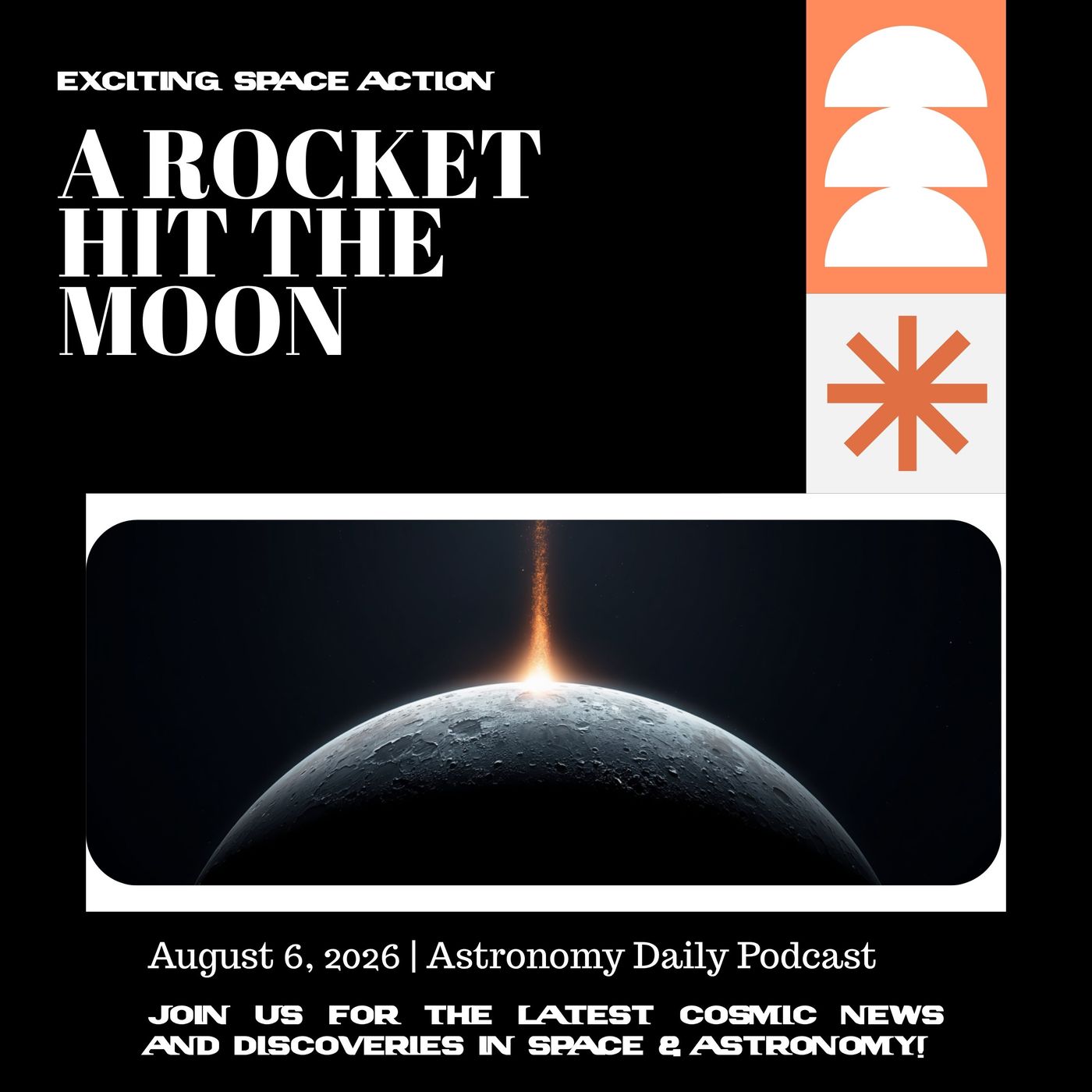
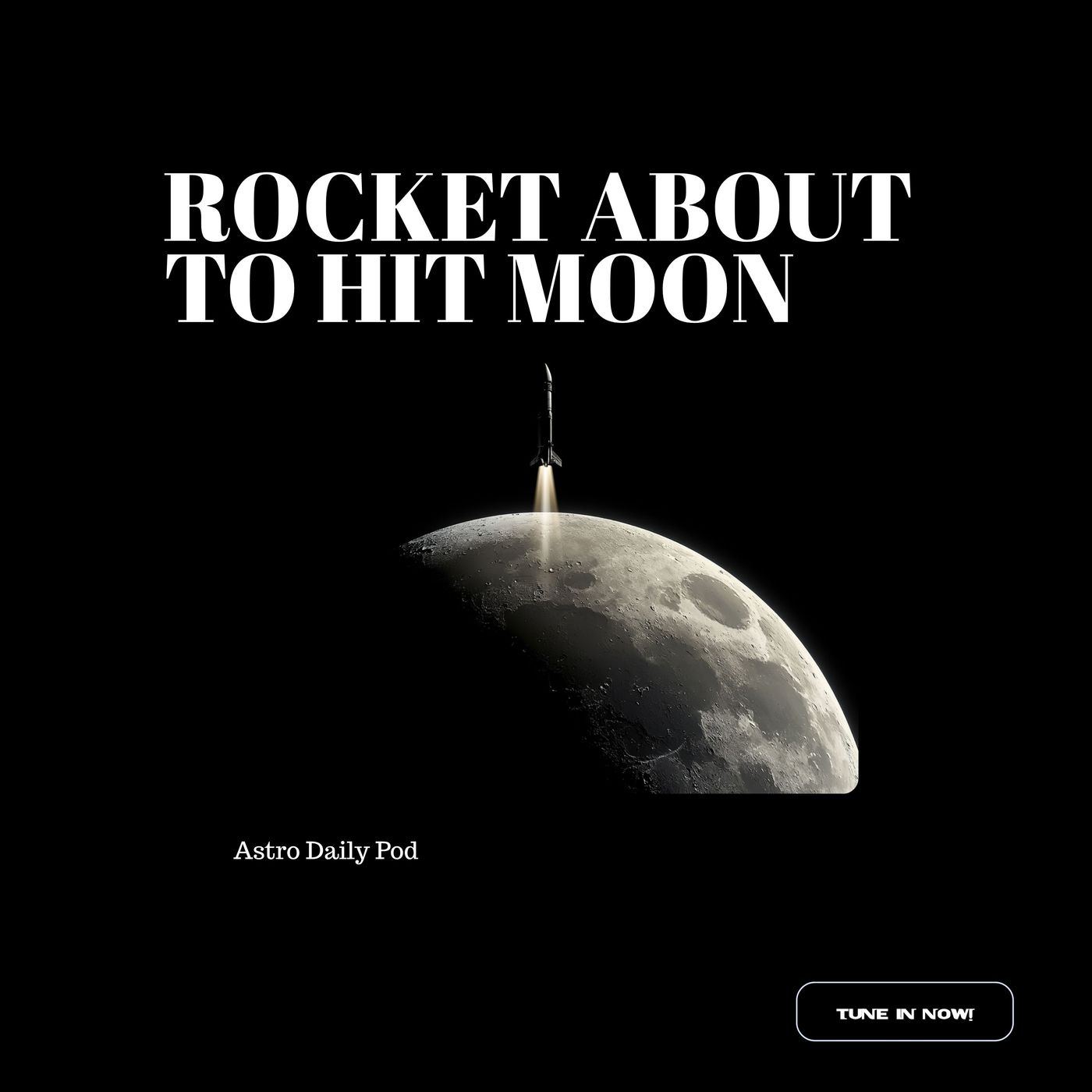
In addition, other companies such as Blue Origin and SpaceX are also developing lunar landers to transport humans to the Moon in the future. This growing interest in lunar exploration is expected to bring about new opportunities and advancements in space exploration. SpaceX has successfully launched its Starship rocket prototype, which is designed to take humans and cargo to the Moon and Mars. However, the rocket exploded during its landing attempt, marking the third failure of the Starship's landing attempts.
Despite the failure, the launch was still a significant milestone as it demonstrated the Starship's capability to reach high altitudes and perform controlled maneuvers. The Starship rocket is powered by the Raptor engines, which are the most powerful rocket engines ever built. SpaceX's CEO Alon Musk stated that the failure was due to a lack of fuel in the rockets header tank during the landing attempt. The company is already planning the next Starship prototype and aims to achieve a fully operational spacecraft in the near future.
Thales has successfully seized control of a demonstration satellite owned by the European Space Agency ESA in the first ever cybersecurity exercise of its kind. The exercise was designed to test the satellite's vulnerability to cyber attacks and to demonstrate fails ability to protect it. During the exercise, failed cybersecurity experts simulated a cyber attack on the satellite and successfully took control of it. This demonstration is significant as it highlights the need for increased cybersecurity measures in space, as satellites are becoming increasingly important for communication, navigation, and other critical functions.
Failed success in the exercise shows that the company is at the forefront of developing advanced cybersecurity solutions for the space industry. Astrea, a geospatial analytics company, has launched a new satellite tasking capability in partnership with major satellite imagery providers. The new capability enables users to request and receive tasking of high resolution satellite imagery within hours. This initiative aims to provide more timely and cost effective access to satellite imagery, enabling customers to quickly analyze changes in land use, natural resources, and infrastructure.
The new service is expected to benefit several industries including insurance, finance, agriculture, and environmental management. Astria's new capability will integrate with Maxer Technologies, Airbus and Planet to provide access to a vast network of satellites. The company's platform uses artificial intelligence and machine learning to analyze and interpret satellite data, providing valuable insights for customers. The launch of this new service reflects Astria's commitment to innovation and sustainability.
The company seeks to leverage the power of satellite imagery and data analytics to help customers make informed decisions about resource management and environmental sustainability. Overall, Astria's new satellite tasking capability is a significant development for the geospatial analytics industry, offering more efficient and cost effective access to high resolution satellite imagery. So the Astronomy Daily podcast, here are a couple of stories that I would like to cover today. Scientists researchers at USC are tackling the problem of legacy satellites.
There are currently several thousand satellites orbiting Earth. Many have already completed their missions or how or have outlived their primary lifespan. These are legacy satellites, and while some of them may have broken hardware and will eventually run out of energy, leave orbit and burnout in space, others are physically in good conditions. So the question becomes what to do with them? As ce researches are looking at ways to possibly reuse satellites for different things. They are collaborating with the software company Tangrum Flex to figure out how they can replace the software components within the satellites to repurpose them.
The approach that they are taking is to look inside the satellite and say, this particularly a piece of software did this particular function before. Can we actually replace that function to make it do something else as a path to repurposing it. I think this is an absolutely brilliant use of old hardware spinning around in satellites around the Earth. If we can get this done, it would mean a lot of savings in money and old satellites crushing to Earth when we could reuse them for other purposes.
Here is a great story about extending the use of satellites and spacecraft. Voyager two, launched in nineteen seventy seven, is more than twelve billion miles that's twenty billion columns from Earth using its five science instruments to study interstellar space. To keep those instruments operating despite a diminishing viminishing power supply, the aging spacecraft has begun using a small reservoir a backup power set aside as part of an onboard safety mechanism. The move will enable the mission to postpone shutting down the science instruments until twenty twenty six rather than this year.
Voyager two and its twin, Voyager one, are the only ever spacecraft to operate outside the heliosphere, the protective bubble of particles of magnetic fields generated by the Sun. The probes are helping scientists answer questions about the shape of the heliosphere and its role in protecting Earth from the energetic particles and other radiation found in the interstellar environment. The science data that the voyages are returning gets more valuable the further away from the Sun they go, so we are definitely interested in keeping as many science instruments operating as long as possible, said Linda Sprilker, Voyagers Project scientist at NASA's Jet Propulsional Lab in Southern California, which manages the mission FANASSA.
Both Voyager probes power themselves with radioisotope thermoelectric generators RTGs, which convert heat from decaying plutonium into electricity. The continual decay process means the generator produces slightly less power each year. So far, the declining power supply hasn't impacted the mission's science output, but to compensate for the loss, engineers have turned off heaters and other systems that are not essential to keeping the spacecraft flying. With those options now exhausted in Voyager two, one of the spacecraft's five science instruments, was next on their list.
Voyager one is currently operating one less science instrument than its twin because of an instrument failed early in the mission. As a result, the decision about whether to turn off an instrument on Voyager one won't come until sometimes next year. In search of a way to avoid shutting down a Voyager two science instrument, the team took a closer look at a safety mechanism designed to protect the instruments in case the spacecraft's voltage the flow of electricity changes significantly. Because of a fluctuation in voltage could damage the instruments.
Voyager is equipped with a voltage regulator that triggers a backup circuit. In such an event, this circuit can access a small amount of power from the RTG that set aside for this purpose. Instead of reserving that power, the mission will now be using it to keep the science instruments operating now to show that we really are an international podcast. I'm currently sat in a very old Georgian property in the city of Bath in Somerset in the United Kingdom, and I'm going to cover a local story to me but may be useful for other people to understand and listen to it.
Bath University has established a low cost observatory located at the University of Bath's campus and is proving to be again changing experimental tool for undergraduate studying events in space. The facility, which is built and equipped for less than thirty five thousand pounds, features a roll off roof, two high quality computer controlled telescopes, solar panels, and can accommodate two people at a time. The timber cabin was designed to give astrophysicist students hands or experience observing objects in the night sky.
Students use their time in the observatory to gather data and ties that ties into specific science projects or modules on their courses. I think that's a great local story to me and I hope everybody enjoyed the insight into how to create a low cost observatory for students. Now, just before we finish over to you, Hallie, do you have a dad joke for today? Why did the sun go to school to get brighter? Thanks Hally, You're going to get no comment from me on your dad jokes. So I hope everybody you've enjoyed today's version of the podcast.
It's good day from me and it's good day from Hallie. See you next time on Astronomy Today podcast. Thank you very much for listening. Bye for now the Astronomy They'll Be podcast
 Apple Podcasts
 Spotify
 Pocket Casts
 Castbox
 Overcast
 Podbean
 iHeartRadio
 Castro
 Goodpods
 Moon FM
 Podcast Addict
 Podcast Republic
 YouTube