
In this episode
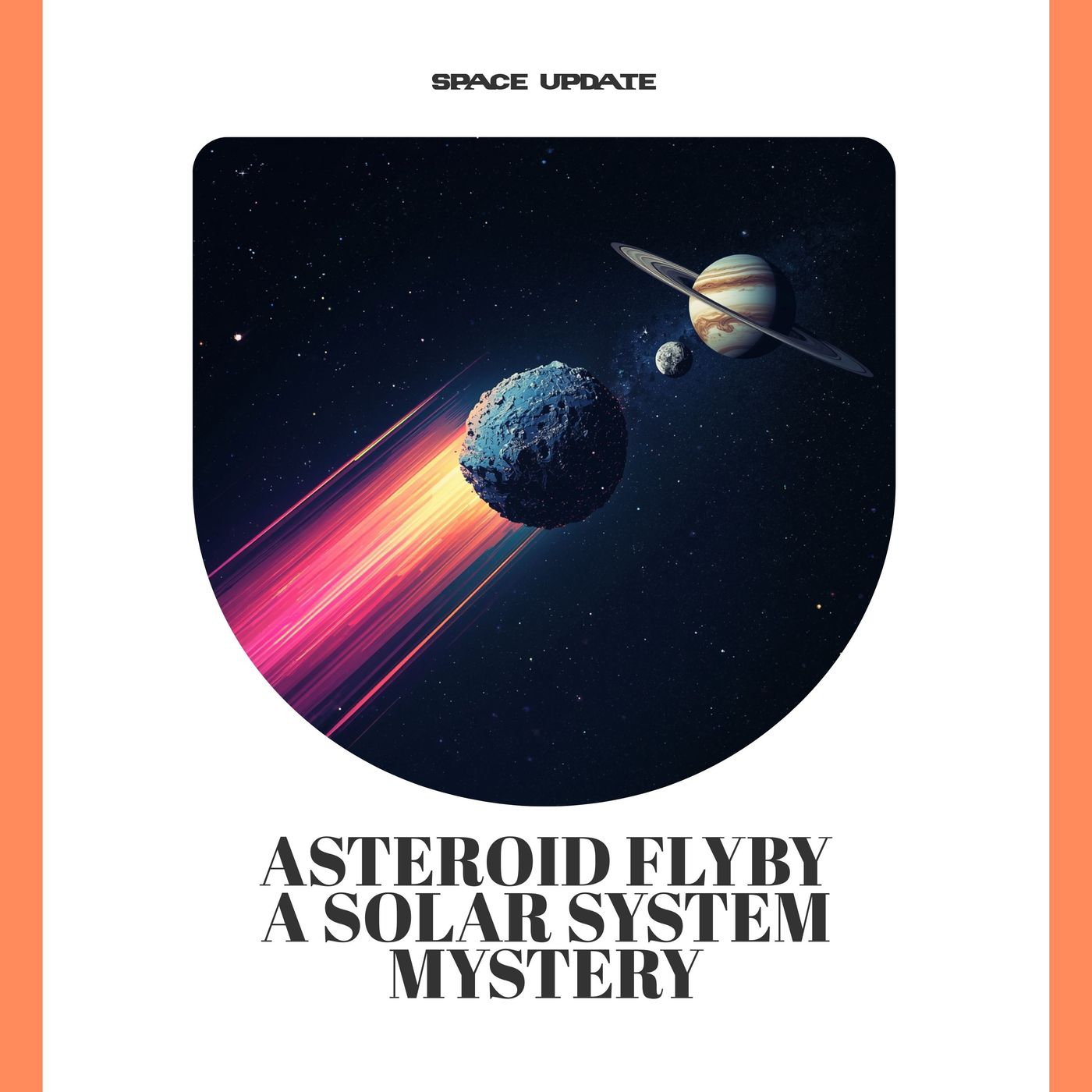
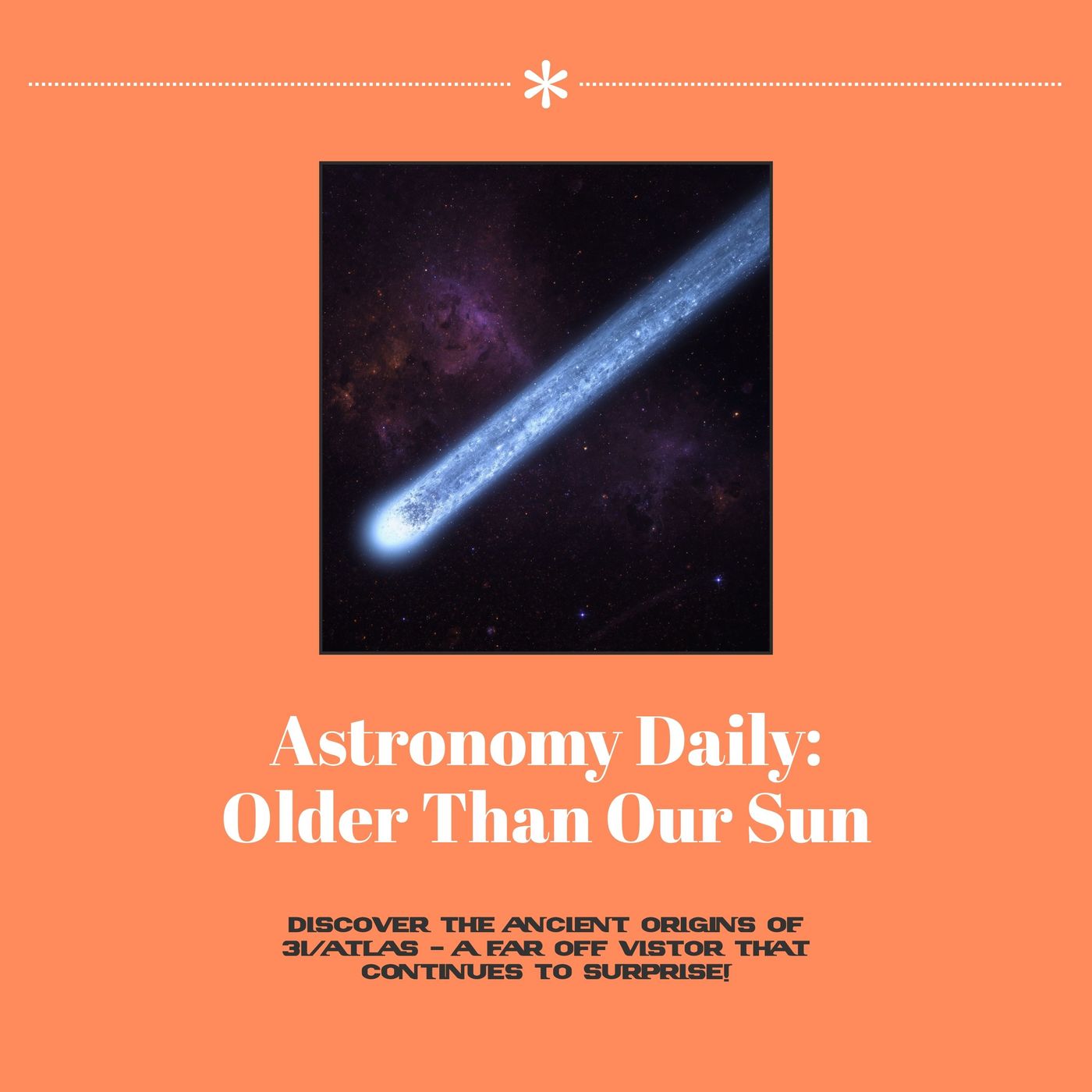
- Interstellar Comet 3I Atlas: NASA has unveiled new images and data of the interstellar comet 3I Atlas, the third confirmed visitor from beyond our solar system. This comet, rich in carbon dioxide and water ice, offers a unique opportunity to study ancient material from a distant solar system, challenging previous assumptions about interstellar objects.
- Enceladus' Organic Compounds: Exciting findings from NASA's Cassini mission reveal previously undetected organic compounds in the plumes of Saturn's moon Enceladus. These complex molecules suggest potential for life, as they may serve as precursors to amino acids, highlighting Enceladus as a prime candidate in the search for extraterrestrial life.
- Nasa's Swift Observatory Rescue Mission: NASA has partnered with Catalyst Space Technologies for a groundbreaking robotic mission to rescue the Neil Girls Swift Observatory. Scheduled for June 2026, this mission aims to extend the observatory's life by boosting it back to a stable orbit, marking a historic first for private commercial space efforts.
- New Lunar Crater Discovery: NASA's Lunar Reconnaissance Orbiter has discovered a small, fresh crater on the moon, nicknamed "freckle." This 72-foot crater, formed between 2009 and 2012, provides valuable data on impact rates, crucial for planning future lunar missions, including Artemis.
- James Webb Telescope's Early Universe Discoveries: Astronomers using the James Webb Space Telescope have identified a puzzling young galaxy, Knucks LRD Z8.6, with a supermassive black hole that appears to have formed much faster than expected. This challenges existing theories of black hole and galaxy co-evolution, prompting a reevaluation of cosmic formation models.
- For more cosmic updates, visit our website at astronomydaily.io. Join our community on social media by searching for #AstroDailyPod on Facebook, X, YouTubeMusic, TikTok, and our new Instagram account! Don’t forget to subscribe to the podcast on Apple Podcasts, Spotify, iHeartRadio, or wherever you get your podcasts.
- Thank you for tuning in. This is Anna and Avery signing off. Until next time, keep looking up and exploring the wonders of our universe.
Interstellar Comet 3I Atlas Insights
[NASA](https://www.nasa.gov/)
Enceladus Organic Compounds Study
[NASA](https://www.nasa.gov/)
Swift Observatory Rescue Mission Details
[NASA](https://www.nasa.gov/)
Lunar Crater Discovery Robert
[NASA](https://www.nasa.gov/)
James Webb Telescope Findings
[NASA](https://www.nasa.gov/)
Become a supporter of this podcast: https://www.spreaker.com/podcast/astronomy-daily-space-news-updates--5648921/support.
Sponsor Details:
Ensure your online privacy by using NordVPN. To get our special listener deal and save a lot of money, visit www.bitesz.com/nordvpn. You'll be glad you did!
Sponsor Details:
Ensure your online privacy by using NordVPN. To get our special listener deal and save a lot of money, visit <a href="https://www.astronomydaily.io/nordvpn"...
Avery: Hello, and welcome to Astronomy Daily, the podcast that brings you the latest news from across the cosmos. I'm your host, Avery. Anna: And I'm Anna. It's great to be with you. And today we'll be covering everything from our mysterious interstellar visitor to groundbreaking discoveries in our own cosmic backyard. Avery: That's right, Anna. On today's episode, we'll be looking at new images of a comet from another star system, uncovering organic compounds on one of Saturn's moons, and detailing a daring private rescue mission for a NASA space telescope.
Anna: And there's more. We'll also be examining a brand new tiny crater on the moon and peering back to the dawn of time with the James Webb Telescope to investigate a cosmic mystery that's challenging everything we thought we knew about black holes. So let's get started. Avery: First up, our current visitor from deep space. NASA has just released a trove of new images and data about interstellar comet space 3i atlas. This is a pretty big deal. Anna: It really is. This is only the third interstellar object we've ever confirmed entering our solar system, of course, after Oumuamua and Borisov.
And this time, we were ready for it. A whole fleet of spacecraft got a look, including the James Webb Telescope and even the Mars Reconnaissance Orbiter. Avery: Right, and the big takeaway? It's definitely a comet. There was a lot of speculation, especially after Oumuamua, about Alie spaceships. But scientists have confirmed that 3i Atlas looks and behaves just like a comet from our own solar system. Complete with a tail and a coma. Anna: Exactly. No alien technology here. But what they did find is scientifically fascinating.
The data shows it's rich in carbon dioxide and water ice. But what's interesting is the ratio. There's more frozen carbon dioxide than. Than water ice. Avery: Mhm. That's unusual compared to comets from our own Oort Cloud. It suggests it formed in a very different, likely very cold environment around its parent star. Its trajectory is also unique, coming in at a steep angle relative to the planets. Anna: And that's the real prize here, because it came from outside our solar system. It's a pristine sample of ancient material from a completely different solar system.
It's. It's like getting a geological sample delivered to our doorstep from an alien world. A, uh, truly incredible opportunity to study the building blocks of another solar system. Avery: From the outer reaches of the solar system to one of its most intriguing moons. Let's talk about Enceladus. New analysis of old data from NASA's Cassini mission has turned up something exciting in the Plumes erupting from this icy moon of Saturn. Anna: That Cassini mission just keeps on giving, doesn't it? These plumes are essentially geysers of water, ice and gas shooting out from cracks in the moon's surface, originating from a vast liquid water ocean we know is hidden beneath the ice.
Avery: It really does. And during one of its final daring flybys, Cassini flew just 13 miles from the surface, right through one of these plumes, collecting samples. Scientists have been digging through that data and found evidence of previously undetected organic compounds. Anna: And these aren't just simple molecules. The new findings suggest a greater diversity of organic compounds than we knew about. And some of them are the types of molecules that can act as precursors for amino, um, acids, the building blocks of proteins which are essential for life as we know it.
Avery: That's the key. This fresh material, straight from the subsurface ocean, suggests that some really complex organic chemistry could be happening in the dark, warm waters of Enceladus. It strengthens the case for it being one of the most promising places in our solar system to search for extraterrestrial life. Anna: It doesn't mean we've found life, but it adds another crucial piece to the puzzle, suggesting that the necessary ingredients are there. And it's an incredibly tantalizing discovery.
Avery: Now let's turn our attention closer to home to a story about saving a crucial piece of our space infrastructure. We're talking about NASA's Neil Girls Swift Observatory. Anna: Swift has been a, uh, workhorse for nearly two decades, studying the most powerful explosions in the universe, gamma ray bursts. But its gyroscopes are failing, and it's in a, uh, slowly decaying orbit. The projections weren't good. It was expected to make an uncontrolled re entry and crash back to Earth as early as 2026.
Avery: Right. And losing it would be a huge blow to astronomy. But NASA has a plan. They've selected a private company, Catalyst Space Technologies, to launch a robotic rescue mission. Anna: This is where it gets really interesting. The mission will use a Northrop Grumman Pegasus rocket, which, which is a unique system. It's not launched from the ground. It's air launched from under the wing of a carrier aircraft. The mission is scheduled for June 2026. Avery: And it's set to be a historic first.
This will be the first ever capture of an uncrewed US Government satellite by a private commercial spacecraft. Catalyst's robotic servicing vehicle will rendezvous with Swift, dock with it, and then use its own thrusters to do the heavy lifting. Anna: The goal is to boost Swift back up to its original stable altitude. If successful, this maneuver could extend the observatory's life for another two decades. It's a fantastic example of public private partnership and a new era of maintaining and servicing our assets in space, Rather than just letting them become space junk.
Avery: From saving a satellite to spotting new features on the moon. NASA's Lunar Reconnaissance Orbiter, or LRO, has been circling the moon since 2000, and it has just discovered something new. A small, fresh crater. Anna: It's adorable. As far as craters go. They've nicknamed it a freckle. It's only about 72ft, or 22 meters in diameter. The LRO team found it by comparing images of the same area Taken at different times. They've narrowed it down to its formation between 2009 and 2012. Avery: So in cosmic terms, it's brand new.
The impact was energetic enough to blast bright, fresh material from beneath the lunar surface, Creating these beautiful rays stretching outwards. You can see it really clearly in the images. Anna: Mm mhm. But that brightness won't last. Over millions of years, a process called space weathering bombardment by micrometeorites and charged particles from the sun Will slowly darken that material until it blends back in with the surrounding terrain. Avery: It seems like a small thing, but studying these new impacts Is incredibly important.
It helps scientists understand the current rate of impacts on the Moon. And that data is crucial for planning safe landing sites and habitats for the upcoming Artemis missions. When we send astronauts back to the lunar surface, we need to know what the risks are. Anna: Finally, for our last story, we're going deep, Way deep into the early universe. Thanks to the James Webb Space Telescope, Astronomers have been using Webb to study objects they've nicknamed little red dots. Avery: Right. These aren't just any dots.
They are extremely distant and therefore very young, compact galaxies. Because of the expansion of the universe, Their light has been stretched or redshifted, so they appear red to us. We're essentially looking back in time to the cosmic dawn. Anna: Exactly. And one of these galaxies in particular, named Knucks LRD Z8.6, has presented a real puzzle. We're seeing it as it was, just 570 million years after the Big Bang. The universe was still in its infancy. And hidden inside this tiny young galaxy Is an actively grow supermassive black hole.
Avery: And that is the shocking part. Based on its brightness, this black hole is far, far more massive than it should be for that point in cosmic history. Current theories suggest that black holes and their host galaxies grow in tandem over billions of years. A, uh, seed black hole forms and it slowly accretes matter as its galaxy grows around it. Anna: But this one breaks the mold. This black hole seems to have grown much faster than its host Galax. Or perhaps it started from a much larger seed than we thought possible.
It's as if we found a fully grown oak tree just a week after planting an acorn. It challenges our fundamental models of how the first black holes and galaxies form and co evolve. Avery: It's a fantastic mystery. It could mean we need to rethink how these cosmic giants come into being. This is exactly the kind of transformative science the JWST was built for. Finding the unexpected in forcing us to come up with new theories. Anna: And that's all the time we have for today. From interstellar travelers and hidden oceans to space rescues and mysteries from the dawn of time, the universe never fails to surprise us.
Avery: It certainly doesn't. Thanks so much for joining us from both of us here at Astronomy Daily. Keep looking up. See you tomorrow.
 Apple Podcasts
 Spotify
 Pocket Casts
 Castbox
 Overcast
 Podbean
 iHeartRadio
 Castro
 Goodpods
 Moon FM
 Podcast Addict
 Podcast Republic
 YouTube