In this episode
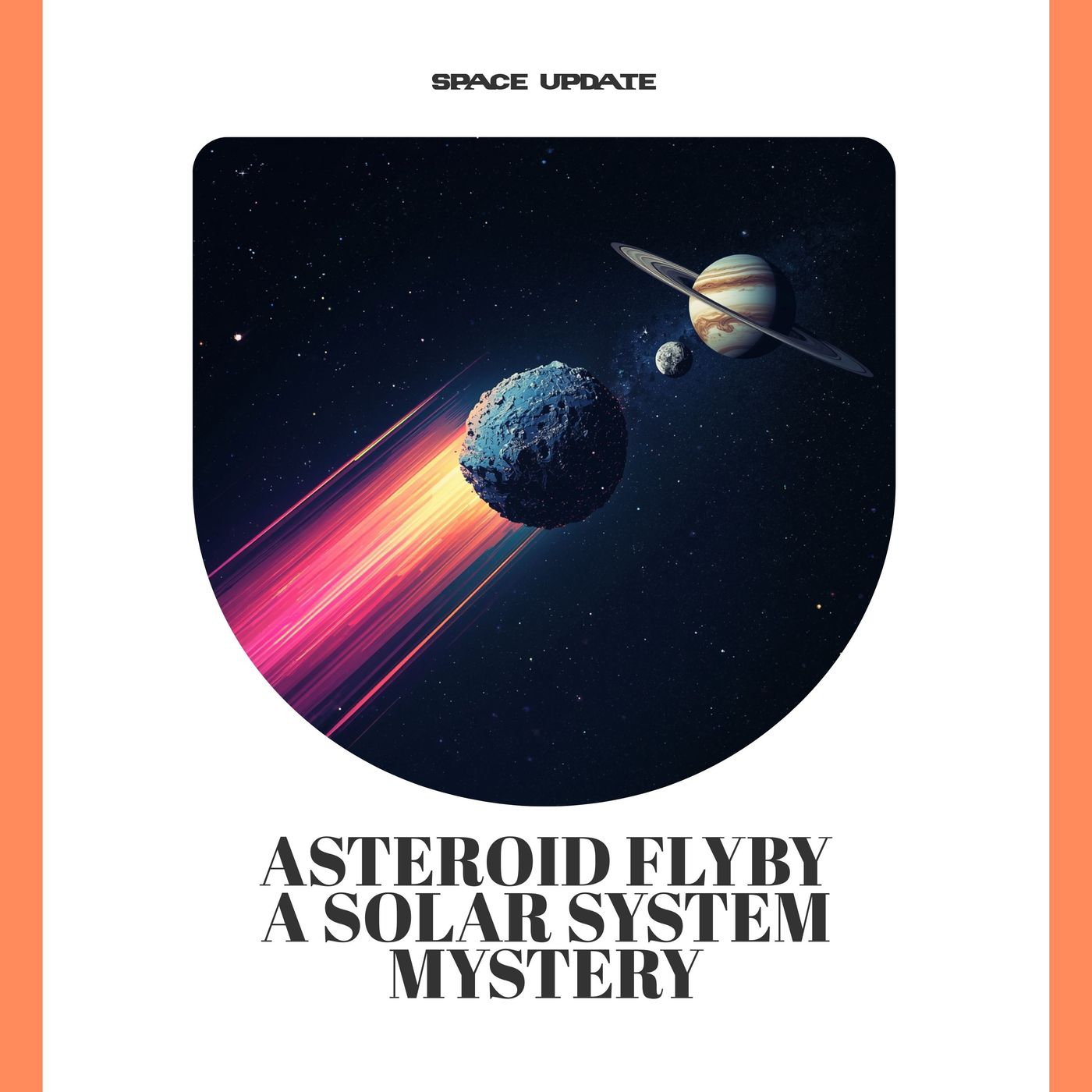
- Close Encounter with Asteroid 2025 QD8: Astronomers have identified a newly discovered asteroid, designated 2025 QD8, which is set to make a close flyby of Earth on September 3rd. Passing within one lunar distance, approximately 135,465 miles, this asteroid, comparable in size to a commercial jet, presents a fascinating opportunity for observation, with a free livestream available via the Virtual Telescope Project.
- UK Space Agency's Major Reorganisation: The UK Space Agency is merging with the Department for Science, Innovation and Technology, a move aimed at streamlining operations and cutting costs. However, concerns arise regarding the agency's influence within the European Space Agency and the potential impact on the UK's space ambitions amidst shifting priorities.
- SpaceX's Record Launch Week: SpaceX is set for an extraordinary week with five Falcon 9 launches planned, primarily focused on deploying new Starlink satellites. This week will also mark the 200th orbital launch attempt of 2025, highlighting a remarkable increase in global access to space.
- Unraveling Solar Mysteries: The ESA's Solar Orbiter has made significant strides in understanding the origins of solar energetic electrons. By distinguishing between impulsive bursts and gradual events linked to coronal mass ejections, scientists can enhance predictions of space weather and better protect technology and astronauts in orbit.
- For more cosmic updates, visit our website at astronomydaily.io. Join our community on social media by searching for #AstroDailyPod on Facebook, X, YouTube Music, TikTok, and our new Instagram account! Don’t forget to subscribe to the podcast on Apple Podcasts, Spotify, iHeartRadio, or wherever you get your podcasts.
- Thank you for tuning in. This is Avery and Anna signing off. Until next time, keep looking up and keep your eyes on the stars.
Asteroid Discovery
[NASA](https://www.nasa.gov/)
UK Space Agency Updates
[UK Government](https://www.gov.uk/government/organisations/uk-space-agency)
SpaceX Launch Schedule
[SpaceX](https://www.spacex.com/)
Solar Orbiter Findings
[ESA](https://www.esa.int/)
Astronomy Daily
[Astronomy Daily](http://www.astronomydaily.io/)
Become a supporter of this podcast: https://www.spreaker.com/podcast/astronomy-daily-space-news-updates--5648921/support.
Sponsor Details:
Ensure your online privacy by using NordVPN. To get our special listener deal and save a lot of money, visit www.bitesz.com/nordvpn. You'll be glad you did!
Sponsor Details:
Ensure your online privacy by using NordVPN. To get our special listener deal and save a lot of money, visit www.astronomydaily.io/nordvpn. You'll be glad you did!
Get the best secure and private email on the planet. Stop your Government, google and who knows who else spying on every email you write. Do what we did and use...
Avery: Welcome space enthusiasts to Astronomy Daily, the podcast that brings the wonders of the cosmos down to Earth every single day. I'm your host, Avery. Anna: And I'm your other host, Anna. Um, it's great to be with you. We have a truly packed show today covering a wide spectrum of space news. We'll be looking at a recently discovered asteroid making a very close pass by Earth. Avery: We'll also dive into a major political shakeup for the UK Space Agency, see just how busy SpaceX plans to be this week, and unravel a long standing mystery about the sun's fastest particles.
Anna: It's a lot to cover, so let's jump right in. Avery, why don't you start us off with our celestial visitor? Avery: My pleasure. So get this. Astronomers have spotted a new asteroid designated 2025 QD8, and it's set for a close flyby on September 3rd. That's tomorrow. When they say close, they really mean it. In cosmic terms at least. Anna: And how close are we talking? Avery: It's expected to pass within what's known as one lunar distance. For our listeners, that's roughly 135,465 miles, or 218,009 kilometres.
Essentially the same distance as our own moon. Anna: That is quite close for an object we've only just discovered. It really highlights how many of these near Earth objects are still out there waiting to be found. But let's be clear, this one poses absolutely no risk to us. Avery: Absolutely zero risk. But it's still pretty cool. They say it's about the size of a commercial jet with an estimated diameter between, uh, 55 and 124ft. Just big enough to make you pay attention. Anna: It certainly is.
And for those who want to do more than just pay attention, there's a great opportunity to see it. Avery: That's right. The virtual telescope project, which does fantastic work, will be hosting a free livestream of the Flyby on their YouTube channel. It's a wonderful way for the public to connect with these events. Anna: I agree. It turns an abstract piece of news into a real observable event. A great reminder of the dynamic solar system we live in. Alright, let's bring our focus back down to Earth for our next story, which involves a significant shift in space policy.
The government in the United Kingdom has announced that its space agency, the uksa, is set to be merged with a larger government department. Avery: That sounds like a pretty big deal. Which department is absorbing it? Anna: It will become part of the Department for Science, Innovation and Technology, with the change expected to be complete by April. The stated reason is part of a wider initiative to cut government expenditure and streamline operations. Avery: Makes sense from a budget perspective.
But usually these moves have other factors at play, don't they? Anna: That's what insiders are suggesting. For some time, there have apparently been questions in government circles about UK SA's merit and its strategic direction. The perception among some was that the agency had become too isolated. Avery: Isolated in what way? Anna: The concern was that it was too focused on the goals and wishes of the European Space Agency, or esa, and perhaps not aligned enough with the direct needs of the UK government itself.
Avery: So, on one hand, you have people who see this as a sensible move to unify stakeholders and create a single, powerful voice for science and tech in the government. Anna: Exactly. But there is a very vocal other side to this argument. Many in the UK space industry fear this could seriously harm the nation's space ambitions. Avery: How so? Anna: The fear is that by losing its status as a standalone agency, the UK's Voice and Influence the within the European Space Agency, could be significantly weakened.
It's a delicate balance between domestic priorities and international collaboration, and many are worried this M merger tips the scales in the wrong direction. Avery: Well, while governments reorganise, the private sector just keeps launching. And no one is launching more than SpaceX. This week is another prime example, with an incredible five Falcon 9 launches on the manifest. Anna: That pace is just relentless. It's almost becoming routine, which is a testament to their operations. What's on the docket for these five flights?
Avery: The main focus is, as usual, Starlink four of the five missions are dedicated to lofting more satellites for their Internet constellation. We have Starlink Group 17.8, Group 1022, 1057 and 17.9. All told, that's over a hundred new satellites heading to orbit. Anna: And they're launching from both of their primary sites, I assume. Avery: You bet. They're keeping the pads warm at both Vandenberg in California and Cape Canaveral in Florida to keep up this tempo. The fifth launch is a dedicated mission for a customer.
Anna: Who are they launching for? Avery: It's the Nusantara 5 mission, which will place a powerful Indonesian telecommunications satellite into geostationary transfer orbit. It's another example of how SpaceX dominates the commercial launch market. Anna: And amidst all this activity, there's a pretty significant global milestone being reached this week. Avery: That's the really cool part. One of these five launches is expected to be the 200th orbital launch attempt of 2025 worldwide. We're not even through September and We've already hit 200 launches for the year.
Anna: It's simply mind boggling. When you think about where we were just a decade ago, it truly feels like a paradigm shift in our access to space. For our final story Today, let's journey 93 million miles away to our local star. Scientists using ESA's incredible Solar Orbiter spacecraft have solved a key mystery about the Sun's fastest, most energetic particles. Avery: I love a, uh, good solar mystery. I know the sun is constantly throwing things out into space, but what specific particles were they looking at?
Anna: They were focused on what are called solar energetic electrons, or sees. These are electrons that have been accelerated to near the speed of light. Tracing them back to their precise origin on the sun has been a major challenge for solar physicists. Avery: So what did the solar orbiter's unique perspective allow them to see? Anna: Its suite of instruments allowed it to confirm two distinct origins for these SE events. The first type is what they call impulsive bursts. These are short, intense events where electrons are fired out directly from the site of a solar flare.
Like a rifle shot. Avery: Okay, a rifle shot from a flare. What's the other type? Anna: The other is described as gradual. In this case, the electrons sort of surf a wave created by a much larger eruption called a coronal mass ejection, or cme. This is more like a giant tsunami of particles rolling through the solar system. Avery: A rifle versus a tsunami. That's a great analogy. Why is that distinction so critical? Anna: It all comes down to space weather. The research confirmed that while the flare events are intense, the CMEs, the tsunamis, carry a much larger number of high energy particles.
Overall, this makes them the far greater threat to our technology and to astronauts in space. Avery: So understanding the source helps us quantify the risk. Anna: Precisely. By knowing whether an event is impulsive or gradual, forecasters can make much more accurate predictions about the level of danger heading our way. So it's a huge step forward for protecting our assets and explorers in space. Avery: And that, unfortunately, is all the time we have for today's Astronomy Daily. We've covered a jet sized asteroid, a major policy shift for the uksa, a record setting launch week, and a solar tsunami.
Anna: It just goes to show that the universe is never standing still. There's always something new and fascinating to discover and discuss. Avery: We want to thank all of you for tuning in. Be sure to subscribe to Astronomy Bailey, wherever you get your podcast, so you never miss an episode from both of us here. Anna: Thank you for listening. Until next time, keep looking up and keep your eyes on the stars.

 Apple Podcasts
 Spotify
 Pocket Casts
 Castbox
 Overcast
 Podbean
 iHeartRadio
 Castro
 Goodpods
 Moon FM
 Podcast Addict
 Podcast Republic
 YouTube