In this episode
Astronomy Daily S05E127 | Monday, June 29, 2026 Hosts: Anna & Avery | astronomydaily.io | @AstroDailyPod In today's episode: RAD-BAARG — The Bow-and-Arrow Galaxy A citizen scientist scanning LOFAR radio telescope data spotted a galaxy like nothing seen in 25 years — RAD-BAARG stretches 1.8 million light-years and shows what may be the clearest radio signature of a giant cosmic bow shock ever observed. Published June 22 in Monthly Notices of the Royal Astronomical Society. Hayabusa2 Flyby — One Week Away Japan's Hayabusa2# spacecraft is set to fly past asteroid Torifune (2001 CC21) on July 5 at a distance of just 1–10 km — one of the closest asteroid encounters ever attempted. The spacecraft already delivered Ryugu samples to Earth in 2020. Mars Magmatic Systems — Oxford/Nature Astronomy A University of Oxford-led study published June 26 in Nature Astronomy reveals seismic evidence that Mars once hosted vast, Earth-like transcrustal magmatic systems spanning potentially thousands of kilometres — without plate tectonics. Based on NASA InSight seismic data. Skywatching — Strawberry Moon & Mercury Retrograde The full Strawberry Moon peaks at 23:58 UTC tonight in Sagittarius near the Teapot asterism. Mercury also begins retrograde motion today. Southern Hemisphere viewers have good conditions for lunar viewing in winter skies. ESA Juice & 3I/ATLAS — Five New Findings ESA has published early results from Juice's November 2025 observations of interstellar comet 3I/ATLAS. Key findings: 2,000 kg of water vapour per second at perihelion; comet behaviour resembling solar system comets; novel trajectory data from NavCam; and confirmation of Juice's instrument readiness for the Jupiter mission. NASA Artemis Audit — $5.9 Billion in Cancelled Contracts A NASA Inspector General memo finds the total value of cancelled Artemis programme hardware contracts reached $5.9 billion, reflecting cost increases and timeline extensions prior to programme restructuring. Artemis III lunar landing remains targeted for 2027.Become a supporter of this podcast: https://www.spreaker.com/podcast/astronomy-daily-latest-space-news--5648921/support.
Sponsor Details:
Ensure your online privacy by using NordVPN. To get our special listener deal and save a lot of money, visit www.astronomydaily.io/nordvpn. You'll be glad you did!
Get the best secure and private email on the planet. Stop your Government, google and who knows who else spying on every email you write. Do what we did and use ProtonMail. They beleive in privacy and there are no ads in their business model...yet they still provide a free forever service. Check them out and get out special deal at www.astronomydaily.io/protonmail
Become a supporter of Astronomy Daily by joining our Supporters Club. Commercial free episodes daily are only a click way... Click Here
This episode includes AI-generated content.
Anna: Hello and welcome to Astronomy Daily. I'm Anna. Avery: And I'm avery. It's Monday, June 29, and the universe has been absolutely refusing to take the weekend off. Anna: Tonight is the full strawberry moon and Mercury just went retrograde, so we have the sky watching angle covered. But there is so much more. Avery: A galaxy that baffled 25 years of professional expertise, spotted first by a citizen scientist. Uh, a Japanese spacecraft about to attempt one of the closest asteroid flybys in history.
And new evidence that Mars was geologically far more complex than anyone imagined. Anna: Plus, new data from ESA's Juice spacecraft that reveals what interstellar comet 3i Atlas was doing just days after it rounded the Sun. And a candid NASA audit that puts some very large numbers on the Artemis program's canceled hardware. Avery: It is a packed Monday. Stay with us. Anna: Our first story today is one of those discoveries that makes you stop and think about the sheer scale of the universe and also about who gets to discover it.
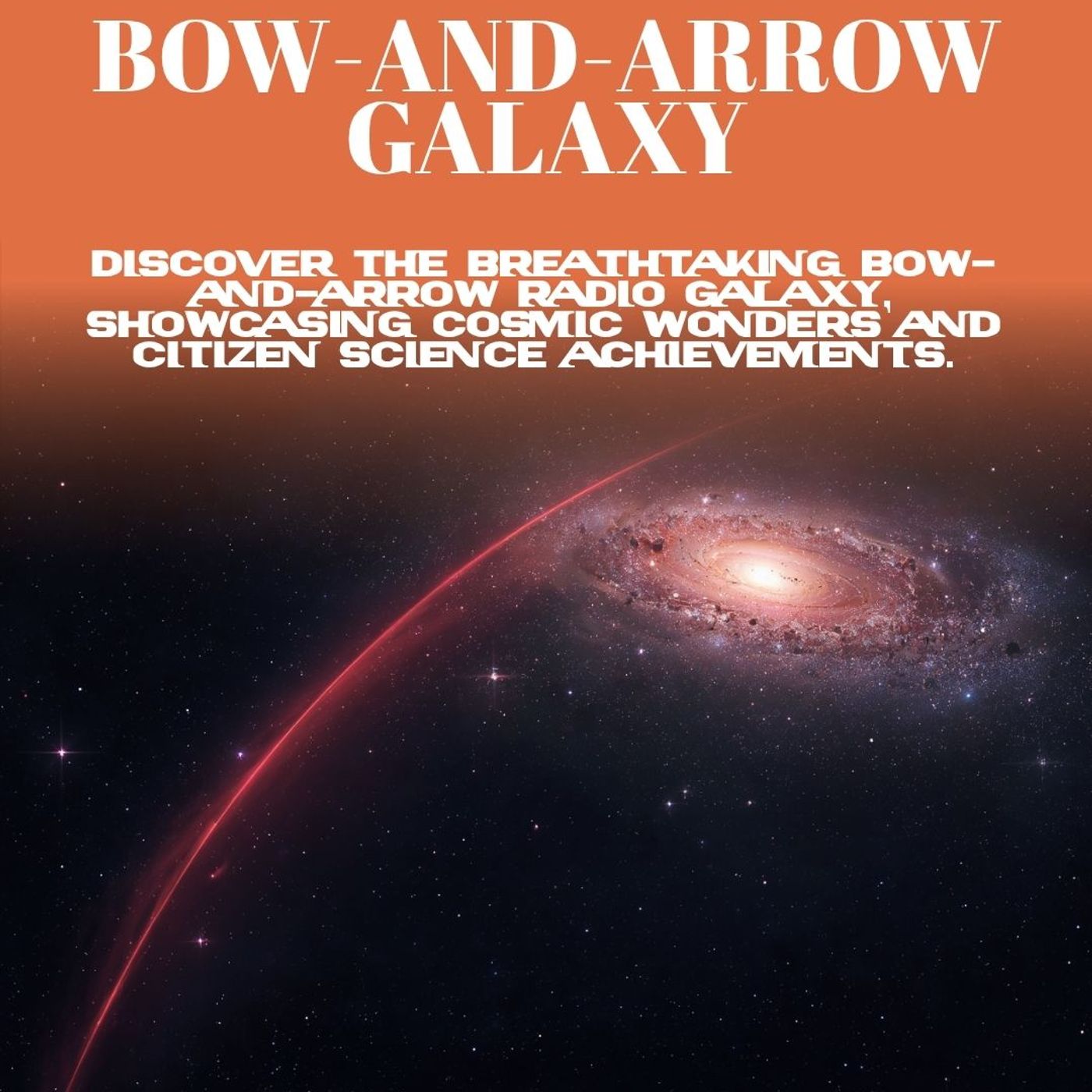
Avery: A citizen scientist, not a professional astronomer, not a research institute, was the first person to spot one of the most unusual radio galaxies ever recorded. And the lead researcher who followed up the find says it is unlike anything he has seen in 25 years of studying these objects. Anna: The object is called RAD Barg. That stands for radio bow and arrow, Radio Galaxy. And the name tells you almost everything because when you look at this thing in radio light, it genuinely looks like a drawn bow and arrow glowing in space.
Avery: The discovery was published on June 22 in the Monthly Notices of the Royal Astronomical Society, and it was made by an international team working with the RAD at Home Astronomy ah collaboratory in India. Uh, a citizen science program that gives volunteers access to telescope data to look for unusual features that professional surveys might miss. Anna: The volunteer who found it was scanning images from the LOFAR radio telescope, the Low Frequency Array based in the Netherlands, and flagged an asymmetric structure that simply didn't look like any known radio galaxy.
Avery: And when the scientists looked closer, they saw something remarkable. Radbarg stretches nearly 1.8 million light years across. For scale, our entire Milky way is about 100,000 light years wide. This structure is roughly 18 times that. Anna: What makes it so unusual is its shape. Most radio galaxies follow a familiar A supermassive black hole at the center fires two jets of charged particles outward in opposite directions, creating a symmetric dumbbell shaped structure. Rad Barg doesn't look like that at all.
Avery: Instead, one of the jets appears to have slammed into something, a vast front of compressed plasma, and lit it up in radiolight. That glowing arc, shaped like the curve of a bow, spans nearly 560 kiloparsecs in the radio data. Anna: On the opposite side, the other jet bends and twists into an S shaped structure with a faint offset tail. The leading explanation is a bow shock. The host galaxy of Radbarg appears to be falling supersonically into a nearby galaxy cluster, plowing through the thin hot gas that fills the space between galaxies.
Avery: And um, just like a supersonic aircraft, produces a shock wave in front of it, a galaxy moving faster than the speed of sound in that gas can compress and heat it, creating a giant shock front. Anna: The radio emitting plasma from Rad Barg appears to illuminate that shockwave, making visible something that astronomers have long predicted, but almost never directly observed in radio light. Avery: Lead author Dr. Ananda Hota of the University of Mumbai said the structure is unlike any radio galaxy he has seen in 25 years.
His co lead, Dr. Pratik Dabade of the national center for Nuclear Research in Poland noted that the complex multi halo environment makes this especially exciting. We're seeing gas flows infall and possible shocks reshaping radioplasma over millions of light years of space. And crucially, this discovery came directly from the citizen science community. The Data came from LOFAR's 2 Meter Sky Survey, whose third data release, covering more than 80% of the northern sky, came out earlier this year. Rad Barg shows what might be hiding in that massive dataset.
Anna: The team is hoping that AI and machine learning tools can now be applied to find similar systems. And the next generation Square Kilometer Observatory, currently under construction, will be able to survey the sky with even greater sensitivity. Rad Barg may turn out to be Avery: just the beginning, a triumph for citizen science and a reminder that the universe is still hiding things from us until an alert volunteer spots them from a hillside data center. Next up, Japan's Hayabusa2 spacecraft has been on an extended mission for several years now after it already delivered what many consider the most scientifically valuable asteroid sample ever returned to Earth.
And next Sunday, July 5th, it's about to attempt something extraordinary. Anna: A flyby of an asteroid called tori fune, designated 2001 CC21, at a closest approach distance of somewhere between 1 and 10 kilometers at a speed of 5.3 kilometers per second. That is roughly 19,000 kilometers per hour. And the spacecraft's cameras were not designed for this kind of encounter. Avery: For some context, Hayabusa2, launched in December 2014, traveled to the asteroid Rigu, deployed rovers and landers onto Its surface fired an impactor to create an artificial crater, collected samples from below the surface and returned that material to Earth in December 2020.
Five grams of Rigu, but an extraordinary five grams. Anna: After releasing this sample capsule over Australia, the spacecraft still had fuel remaining. Rather than decommission it, JAXA approved an extended mission, now called Hayabusa2, and redirected it toward two new targets. Tori Fune is the first. Avery: Jaxa Satoshi Tanaka presented the mission status at the 35th NASA Small Bodies Assessment Meeting on June 11, describing the Torifune flyby as one of the closest asteroid encounters ever attempted by a mission of this class.
Anna: What makes it so challenging is the geometry. At uh, that speed and that distance, the window of observation is extremely short. The spacecraft will sweep past in a matter of seconds. The navigation cameras have to be precisely aimed, the timing has to be right, and the whole sequence has to execute autonomously because there is no time for ground control corrections. Avery: Tori fune is roughly 450 meters wide, a mid sized near Earth asteroid. Scientists believe it may be an L type asteroid, potentially containing calcium aluminum inclusions, some of the oldest primitive material in the solar system.
But that classification is uncertain and the flyby data will help pin it down. Anna: After Terephone, Hayabusa2 continues on a long arc toward its second target, asteroid 1998 KY26, a fast spinning micro asteroid just 30 meters across, with which it will rendezvous in July 2031. That will be the first ever close encounter with an asteroid of that size. Avery: But for now, next Sunday, July 5, one of the closest asteroid flybys ever attempted. A spacecraft that was never designed to do this. Doing it anyway.
Hayabusa2 has already exceeded its mission objectives once. It is about to do it again. Anna: Mars is often described as a dead planet. No plate tectonics, no active volcanism, a frozen core, a thin atmosphere. And for a long time, scientists assumed its geological history was correspondingly simple. Isolated volcanoes, simple basaltic crust. Nothing like the complex churning geology that made Earth habitable. Avery: A new study published on June 26 in the journal Nature Astronomy suggests that picture is fundamentally wrong.
Researchers from the University of Oxford, in collaboration with the University of Bristol, have found seismic evidence that Mars once hosted enormous Earth like magmatic systems spread across potentially hundreds or even thousands of kilometers of its northern hemisphere. Anna: The key is a boundary layer about 24 km below the Martian surface. Scientists already knew this boundary existed. What they didn't know was what it meant. The new analysis, based on seismic data from NASA's InSight mission, which recorded marsquakes and meteoroid impacts before being retired suggests this boundary marks a zone of melt depleted rock, rock that has already had magma extracted from it.
Avery: That's a signature of what geologists call transcrustal magmatism, a process where molten rock rises from the mantle, pools within the crust, differentiates, gets mixed and reprocessed, and slowly builds up complex crustal material over millions of years. On Earth, this process is driven by plate tectonics. The key finding here is that Mars appears to have done it without plate tectonics. Anna: Bead author Dr. Tobramori Mackay Champion put it traditionally, complex silica rich crust was thought to require plate tectonics and subduction.
This study suggests Mars can build complex crust through long lived transcrustal magmatic systems where mantle derived magma is stored, differentiated, mixed and assimilated within the crust. Plate recycling is not the only route. Avery: Professor John Wade of Oxford added a striking application. If Mars could develop this kind of complex crust without plate tectonics, then maybe the conditions needed for habitability can emerge on more planets than we realized, including those we've previously dismissed because of their apparent lack of tectonic activity.
Anna: There are also more practical implications. Systems like these on Earth are known to generate large mineral and metal deposits. The study suggests Mars may hold significantly more near surface mineral wealth than previously assumed, something that could matter greatly for any future human presence on the Red Planet. Avery: Mars is not a simple, geologically boring world. It just did its geology differently. And the universe, it turns out, has more than one way to build a complex planet. Time for your sky watching update.
And tonight is genuinely worth stepping out for because the full Strawberry Moon reaches its peak at ah, 2358 UTC. That that's just before midnight in Universal Time, which means most of our listeners will see it at its fullest either late tonight or early tomorrow morning, depending on your time zone. Anna: The Strawberry Moon gets its name from early Native American traditions. It marked the time of year when wild strawberries began to ripen. It's also been called the Rose Moon and the Honeymoon, giving us the phrase honeymoon since June was historically considered an auspicious time for weddings.
Avery: Tonight the moon rises in Sagittarius near the well known teapot asterism. For observers across Australia and New Zealand, the teapot will be reasonably well placed in the northern sky. After dark, the moon will be brilliantly bright, so fainter stars will wash out. But the bright stars of Sagittarius should still be visible around it. Anna: One thing to note for our Southern Hemisphere listeners, in winter, the Full Moon rises higher in the sky for you, which actually gives you better viewing conditions for this kind of event than our friends in the Northern Hemisphere get during their summer full Moons.
Avery: And there's an astronomical event today that you won't actually be able to see with your eyes, but is worth knowing about. Mercury begins its retrograde motion today, June 29th. This is the apparent reversal of Mercury's movement against the background stars caused by the geometry of Mercury's faster orbit relative to Earth. Anna: You won't see Mercury move backward in real time. It's far too subtle for that. But if you track its position night by night over the coming weeks, you'll see it trace a small loop against the background stars before resuming its normal eastward motion.
It's a lovely demonstration of orbital mechanics if you have the patience to follow it. Avery: Mercury is currently a challenging target anyway, sitting low in the western sky after sunset and getting lower. But Venus is blazingly bright and easy to find in the west after dark. And the crescent Moon earlier in the month created some lovely, lovely conjunctions that astrophotographers took full advantage of. Anna: Tonight, though, the Strawberry Moon is the star of the show. Get outside, look up, and enjoy it.
Time now to revisit an old friend. We've covered interstellar comet 3I ATLs extensively on this show from its discovery last July through its perihelion pass, its chemistry, its ancient isotopic signature. But the data from that encounter is still coming in. And this week, ESA published the results from one of the most unusual scientific opportunities of the entire 3i ATLAS mission. Avery: ESA's JUICE spacecraft, the Jupiter Icy Moons Explorer, was in the right place at the right time with the right instruments.
In November 2025, just days after 3i ATLs made its closest approach to the Sun, JUICE turned 5 of its science instruments towards the comet. The data took months to arrive on Earth, but it has now been analyzed, and the early results are fascinating. Anna: Here are five things Juice revealed. First, the water output. On November 2, 2025, just four days after perihelion, JUICE's Magis spectrometer detected 3i ATLAS was releasing approximately 2,000 kilograms of water vapor every single second. That is equivalent to filling 70 Olympic swimming pools every day.
Avery: Second, um. Despite its interstellar origin, three I ATLs behaved like a typical solar system comet during its close approach to the sun. JUICE's Janus camera showed a coma and activity consistent with what you would expect from a comet formed right here in our own system. The universe appears to make comets using broadly Similar rules. Anna: Third, JUICE's navigation camera was pressed into unexpected scientific service. NAVCAM is designed to help Juice navigate around Jupiter's icy moons when it arrives in 2031.
But during the Three Eye Atlas encounter, it captured images from a, uh, novel vantage point, different from Earth based telescopes. At times when the comet wasn't even visible from Earth. That gave ESA's planetary defense team a better fix on the comet's trajectory than they could have obtained. Avery: Fourth, the encounter revealed how well prepared JUICE's instruments actually are for their primary mission. The same tools built to study Europa, Ganymede and Callisto, icy moons with complex chemistry, turned out to be remarkably well matched to studying an interstellar icy comet.
The team says the data has made them more excited than ever about what Juice will find at Jupiter in the2030s. Anna: And fifth, the overall picture emerging from JUICE, combined with the JWST isotopic data we discussed last week, paints a, uh, consistent portrait. Three I ATLS is very old. Formed possibly 10 to 12 billion years ago in a stellar system that predates our Sun. It spent billions of years in the cold darkness of its home system before being ejected on a journey that would eventually bring it briefly through ours.
Avery: Juice itself has one more Earth gravity assist coming in September 2026, when its instruments will be switched on again before the long cruise to Jupiter. The common encounter was a remarkable bonus for a mission with a very different primary purpose. Anna: 3i ATLAS is gone, heading out of the solar system, never to return. But it has left behind a remarkable scientific legacy. Avery: Our final story today takes us from the science of space to the economics of it, and it involves some large numbers.
Anna: A memo from NASA's Office of Inspector General published this past week has found that the total value of NASA hardware contracts that were canceled as part of the Artemis Program restructuring came to $5.9 billion. 5.9 billion. Avery: Now, for context, the Artemis program is NASA's flagship effort to return humans to the moon. With Artemis 2 having already carried four astronauts around the moon earlier this year, the program has been hugely ambitious, hugely expensive, and has gone through significant changes, particularly around which contractors build which components and what the architecture looks like.
Anna: The Inspector General's review found that canceled hardware contracts included items that had experienced cost increases and extended timelines before being cut. The audit highlights the scale of the program's evolution and the real financial cost of changing direction in large scale space programs. Avery: To be clear, this doesn't mean $5.9 billion was simply lost. Some of that work will have produced useful data technical knowledge or partially completed hardware. And program restructuring of this kind is not unusual in aerospace development.
The Space Launch System itself went through years of design evolution before its first flight. Anna: But it is a significant figure, and it arrives at a moment when NASA is navigating a complex budget environment and Preparing for Artemis 4, the first crewed lunar landing currently targeting 2028. Avery: The ODA is a reminder that returning to the Moon is not just a scientific and engineering challenge. It is also a program management challenge, one that involves billions of dollars, hundreds of contractors, and years of decision making under conditions of political, technical and financial uncertainty.
Anna: The numbers are sobering, but the program continues, and the end goal humans on the moon and eventually beyond, remains one of the most ambitious endeavors in human history. And that is a wrap on Astronomy daily for Monday, June 29th. What a lineup. A galaxy shaped like a bow and arrow, a spacecraft hurtling toward an asteroid, a new picture of ancient Mars, tonight's full strawberry moon, the last data from our interstellar visitor, and a candid look at the cost of going back to the moon.
Avery: The universe never disappoints. And, um, neither do you, our listeners. Thank you for joining us. Anna: If you're enjoying Astronomy Daily, please subscribe wherever you're listening and leave us a review. It genuinely helps more people find the show. Avery: Until tomorrow. Clear skies. Anna: Clear skies, everyone.


 Apple Podcasts
 Spotify
 Pocket Casts
 Castbox
 Overcast
 Podbean
 iHeartRadio
 Castro
 Goodpods
 Moon FM
 Podcast Addict
 Podcast Republic
 YouTube