
Astronauts Homeward Bound, Sun's Secrets Unveiled, and Uranus's Heat Revelation
In this episode
- Axiom Space's AX4 Mission Returns: Join us as we check-in on the return of the AX4 crew from the International Space Station. Led by Commentaor Peggy Whitson, the crew conducted over 60 experiments during their extended stay, making history as the first astronauts from India, Poland, and Hungary to visit the ISS. We discuss their journey aboard the SpaceX Crew Dragon capsule, and the implications of their research for future missions.
- - Parker Solar Probe's Groundbreaking Discoveries: Delve into the latest stunning images from NASA's Parker Solar Probe, which recently flew closer to the Sun than any spacecraft before. Learn how these insights into solar weather and the Sun's atmosphere are reshaping our understanding of space weather threats and improving safety for astronauts and technology on Earth.
- - Global Launch Roundup: Catch up on a whirlwind week of space launches, including China's successful cargo resupply mission to the Tiangong Space Station, and Gilmour Space's maiden launch attempt of its Eris rocket from Australia. We also highlight SpaceX's busy schedule, featuring the launch of Starlink satellites and Amazon's Kuiper satellites.
- - Surprising Findings on Uranus: Discover new research suggesting that Uranus emits more internal heat than it receives from the Sun, challenging previous assumptions made by Voyager 2. This revelation could redefine our understanding of Uranus's internal structure and evolution, bolstering the case for future exploration missions.
- For more cosmic updates, visit our website at astronomydaily.io. Join our community on social media by searching for #AstroDailyPod on Facebook, X, YouTube Music Music, TikTok, and our new Instagram account! Don’t forget to subscribe to the podcast on Apple Podcasts, Spotify, iHeartRadio, or wherever you get your podcasts.
- Thank you for tuning in. This is Anna signing off. Until next time, keep looking up and stay curious about the wonders of our universe.
Axiom Space AX4 Mission
[Axiom Space](https://www.axiomspace.com/)
Parker Solar Probe
[NASA](https://www.nasa.gov/content/parker-solar-probe)
Global Launches
[SpaceX](https://www.spacex.com/)
Uranus Research
[University of Houston](https://www.uh.edu/)
Astronomy Daily
[Astronomy Daily](http://www.astronomydaily.io/)
Become a supporter of this podcast: https://www.spreaker.com/podcast/astronomy-daily-space-news-updates--5648921/support.
Sponsor Details:
Ensure your online privacy by using NordVPN. To get our special listener deal and save a lot of money, visit www.astronomydaily.io/nordvpn. You'll be glad you did!
Get the best secure and private email on the planet. Stop your Government, google and who knows who else spying on every email you write. Do what we did and use ProtonMail. They beleive in privacy and there are no ads in their business model...yet they still provide a free forever service. Check them out and get out special deal at <a...
Anna: Welcome to Astronomy Daily, your daily dose of cosmic updates and celestial wonders. I'm your host, Anna, and I'm thrilled to dive into some truly captivating space news with you today. First, we'll be looking at the return trip of private astronauts from the International Space Station after an extended stay highlighting their incredible work and a new splashdown location. Then we'll zoom in on our very own star, the sun, as NASA's Parker Solar Probe sends back the closest ever images, revealing groundbreaking insights into solar weather.
Our journey continues with a global launch roundup featuring a busy week for space agencies worldwide, including cargo resupply missions, maiden rocket flights and a flurry of Internet satellite deployments. And finally, we'll uncover a surprising new discovery about the distant ice giant Uranus that might just rewrite its planetary history and bolster the case for a future mission. So buckle up because there's a lot to explore. We kick things off today with news from above our heads as the four intrepid astronauts of Axiom Space's latest private mission, AX4, have successfully concluded their stay aboard the International Space Station and are, uh, currently headed home.
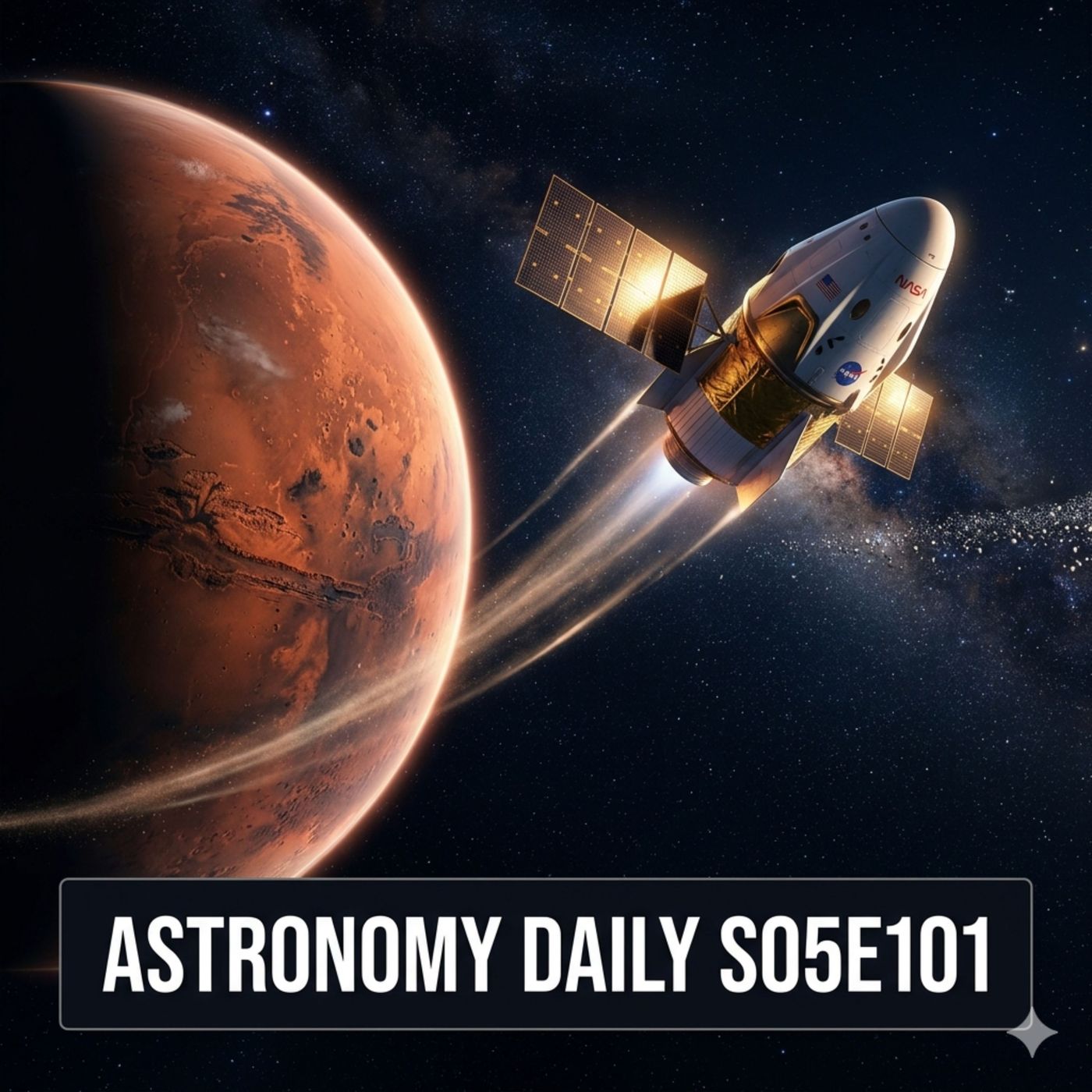
Their SpaceX Crew Dragon capsule, aptly named Grace, undocked from the ISS this morning, July 14, marking the final leg of their journey back to Earth. The undocking happened precisely at 7:15am EDT. Grace then gracefully maneuvered away from the orbital laboratory which had been the AX4 crew's home for the past two and a half weeks. This was actually a bit longer than their originally planned two week stay, giving them even more time to complete their extensive research. Leading the AX4 mission was Commander Peggy Whitson, a former NASA astronaut and now Axiom's Director of Human Spaceflight.
As Grace cleared the isss safety keep out sphere, Whitson transmitted a heartfelt message saying Space Station grace, the AX4 crew wants to thank you very much for your support. You guys are amazing. This mission marks Whitson's fifth trip to orbit, pushing her impressive record for most cumulative days in space by an American to an incredible 695 days. Her crewmates included pilot Shubanshu Shuks Shukla and mission specialists Slawas Suave, Uznansky Wisniewski and Tibor Kapu. What's particularly exciting is that this was the first space flight for Shucks, Suave and Kapu.
And they also made history as the first citizens of India, Poland and Hungary respectively to launch on a mission to the International Space Station. Throughout their time in microgravity, the AX4 crew undertook more than 60 experiments and technology demonstrations with contributions from a remarkable 31 different nations. They also participated in numerous public outreach events, setting a new record for Axiom as the company continues to refine its orbital operations. Launched aboard a SpaceX Falcon 9 rocket from NASA's storied Launch Complex 39A in Florida on June 26, the crew spent just over a day catching up to the International Space Station after their extended mission.
The departure procedures began early this morning with the crew entering Grace and closing the hatch. Now Grace and its crew are on a 22.5 hour trajectory, set to splash down in the Pacific Ocean off the coast of California early on Tuesday, Eastern Daylight Time. This will be a notable event as it's only SpaceX's second West coast crew recovery. Following the Crew 9 ISS mission in March, SpaceX has made a permanent shift to Pacific Ocean recoveries instead of the Atlantic or Gulf, a uh change driven by instances of debris from Dragon's trunk surviving atmospheric reentry and crashing back to Earth.
This new re entry path significantly minimizes the chances of such debris causing any damage or injury, prioritizing safety for everyone. Now let's turn our gaze to our closest star, the sun, where NASA's Parker Solar Probe continues to redefine our understanding. Understanding this incredible spacecraft is certainly no stranger to breaking records. On December 24, 2024, Parker made history by flying closer to the sun than any spacecraft ever, reaching a mere 3.8 million miles from the solar surface.
In doing so, it entered the outermost layer of the Sun's atmosphere, the corona. During this daring flyby, it also broke its own record as the fastest human made object, soaring at an astonishing 430,000 miles per hour. Recently, NASA released some truly remarkable video footage captured during this historic flyby, offering us the closest views of the sun ever recorded. These groundbreaking images were captured by Parker's Wide Field Imager for Solar Probe or Wispiar, revealing a uh, never before seen perspective of the Sun's corona and the solar winds shortly after they're released from it.
As Nikki Fox, Associate Administrator for the Science Mission Directorate at NASA Headquarters, noted, Parker Solar Probe has once again transported us into the dynamic atmosphere of our closest star. She emphasized the incredible advantage of witnessing where space weather threats to Earth begin with our eyes, not just with models. This new data is set to vastly improve our space weather predictions, enhancing the safety of our astronauts and the protection of our vital technology both on Earth and throughout the solar system.
WISPR's images have unveiled an important boundary within the Sun's atmosphere known as the heliospheric current sheet, where the Sun's magnetic field Dramatically shifts direction from north to south. Even more impressively, it captured for the first time in high resolution collisions between multiple coronal mass ejections, or CMEs. These CMEs are major drivers of space weather and are crucial for understanding risks to astronauts and Earth based technology like power grids and communication satellites.
Angelus Vorlidas, the Whisper instrument scientist, explained that in these images, we're seeing the CMEs basically piling up on top of one another. We're using this to figure out how the CMEs merge together. Before the Parker Solar Probe, NASA and its international partners could only study solar wind from a distance. That's why Parker has been instrumental in bridging key knowledge gaps. It identified the widespread presence of switchbacks, which are zigzagging magnetic field patterns Even at distances of around 14.7 million miles from the sun, linking them directly to the origins of one of the two main types of solar wind.
Closer in, at just 8 million miles, Parker revealed that the boundary of the Sun's corona Is far more uneven and complex Than previously imagined. But the probe's discoveries didn't stop there. The big unknown has always been how solar wind is generated and how it manages to escape the Sun's immense gravitational pull. Noor Rawafi, the project scientist for Parker Solar Probe, Described understanding this continuous flow of particles, especially the slow solar wind, as a major challenge, Particularly given the diversity in the properties of these streams.
However, thanks to Parker Solar Probe, scientists are closer than ever to uncovering their origins and how they evolve. Prior to Parker Solar Probe, distant observations suggested there were two varieties of slow solar wind differentiated by the orientation or variability of their magnetic fields. One type, called alphenic, Exhibits small scale switchbacks, While the second, non alphenic, does not. As it spiraled closer to the Sun, Parker confirmed the existence of both types. Its close up views are also helping scientists distinguish the origins of these two unique types.
It's believed that the non alvenic wind May emerge From features called helmet streamers, Large loops connecting active regions where some particles can heat up enough to escape. While the alphenic wind might originate near coronal holes, which are dark, cooler regions in the corona. As Adam Sabo, Parker Solar Probe mission scientist, put it in we don't have a final consensus yet, but we have a whole lot of new intriguing data. So how does the Parker Solar Probe Manage to endure such extreme conditions?
From the freezing cold of deep space to the intense heat near the Sun? A, uh, key factor in its survival lies in the fundamental difference between temperature and heat. While the space near the sun can reach temperatures of several million degrees, this doesn't necessarily mean there's a lot of heat transferred. This is because the Sun's corona is incredibly thin, meaning there are far fewer particles. Even though individual particles in the corona are exceptionally hot, their scarcity means the probe doesn't receive much actual heat.
NASA scientists explain that while the probe travels through space with temperatures of several million degrees, the surface of its heat shield facing the sun will only be heated to about 2500°F, or roughly 1400°C. These temperatures are, of course, still incredibly hot, which makes its robust heat shield, the Thermal Protection System, or tps, absolutely essential. This shield is crafted from a carbon composite foam sandwiched between two carbon plates. Carbon is an ideal material for this purpose because it is both remarkably lightweight and capable of withstanding extremely high temperatures without melting.
Tested to withstand up to 3,000 degrees Fahrenheit, or 1,650 degrees Celsius, the TPS can handle any heat the sun sends its way, keeping almost all the probe's instrumentation safe. Its unique structure enables it to endure intense heat while minimizing weight, a crucial factor for a spacecraft designed to travel at such extreme speeds. Furthermore, the outer surface of the TPS is coated with a white ceramic paint designed to reflect as much solar energy as possible and further reduce the amount of heat absorbed.
Next, let's look at this week's launch schedule. And this week has certainly been a whirlwind in the world of space launches, with multiple missions lifting off from sites across the globe. First, from China, their latest cargo supply mission to the Tiangong Space Station successfully lifted off The Chang Geng 7 rocket. Launched the Tianzhou 9 cargo vehicle from the Wencheng space launch site on Monday, July 14. This mission brings essential supplies for the Shenzhou 20 crew, including food, life support, scientific experiments, and propellants.
Notably, it also delivered two upgraded Fei Shen extravehicular activity suits designed for extensive use. Tianzhou 9 is expected to spend six to seven months at the station carrying a substantial 7,400kg of cargo, showcasing China's robust orbital resupply capabilities. Meanwhile, a significant milestone is on the horizon for Australia. Gilmour Space is gearing up to try again for its second attempt at the maiden launch of its Eris small satellite rocket this Wednesday, July 16, from the Bowen Orbital Spaceport.
This pivotal launch follows a previous stand down in May due to an unexpected power surge. Now mitigated, this three stage Eris launcher, proudly Australian made, is poised to become the very first orbital launch from from Australian soil performed by a sovereign built vehicle. Standing at 25 meters tall, Eris can carry payloads of up to 215 kilograms to a 500 kilometer Sun Synchronous Orbit. Its first stage uses unique hybrid Sirius engines and a successful orbital launch would also mark a historic first for a hybrid rocket design globally.
Gilmour Space recently partnered with Tokyo based Space bd, opening up opportunities for Japanese and global satellite customers. And Speaking of busy, SpaceX continues its relentless pace with a packed schedule of launches, predominantly expanding Internet satellite constellations earlier this week, a Falcon 9 rocket launched 26 Starlink VTU mini Internet satellites into low Earth orbit from Vandenberg, California. This particular launch was significant as it marked the 150th consecutive successful mission for a Falcon rocket since an anomaly back in July 2024.
A truly remarkable streak. Looking ahead, SpaceX is also set to launch its very first contracted batch of Amazon's Kuiper satellites this Wednesday, July 16th from Cape Canaveral in Florida. Project Kuiper is Amazon's direct competitor to Starlink, aiming to build its own massive Internet constellation. This mission will carry at least 20 of these crucial satellites. Amazon faces ambitious deadlines, needing to launch its full constellation of over 3200 satellites by July 2029, with half required by July 2026.
This requires numerous launches across various providers. To round out SpaceX's week. Two more Starlink launches are scheduled from Vandenberg. On Wednesday, July 16, another Falcon 9 will launch satellites into Starlink's Group 17 shell, flying into a highly inclined sun synchronous orbit. And finally, on Sunday, July 20, a third batch of Starlink satellites will launch from the same California pad, completing a remarkably busy period for SpaceX and further expanding global Internet access. Now let's turn our attention to one of our solar system's distant ice giants, Uranus, which is proving to be far more fascinating than we once thought.
New scientific findings have revealed something quite surprising about this enigmatic planet. It's emitting its own internal heat, even more than it receives from the sun. This discovery actually contradicts observations made by NASA's Voyager 2 probe nearly four decades ago. Back in 1986, Voyager 2 flew by Uranus, and its readings suggested the planet didn't have significant internal heat. However, new research led by Xinyue Yang of the University of Houston analyzed decades of spacecraft readings and computer models.
Their findings indicate that Uranus emits 12.5% more internal heat than it absorbs from solar radiation. While this is less than other outer planets like Jupiter, Saturn, and Neptune, which radiate 100% more heat than they receive, it's still a significant amount that challenges our previous understanding. It turns out we might have caught Uranus at a peculiar time during the Voyager 2 flyby, with some readings potentially skewed by a surge in solar weather. By combining archival data with advanced computer models, scientists now believe this internal heat suggests a completely different internal structure or evolutionary history for the planet.
For a long time, it was thought that Uranus formed closer to the sun before migrating outwards. These new findings are now calling that story into question. This fresh understanding of Uranus's internal processes could also significantly boost the case for future missions to the distant planet. The National Academy of Sciences had already flagged a mission concept called the Uranus Orbiter and Probe, or uop, as a high priority for the next decade. These new results showing how Uranus stores and loses heat not only deepen our understanding of this icy world, but also offer valuable insights into fundamental processes that shape planetary atmospheres, weather systems, and even climate systems.
It's groundbreaking science that could inform our studies of Earth's own changing climate. And that brings us to the end of another fascinating episode of Astronomy Daily. Thank you so much for tuning in and joining me on this cosmic exploration. I'm Anna, and it's been a pleasure sharing the latest in space and astronomy news with you. Remember, you can catch up on all the latest space and astronomy news and listen to all our back episodes by visiting our [email protected]. and don't forget to subscribe to the podcast on Apple podcasts, Spotify and YouTube Music or wherever you get your podcasts so you never miss an episode.
Until next time, keep looking up


 Apple Podcasts
 Spotify
 Pocket Casts
 Castbox
 Overcast
 Podbean
 iHeartRadio
 Castro
 Goodpods
 Moon FM
 Podcast Addict
 Podcast Republic
 YouTube