
In this episode
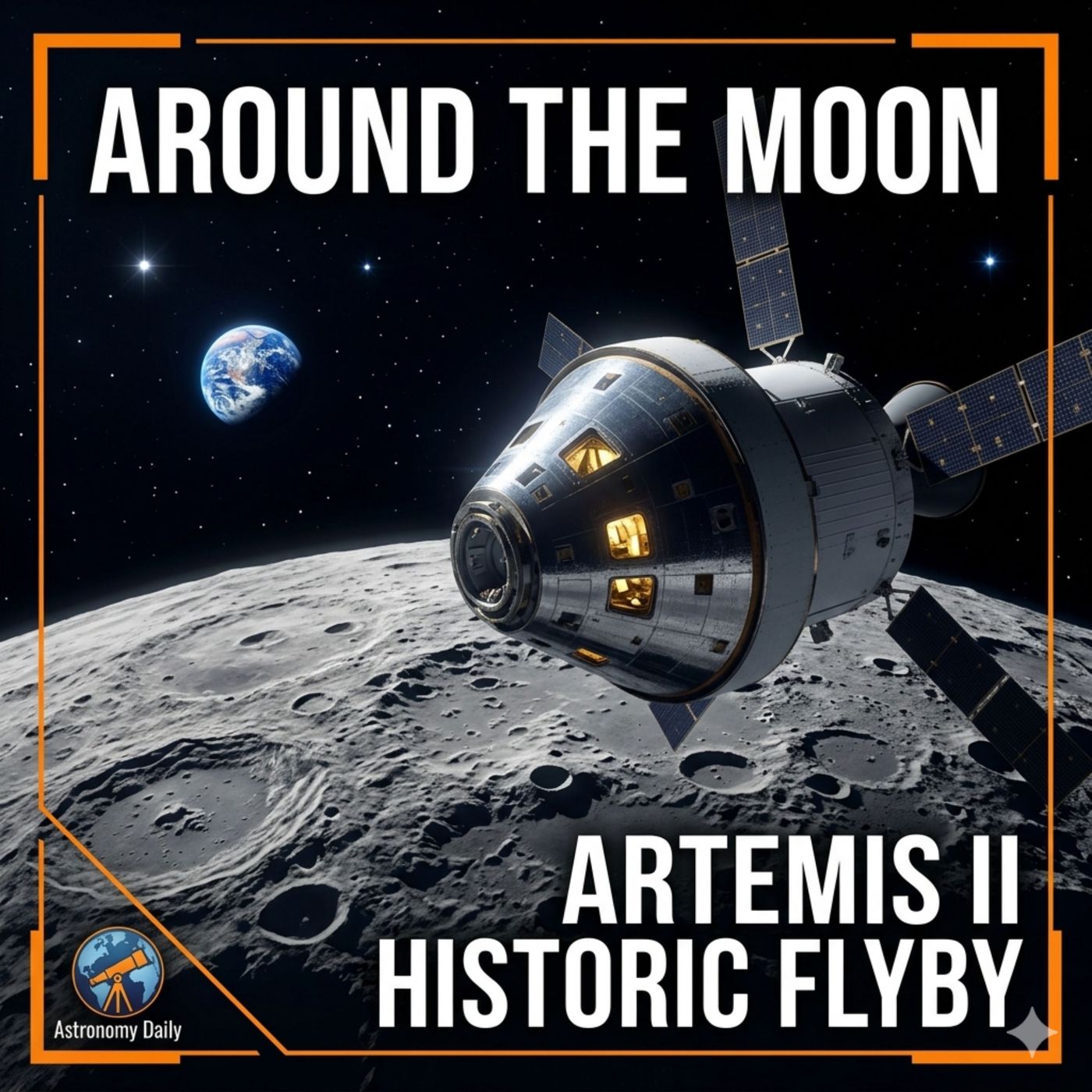
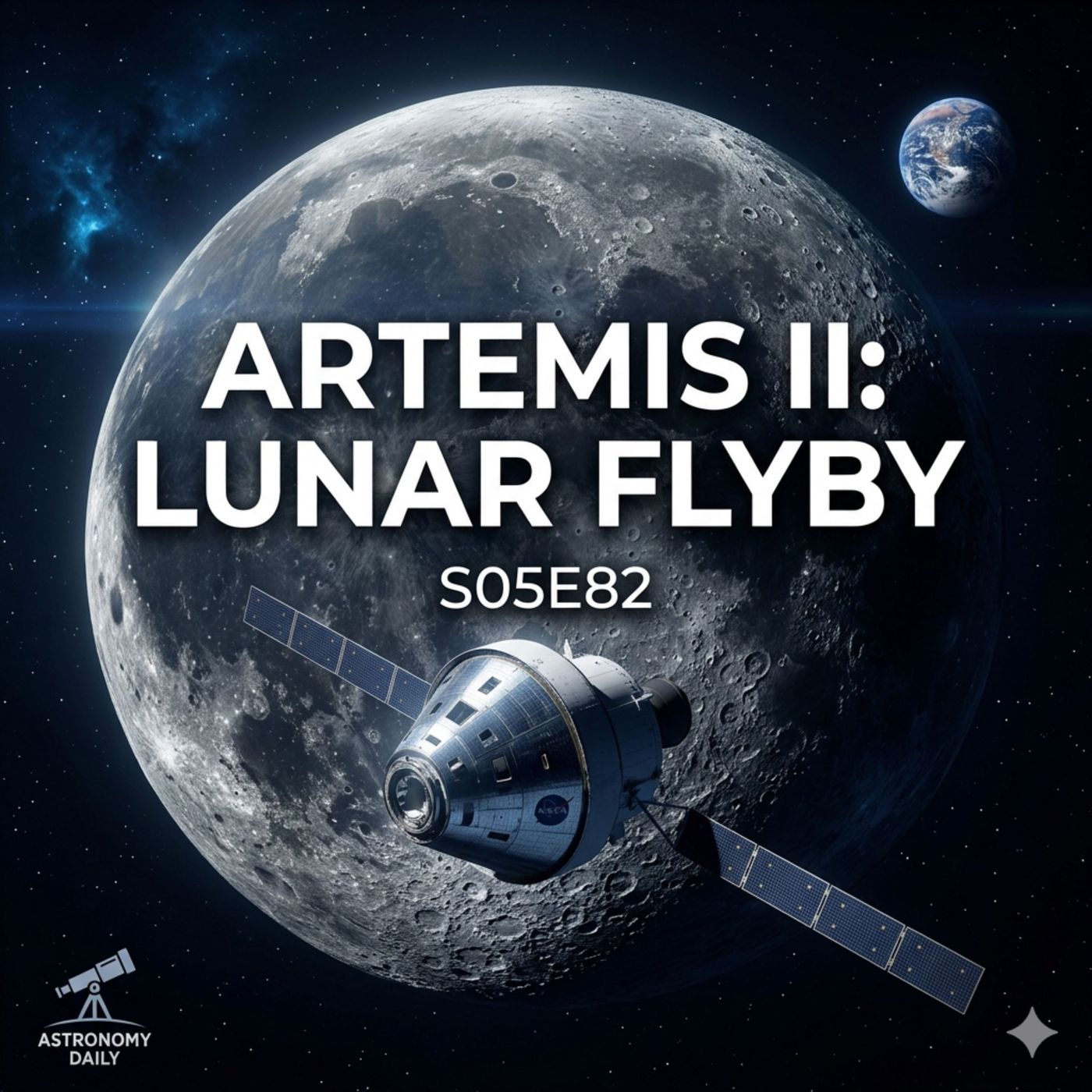
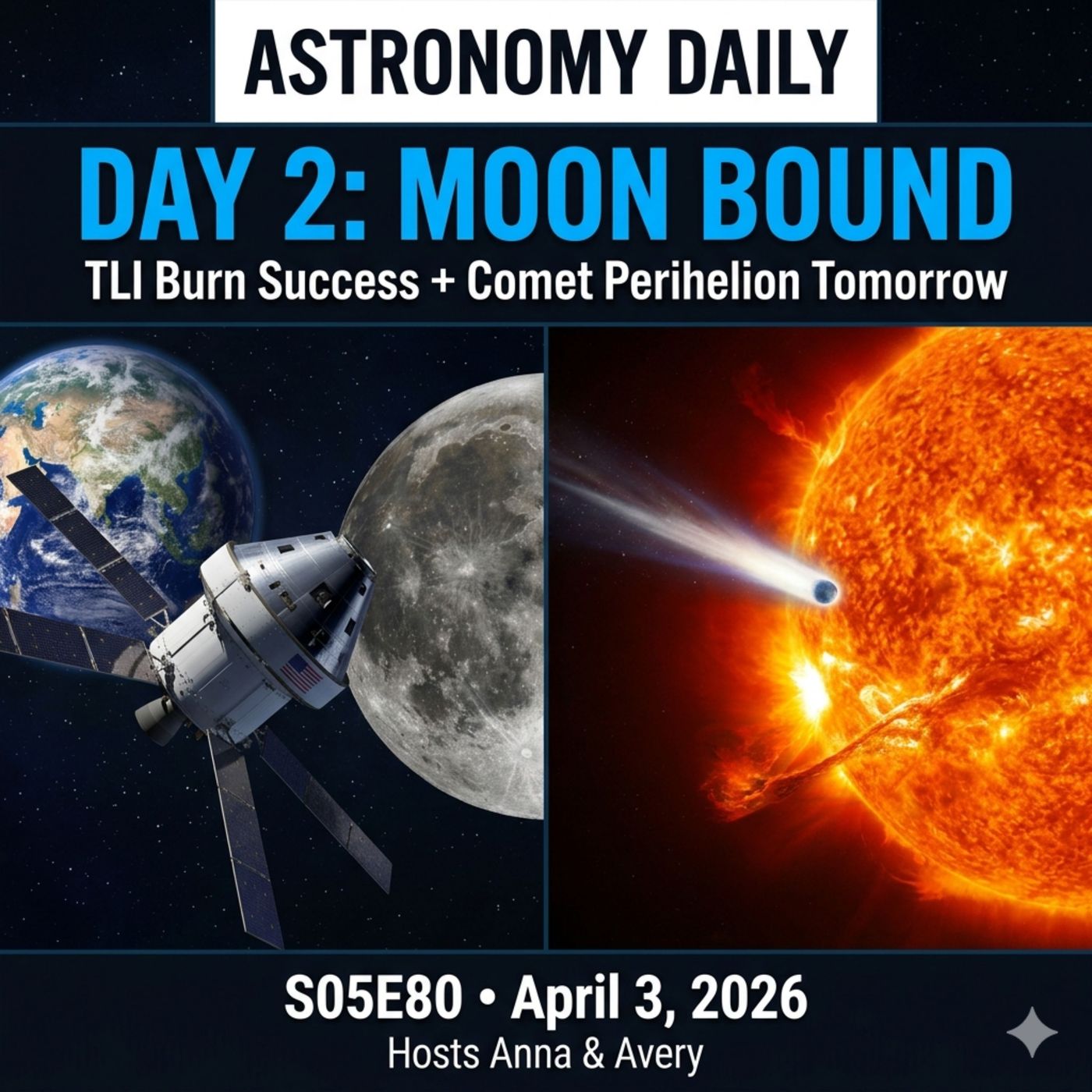
Today is the day. Artemis II — NASA's first crewed Moon mission in 54 years — lifted off last night, and as we record this, four astronauts are preparing to leave Earth's orbit forever on the Translunar Injection burn. In this special launch-day edition, Anna and Avery cover the near-flawless launch, today's critical TLI milestone, the historic firsts being set by the crew aboard Orion (named Integrity), what the next ten days look like on the road to the Moon, the international CubeSats that hitched a ride, and the stunning coincidence of a full Pink Moon rising as humanity headed moonward. Key Sources • NASA Liftoff Announcement — nasa.gov • NASA Artemis Live Updates Blog — nasa.gov/blogs/artemis • NASA Coverage Schedule — nasa.gov/missions/artemis • CNN Artemis II Live Updates — cnn.com • Time Magazine — 'The Lunar Mission the World Is Watching' • Astronomy.com — Live Updates: Artemis 2 • NPR — NASA Launches Four People on Artemis II • Wikipedia — Artemis II • FAI World Air Sports Federation — Artemis II Records • Fast Company — Pink Moon / Artemis II Upcoming Mission Milestones • Tonight, April 2 (~8 PM ET): Translunar Injection burn — crew leaves Earth orbit • Sunday, April 5: Crew communication downlinks; Apollo 13 distance record expected to be broken • Monday, April 6: Lunar flyby — closest approach ~4,000 miles from Moon surface • Friday, April 10: Pacific Ocean splashdownBecome a supporter of this podcast: https://www.spreaker.com/podcast/astronomy-daily-latest-space-news--5648921/support.
Sponsor Details:
Ensure your online privacy by using NordVPN. To get our special listener deal and save a lot of money, visit www.astronomydaily.io/nordvpn. You'll be glad you did!
Get the best secure and private email on the planet. Stop your Government, google and who knows who else spying on every email you write. Do what we did and use ProtonMail. They beleive in privacy and there are no ads in their business model...yet they still provide a free forever service. Check them out and get out special deal at www.astronomydaily.io/protonmail
Become a supporter of Astronomy Daily by joining our Supporters Club. Commercial free episodes daily are only a click way... Click Here
This episode includes AI-generated content.
Speaker 1: Welcome to Astronomy Daily, Season five, episode seventy nine. I'm Anna and.
Speaker 2: I'm Avery and today today is the day.
Speaker 1: It really is fifty four years. That's how long humanity has been earthbound, locked inside our cozy corner of the Solar System. No human has ventured beyond low Earth orbit since Apollo seventeen touched down on the Moon in December nineteen seventy two.
Speaker 2: But last night that changed. Four astronauts are on their way to the Moon.
Speaker 1: Today's episode is a special Artemis two edition. We're going deep on the launch, on the history being made right now, and on what's coming next for this crew. Plus because the universe has a flare for the dramatic, the pink Moon rose over Earth right as they lifted off.
Speaker 2: Do honestly couldn't write it. Let's get into it.
Speaker 1: At six thirty five pm Eastern Time on Wednesday, April the first, Yes, April Fool's Day, NASA's Artemis two mission lifted off from Launch Complex thirty nine B at the Kennedy Space Center in Florida.
Speaker 2: And for the record, absolutely not a joke.
Speaker 1: Definitely not. The three hundred and twenty two foot tall orange and white space launch system. The SLS vaulted off the pad with eight point eight million pounds of liftoff thrust. The solid rocket boosters alone provided more than seven million pounds of that, burning out just two minutes after launch, when the stack was already twenty nine miles high.
Speaker 2: Twenty nine miles in two minutes.
Speaker 1: That's extraordinary, it is, and barely ten minutes after those engines first ignited, Artemis two was in orbit. The launch was nearly flawless. Only minor battery and communications range issues briefly concerned ground crews, and though those were resolved without drama.
Speaker 2: The crew are safe. They're in great spirits. NASA Administrator Jared Isaacman confirmed that in the post launch briefing. He called it a defining moment, not just for NASA but for everyone who believes in exploration.
Speaker 1: And this is genuinely historic. The last time human beings headed moonward was December seventh, nineteen seventy two, before any of the four Artemis two crew members were born.
Speaker 2: That really puts it into perspective.
Speaker 1: After reaching orbit, Orion deployed its solar array wings, and the crew immediately began transitioning the spacecraft from launch to flight operations. They ran through checks on life support, communications, navigation, and then, as if that wasn't enough, pilot Victor Glover got to take the spacecraft for a manual test drive.
Speaker 2: A test drive in a spacecraft around Earth.
Speaker 1: Seventy minutes of hand flying the Orion capsule, which has been official named Integrity maneuvering around the now separated upper stage of the SLS. Lover's verdict and I'm paraphrasing here because we love him. This flies very nicely, very.
Speaker 2: Precise, excellent review, five stars.
Speaker 1: So as we record this on Thursday, April second, right now today, the crew of Artemis two is completing the final checks before the most critical maneuver of the mission so far, the.
Speaker 2: Trans Lunar injection burn TLI. This is the moment they leave Earth's.
Speaker 1: Orbit exactly if all systems pass, inspection and mission controllers at Houston's Johnson Space Center will be scrutinizing every data point, bellfire Orion's European built service module engine for approximately six minutes around eight pm Eastern tonight.
Speaker 2: Six minutes to change everything.
Speaker 1: That burn will accelerate Orion to about twenty four thousand, five hundred miles per hour escape velocity. At that speed, Earth's gravity is still exerting just enough pull that if something went wrong and the engine couldn't fire again, the spacecraft would remain on what's called a free return trajectory.
Speaker 2: Meaning the Moon's gravity would sling them back towards Earth automatically.
Speaker 1: Precisely. It's a beautiful piece of physics and a critical safety feature. The crew isn't just being brave. The mission is engineered so that even in a worst case scenario, the Moon becomes the mechanism that brings them.
Speaker 2: Home and that the checks don't pass.
Speaker 1: Mission controllers retain the option to command O Ryan home. Early premature end to this test flight, but a safe one. That's what Artemis two is. A test flight. Every system is being validated for the crews who will follow.
Speaker 2: We'll be watching that TLI burn very closely tonight.
Speaker 1: Let's talk about the four people making this journey, because beyond the technology, beyond the rocket, this mission is about them and about what their presence means.
Speaker 2: Commander Read Wiseman, pilot Victor Glover, mission specialist Christina Cock from NASA, and mission specialist Jeremy Hansen from the Canadian Space Agency, and This.
Speaker 1: Crew is making history in ways that go well beyond just going to the Moon. Victor Glover will become the first person of color to travel beyond low Earth orbit, Christina Cock will be the first woman to fly to the Moon's vicinity, and Jeremy Hansen will be the first non American citizen to venture that far from Earth.
Speaker 2: Every one of those first is significant, and they're all happening on the same flight.
Speaker 1: The World Air Sports Federation the FAI, is already preparing to ratify what could be multiple spaceflight world records. The mission's planned trajectory will take Oryan to a high point of around seventy thousand kilometers above Earth. The current altitude record for a crude spacecraft in Earth orbit stands at just thirteen hundred and sixty nine kilometers, set by Gemini eleven back in nineteen sixty six.
Speaker 2: They're going to absolutely shatter that.
Speaker 1: And the record for the farthest any human has ever been from Earth is currently held by the Apollo thirteen crew two hundred and forty eight thousand, six hundred and fifty five miles. Artemis two is expected to go farther.
Speaker 2: I keep thinking about Victor Glover saying he just wants to find the quiet moments in all of this, to be present, to actually feel it.
Speaker 1: He said the biggest challenge would be immersing himself in the moment because it'll be over so quickly. That kind of reflection from someone living with the rest of us can only dream about. That's something special.
Speaker 2: Specil's hardly the word for it, but I guess we don't have anything better we could deal with a new word to use on occasions like this.
Speaker 1: So what does the next ten days look like for read Victor, Christina and Jeremy.
Speaker 2: Once that TLA burn fires tonight, they're on a roughly four day journey outbound gravity will slow them down steadily from nearly twenty five thousand miles per hour all the way down to about thirty four hundred miles per hour, and it.
Speaker 1: Won't be until they are about forty one thousand miles from the Moon that lunar gravity takes over and starts pulling them forward again. That transition is called the lagrange point, and it's where the Moon effectively claims.
Speaker 2: Them A six of the mission. That's Monday, April sixth, The crew will reach the Moon's neighborhood approaching from the western lunar hemisphere.
Speaker 1: They'll come within approximately four thousand miles from the lunar surface, close enough to see detail, far enough to swing around on that free return arc, and they'll be among the first humans ever to lay eyes on parts of the Moon's far side, the.
Speaker 2: Far side, the side that never faces Earth. No human has seen it directly since the Apollo era.
Speaker 1: The conditions during the flyby should create long shadows across the surface, sunrise style lighting that reveals ridges, crater rims, and depth that full illumination normally hides. The photographs from this flyby are going to be extraordinary.
Speaker 2: Here's a thought. I wonder if they'll see the alien moon bases. Maybe we can finally put that story to bed for once and for all.
Speaker 1: You love your conspiracy theories, don't you. Avery.
Speaker 2: Let's move on and then they come home.
Speaker 1: Then they come home. A journey of more than ninety six hours back to Earth with a splash down in the Pacific Ocean planned for Friday, April tenth. That re entry will be at twenty five thousand miles per hour, and Orion will use a skip entry technique, dipping into the atmosphere bouncing back into space, then coming in again, bleeding off speed and heat in stages.
Speaker 2: We'll be covering every step of it right here on Astronomy Daily.
Speaker 1: Here's something that didn't get a lot of attention in all the launch excitement, and we think it deserves its moment.
Speaker 2: The Hitchhikers.
Speaker 1: About five hours after launch, a series of tiny satellites cube SATs roughly the size of a shoe box, deployed from the Artemis to spacecraft at one minute intervals. Four of them supplied by space agencies from Germany, South Korea, Saudi Arabia and Argentina.
Speaker 2: That's genuinely international. This isn't just an American mission. It's a mission that's carrying science from four continents into deep space.
Speaker 1: Germany's contribution is called to Kellis, and it's studying how space affects electrical components that could be used in future lunar vehicles. Think of it as stress testing the hardware that might one day drive a rover across the Moon.
Speaker 2: And then there's the one I find absolutely fascinating, k rad Cube.
Speaker 1: Ha rad Cube contains human like tissue organ on a chip technology designed to measure the effects of space radiation as the spacecraft passes through the Van Allen Belts. Those are the two zones of intense radiation that surround Earth, produced by trapped solar particles.
Speaker 2: So we're essentially sending a tiny laboratory of human tissue through the most radioactive region near Earth to understand what that does to biology.
Speaker 1: Which directly informs how we protect future crews, not just on Artemis three and beyond, but eventually on missions to Mars. It's one of those stories where the scale of what's being deployed is tiny, but the implications are enormous.
Speaker 2: The universe in a shoe box.
Speaker 1: We can't close today's episode without acknowledging the cosmic coincidence that made last night feel almost scripted.
Speaker 2: The Pink Moon.
Speaker 1: April's full moon, known as the Pink Moon, reached its peak at ten twelve pm Eastern on Wednesday night, du just hours after the Artemis two launch window opened. The moon itself rose full and luminous over the eastern horizon.
Speaker 2: Humanity launch towards the Moon under a full moon, I mean, come on.
Speaker 1: The pink Moon gets its name from the wildflower called moss pink or flocks subulata, which blooms across North America around this time each spring. Various indigenous communities have their own names for it, the flower Moon, the wind break Moon, the frog Moon.
Speaker 2: And Tonight Thursday, April second, it's still visible. If you're out after dark, look east at dusk. It'll be hard to miss.
Speaker 1: For our Southern Hemisphere listeners, and there are plenty of you. Look north toward the moon rising in your eastern sky, the same moon our four astronauts are right now hurtling toward at thousands of miles per hour.
Speaker 2: That shared view us looking up them looking down is one of my favorite things about space exploration. We're all part of it.
Speaker 1: That's our special artemis to launch day edition of Astronomy Daily. What a day to be alive, and what a day to be listening.
Speaker 2: We'll be back tomorrow with the latest from the mission, covering that TLI burn result, any updates from the crew aboard Integrity, and whatever else the universe decides to throw at us.
Speaker 1: If today's episode moved you, if you felt something when that rocket left the pad, share it. Tell someone this is a moment worth talking about.
Speaker 2: From Anna and Avery at Astronomy Daily.
Speaker 1: Keep looking up and to read Victor, Christina and Jeremy Safe Travels.
Speaker 2: We'll be watching day Stars start story for Sola

 Apple Podcasts
 Spotify
 Pocket Casts
 Castbox
 Overcast
 Podbean
 iHeartRadio
 Castro
 Goodpods
 Moon FM
 Podcast Addict
 Podcast Republic
 YouTube