S03E40: Solar Sails & Martian Farms: Pioneering the Space Frontier
In this episode
Set sail with us on the cosmic winds in today's enlightening episode of Astronomy Daily - The Podcast. We're charting a course through the latest astronomical innovations that are transforming our celestial expeditions and deepening our connection to the cosmos. From the cutting-edge solar sail technology that could redefine space travel to the ambitious quest of growing food on Mars, we're journeying to the very edge of possibility and imagination.We begin by celebrating NASA's advanced composite solar sail system, a marvel of engineering that promises to harness the sun's photons for propulsion, potentially revolutionizing our voyages across the solar system. Then, we delve into the trials and triumphs of Martian agriculture, where scientists are teasing life from the barren soils of the Red Planet, sowing seeds of hope for future settlers.Our cosmic quest then takes us to Saturn's icy moon Enceladus, where mysterious water plumes hint at the potential for life in extraterrestrial oceans. We'll unravel the intricate dance of cryovolcanic activity that fuels these fascinating eruptions.Back in our lunar neighborhood, we explore a novel concept for artificial gravity that could keep our moonwalkers healthy and strong. And as we look beyond to the outer planets, we introduce the science craft—a sleek, sunlight-propelled vessel designed to unlock the secrets of Neptune and its intriguing moon, Triton.Finally, we gaze into the potential future of space observation with NASA's FLUTE project, which aims to create large aperture liquid mirrors in space, offering a new window into the universe's most profound mysteries.Join us for a thrilling odyssey that spans from the sunlit expanses of our solar system to the fertile ground of Mars, and from the icy plumes of Enceladus to the cutting-edge concepts that could shape the future of interplanetary exploration. This is Astronomy Daily - The Podcast, your portal to the stars and beyond.1. **NASA's Solar Sail Revolution:** A new dawn for propulsion technology.2. **Martian Agriculture:** Sowing the seeds of life on the Red Planet.3. **Enceladus's Water Plumes:** The cryovolcanic keys to extraterrestrial habitats.4. **Lunar Artificial Gravity:** A simple yet ingenious solution for astronaut health.5. **Outer Planet Exploration:** The science craft's journey to Triton.6. **FLUTE Project:** Pioneering the future of space telescopes with liquid mirrors.As we conclude today's interstellar sojourn, we're reminded that the stories of the cosmos are as boundless as the universe itself. Each discovery, each technological leap, is a verse in the grand poem of our celestial exploration. Until next time, keep your eyes on the skies and your heart filled with cosmic wonder. Clear skies and inspired minds to all—this is Anna, signing off until our next cosmic convergence.For more astronomical adventures, visit our website at astronomydaily.io, and remember, in the vast theater of the universe, every star has a story, and every story is written in the stars.This episode is brought to you with the support of NordPass, the password manager we use and wouldn't be without. Check out the details and great deal we have for you by visiting www.bitesz.com/nordpass
Become a supporter of this podcast: https://www.spreaker.com/podcast/astronomy-daily-latest-space-news--5648921/support.
Sponsor Details:
Ensure your online privacy by using NordVPN. To get our special listener deal and save a lot of money, visit <a href="https://www.astronomydaily.io/nordvpn" target="_blank"...
Welcome to Astronomy Daily, the podcast where we delve into the celestial wonders and the latest advancements that are shaping our understanding of the cosmos. In today's journey across the Universe, we'll cast light on revolutionary solar saiale technology that has the potential to redefine our approach to space travel. Next, we'll venture to the red soil of Mars, exploring the promising yet arduous strides towards growing food on this alien world. Our quest for answers will then lead us to the icy moon of Enceladus, where mysterious plumes of water ice challenge our imaginations about habitats beyond Earth.
Further into our lunar neighborhood, we'll consider groundbreaking concepts that could offer lunar explorers a taste of artificial gravity. And finally, our sites will be set beyond the planetary playground as we delve into the latest innovations poised to change the game in outer planet exploration. Join us as we embark on this astronomical adventure revealing the frontiers of space science and technology. These Autonomy Day forecast in a groundbreaking leap for space exploration NASA's Advance Composite Solar Sale system has signaled back to Earth following its launch on April twenty third, ushering in a new era for propulsion technology as it maneuvers through a Sun synchronous orbit.
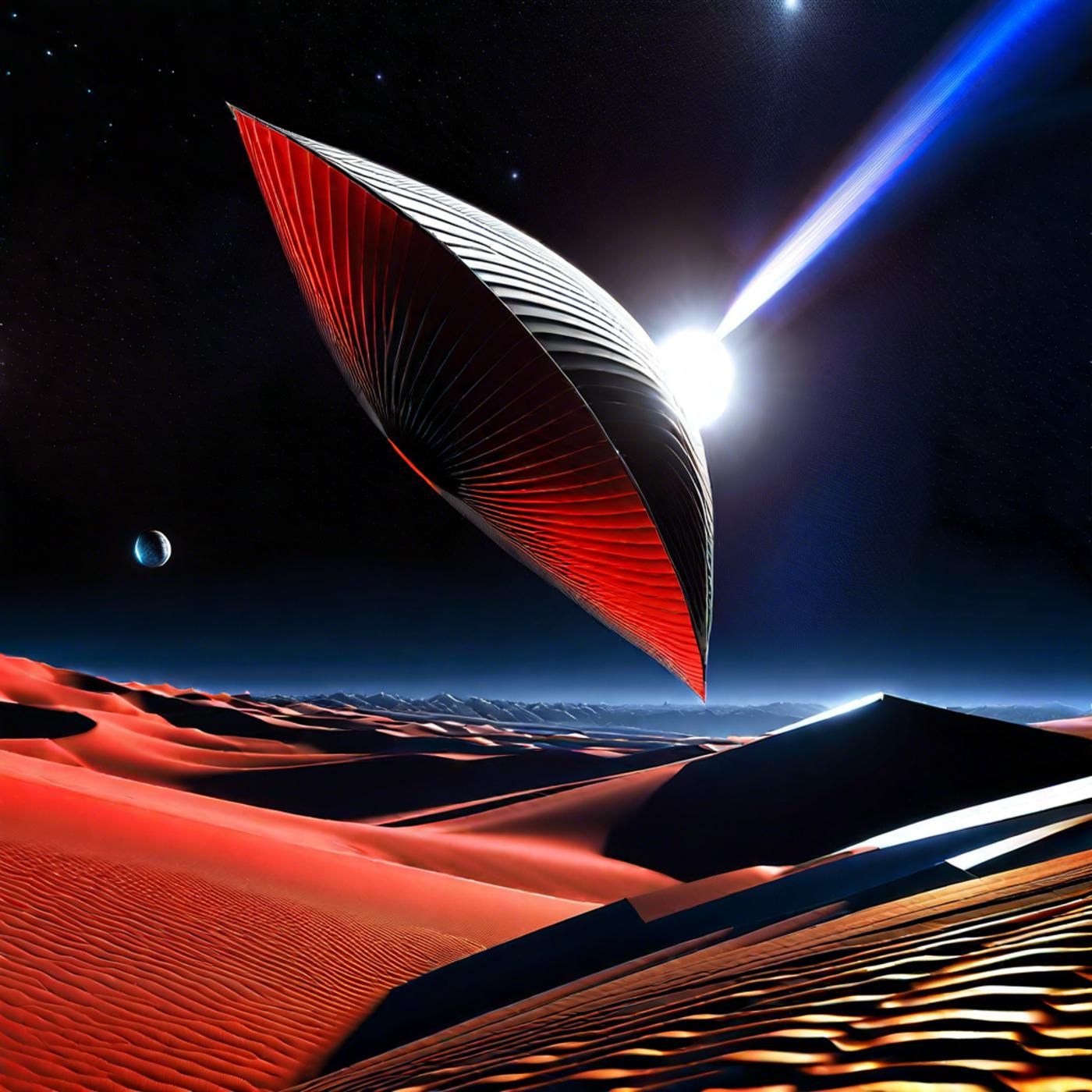
This innovative satellite harnesses the Sun's photon pressure for thrust bypassing the need for conventional fuel with the microwave of inn sized CubeSat now healthy and fully operational, the mission paves the way for more sustainable and efficient travel across our solar system. What is truly remarkable about this solar Sale is its construction. A composite boom technology developed by NASA's game Changing Development Program, promises to substantially increase the robustness and reduce the mass of the spacecraft.
Awaiting its commissioning phase, the satellite will soon deploy its sale that spans approximately seven meters across unfurling much like the wings of a bird taking flight for the first time. As we anticipate the real world data and results from this mission, the implications for future voyages are profound. This technology has the potential to carry us more swiftly and cost effectively to slingshot around celestial bodies, explore asteroids, and even travel beyond the bounds of our Solar system.
With each photon propelled glide through space, NASA's Solar Sail is revolutionizing our approach to unraveling the vast mysteries beyond our blue planet. As we inch closer to establishing a permanent settlement on the dusty, iron oxide rich planes of Mars, feeding our interplanetary pioneers looms as one of the most essential challenges to overcome. Martian soil might bear a striking resemblance to our own barren areas here on Earth, but don't be fooled. Cultivating this extraterre austrial landscape poses its own unique set of troubles and triumphs.
Recent Mars agriculture simulations offer a beacon of hope that we might one day farm the red planet's barren fields. The process, though filled with promise, is no easy task. Take a simple intercropping system peas, carrots, tomatoes. We know them well on Earth, but on Mars, the absence of beneficial soil bacteria means these familiar plants struggle to flourish the very fabric of life that untangles nitrogen from the atmosphere and feeds it to our earthly crops is missing from the Martian regolith.
It's a prime example of how importing our blue planet's practices to another world isn't as simple as interstellar shipping and receiving. Yet there's a silver lining in the less dense Martian soil, akin to our sandy loams, A whisper of home emerges where intercropping surges beyond expectations. Tomatoes thrive, a vivid contrast against the stark Martian backdrop. What's implied here is groundbreaking. We could reform the regus. Optimized conditions make Mars hospitable at a micro level for agriculture.
It's a balance on a cosmic scale. A few nutritious, fresh and psychologically comforting tomatoes weighed against the cold sterility of engineered astronaut meals. The Martian agriculture simulations are as much about nurturing plant life as they are about sustaining human resilience. Gardening isn't just a pastime. It could be the difference between surviving and flourishing mentally and physically amidst the isolation of space, and so it dawns on us. Maybe Mars is not so inimical to life after all.
With each simulation, each peep of a pea shoot into simulated sunlight, we uncover more about the red planet's ability to sustain us and our capacity to adapt and thrive in what once seemed unyielding emptiness. This is not merely farming. It's the germination of hope in extraterrestrial soil. Enceelidus, a pristine, ice covered moon orbiting Saturn, holds a warm, salty ocean beneath its frozen crust, a setting so eerily reminiscent of Earth's own aquatic environments that it beckons a closer look.
Could this distant moon of Saturn support life? The Cassini spacecraft, during its mission to the Saturn system, uncovered the startling discovery that Enceladus is not as dormant as it appears. Cascading from the moon's southern region, plumes of water are responsible for one of Saturn's rings, indicative of hydrothermal activity below the surface. The secrets of these plumes emanate from what's known as the Tiger stripes, four parallel linear depressions that serve as telltale signs of cryovolcanic activity.
The dynamics at play here are complex, driven by tidal interactions with Saturn that heat the interior and maintain the ocean in its liquid state. A new study delves into the mechanics behind this phenomenon, uncovering that strike slip faults, akin to those we've seen with Earth's own San Andreas fault, are integral to the process. These faults behave like cosmic gate keepers, controlling the EBB and flow of water plumes into space. According to this research, the strike slip motion does not require vast energies to pry open faults.
During Enceladus's orbit, they weave open, releasing subterranean water, then clamp shut, a celestial dance dictating the Moon's enigmatic spray. The intermittent plumes peak in intensity in correlation with Enceladus's lunar day, offering tantalizing opportunities for further exploration. Investigations into these fault lines are more than just an academic exercise. They hold the key to understanding the conditions under which life may arise and thrive in extraterrestrial oceans, a testament to the tenacity and universality of biology.
Through meticulous numerical modeling, scientists have painted a vivid picture of how Enceladus's subsurface processes could culminate in an environment hospitable to life. These findings underscore the need for continued exploration and observation, as the dance of Enceladus's plumes may sing the core of life's potential beyond our blue planet. As we turn our gaze from the celestial seas to the moondust beneath our feet. A pioneering concept catches the interest of those concerned with our lunar settler's well being.
Imagine for a moment astronauts running not in the familiar upright stance as we do here on Earth, but in a horizontal fashion parallel to the Moon's dusty surface inside what can only be described as a wall of death. Such is the proposal recently spotlighted in a study published in Royal Society Open Science, offering a low tech, yet ingeniously simple method to counter the health risks associated with prolonged exposure to low gravity environments. Moon based habitats could incorporate a circular track on their inner walls, reminiscent of velodromes or motorcycle stunts where gravitational misgivings are met with the centripetal force of a runner in constant motion.
Historically, the challenges of muscular atrophy, bone density loss, and cardiovascular decline have necessitated complex, often cumbersome solutions, but this concept, derived from Professor Alberto Manetti's research, is as elegant as it is effective. As astronauts orbit these circular tracks, the increased force could emulate Earth like gravity, anchoring their health to the celestial body, they explore. Indeed, the beauty of this solution lies in its simplicity. While the powerful gravity on Earth denies us the ability to experience this phenomenon without the aid of high speed motorcycles, the Moon's one sixth gravitational pull could permit such an exercise with nothing more than the astronaut's own two legs.
Even more compelling, the study suggests that daily sessions within these circular corridors could maintain both physical and cardiovascular fitness while preserving bone mineral status, a feat achieved with no need for the extensive energy requirements of a centrifugal artificial gravity machine. As we continue venturing into the Cosmos, solutions that blend human ingenuity with the laws of physics, affirm our ability to adapt and overcome the barriers that stand between humanity and the vast expanse of space, with health being central to the success of these missions.
Such concepts are not just revolutionary, but may be crucial for the sustainability of long duration space exploration. Our moonwalkers of the future may very well be moon runners their feet, charting courses along walls instead of flat ground, a humbling nod to our unyielding quest to conquer space while honoring the well being of those brave explorers. Exploring the remote outskirts of our solar system presents a formidable challenge, one of cost, duration, and reach. But what if we could rethink our approach to spacecraft design, optimizing for these very frontiers.
Today we peer into an exhilarating prospect in space exploration, the science craft. This groundbreaking architecture melds both spacecraft and science instrument into a single entity. By incorporating a quantum dot based spectrometer directly onto a solar sail, we step away from traditional designs that often limit our ambition due to their bulk and mass. Imagine a spacecraft unfettered by conventional constraints, no larger than a sizeable poster, yet potent enough to survey the enigmatic Neptune and its moon, Tritan.
This is what the dedicated team at NASA Goddard Space Flight Center is developing within the NIAC program. Their eyes are set on Triton, an object of fascination due to its retrograde orbit and geologically active surface, To possibly demystify its atmospheric chemistry, ionic composition, and potentially even its internal structure, this science craft proposes to sail across the Solar System, propelled by sunlight, leveraging both speed and a broad expanse of area for data acquisition not possible with traditional spacecraft.
Not only has Phase one feasibility studies shown promise, but Phase two aims even higher to catapult this concept closer to reality by addressing technology development and strategic planning required for a future mission. This is a journey not merely by rocket propulsion. It's one taken on the wings of ingenuity and ultra light materials, a voyage that folds space as much as it unfolds possibilities. A successful mission to Triton utilizing science craft could mark a turning point, heralding a new era where outer planet exploration is no longer a once in a generation endeavor, but a prolific chapter in our cosmic odyssey.
Now, as we continue to develop and innovate, we prepare to set sail on this solar breeze, hoping to catch the secrets that whirl in the cold, distant reaches of our planetary neighborhood. The Astronomy Daily podcast, As we Gaze into the Cosmos, The quest to unravel the mysteries of far off exoplanets, ancient stars, and primordial galaxies has encountered a bottleneck. Current space telescopes are reaching the limits of their observational powers. But what if we could dramatically scale up our celestial eyesight without succumbing to prohibitive costs.
Enter NASA's FLUTE project. The Fluidic Telescope Experiment, a groundbreaking initiative aiming to circumvent the limitations of traditional space telescopes by leveraging the remarkable potential of liquid mirrors. This project is poised to catalyze a revolutionary leap forward in space based UV, optical and IR astronomy. Instead of piecing together segmented solid mirrors. FLUTE proposes the development of large aperture liquid mirrors formed in the microgravity environment of space. These mirrors would be shaped fluidically, a concept already proven in the controlled confines of laboratory settings, aboard parabolic flights, and even within the microgravity laboratory that is the International Space Station ISS.
For short. Imagine, if you will, a primary mirror with a diameter of fifty meters that's over five times larger than the mirrors on the Hubble Space telescope, and without segmentation. Such a mirror would yield unprecedented clarity and depth in the study of celestial phenomena. The mirror constructed from specially chosen ionic liquids requires innovative techniques to enhance its reflectivity, and the Flute project is making significant strides in this exacting scientific endeavor through machine learning driven research and meticulous experimental work.
The possibilities that Flute unlocks are boundless. A telescope of this magnitude could bring into focus the elusive signatures of Earth like exoplanets, offering a new lens through which to search for biosignatures or to explore the very earliest structures formed after the Big Bang. Despite the captivating promise it holds, the path to realizing such an audacious project is strewn with technical and engineering challenges. Phase one of Flute saw extensive research into ionic liquids and the preliminary development of reflective of enhancement techniques.
Moving into Phase two, the team aims to refine the mission concept by tackling high risk elements and pushing forward with modeling, including addressing perturbations caused by maneuvers, temperature variations, and potential micro meteorite impacts on these futuristic fluidic mirrors. It is a venture into the unknown, an attempt to peel back yet another layer of the cosmic onion, revealing the Universe's secrets hidden in plain sight by the inadequacies of our current observational equipment. Flute isn't just a project.
It represents a beacon of human ingenuity, calling out to the pioneers of tomorrow to look further, see clearer, and dream bigger. As we wind down today's episode of Astronomy Daily, the podcast, we've covered a stellar array of topics that weave together the fabric of our current and future space endeavors. From the promise of NASA's solar sale technology, to the fascinating look at Marsha and agriculture, the mysteries of Enceladus's plumes, the pioneering concepts for lunar exploration, and the groundbreaking innovations for outer planet exploration.
Today's dialogue has truly taken us from the sun drenched vacuums of our solar system to the potential agricultural grounds of Mars and beyond. Each story today has pulsated with the rhythms of possibility, innovation, and the unwavering quest for knowledge. It's truly an exciting time to be a part of the astronomical community as we watch these groundbreaking studies and projects unfold, further expanding the horizons of our cosmic ocean. For those inspired by today's conversation and eager for more astronomical insights, I encourage you to navigate to our website at Astronomy Daily dot io.
There you'll find a constellation of space news, detailed articles, and the chance to listen to past episodes of this podcast. It's a space enthusiast haven for continuums of discovery that reach into the deepest pockets of our universe. Thank you for joining us on this interstellar journey today. We look forward to having you with us next time for another enlightening episode as we explore the cosmos and uncover the mysteries awaiting us among the stars, clear skies, and inspired minds to all. This is Anna signing off until our next cosmic convergence Sunday, Star is so Star



 Apple Podcasts
 Spotify
 Pocket Casts
 Castbox
 Overcast
 Podbean
 iHeartRadio
 Castro
 Goodpods
 Moon FM
 Podcast Addict
 Podcast Republic
 YouTube