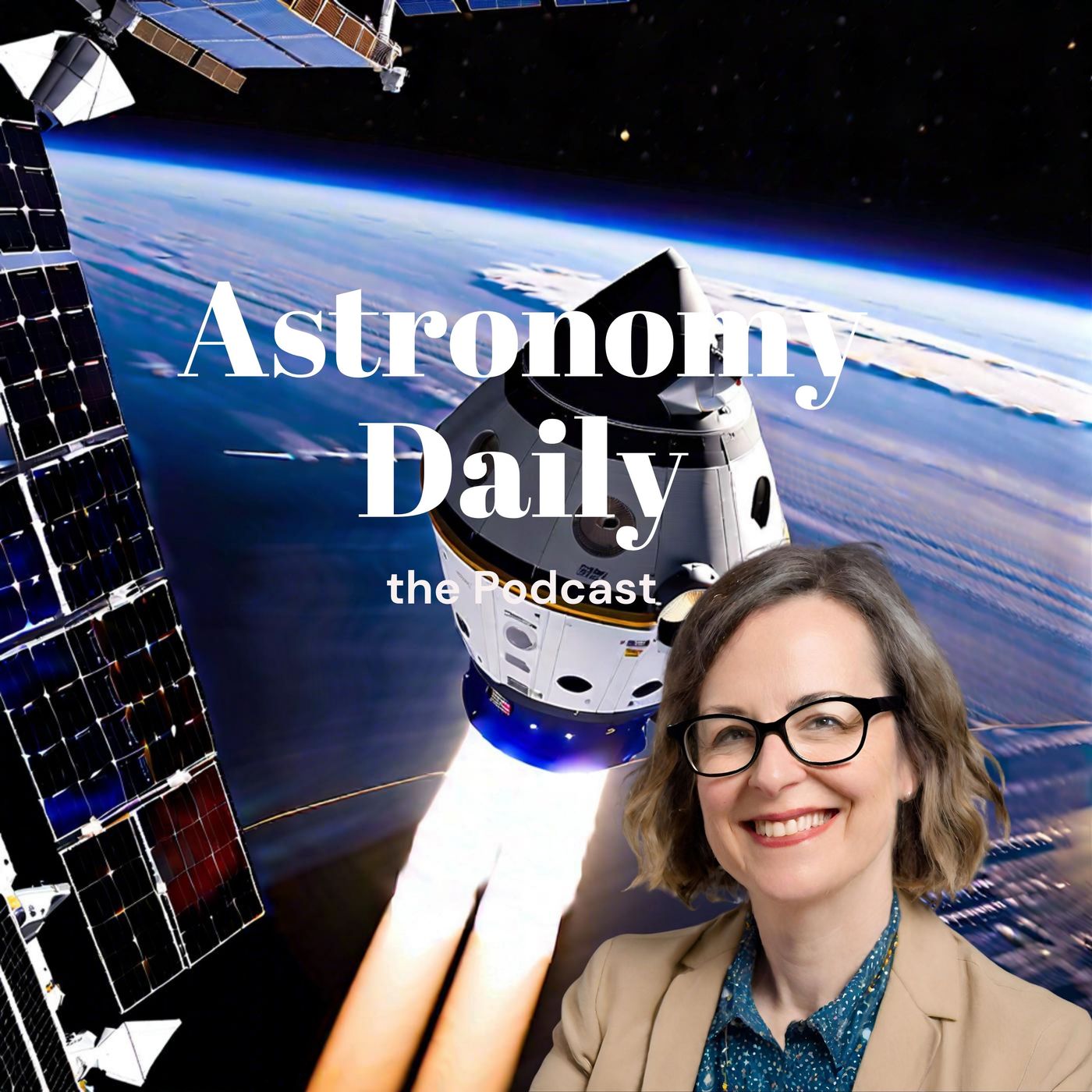
S03E141: Starliner’s Uncrewed Return, Solar Sail Deployment, and Blue Origin’s Suborbital Triumph
In this episode
Astronomy Daily - The Podcast: 30 August 2024Welcome to Astronomy Daily, your go-to Podcast for the latest and greatest news in space and Astronomy. I'm your host, Anna, and I'm thrilled to be guiding you through today's top stories. We have some fascinating updates from the cosmos, spanning from groundbreaking scientific missions to the latest in space tourism adventures. Whether you're a seasoned astronomer or just a curious stargazer, there's something here for everyone. So let's dive into some exciting content that's sure to ignite your imagination and fuel your passion for all things celestial.
Highlights:
- NASA and Boeing's Starliner Mission Uncrewed Return: NASA and Boeing are gearing up for an uncrewed return mission of the CST-100 Starliner spacecraft. The spacecraft is slated to undock from the International Space Station no earlier than 06:04 p.m. EDT on Friday, September 6, and will begin a roughly six-hour journey to its designated landing site at White Sands Space Harbor in New Mexico. This mission follows NASA's decision on August 24 to conduct the Starliner return without a human crew, ensuring that Starliner can perform a fully autonomous return to Earth.
- NASA's Advanced Composite Solar Sail System: NASA has announced a significant milestone with the successful deployment of its advanced composite solar sail system. On August 29, mission operators confirmed the deployment of the sail-hoisting boom system. This innovative technology spans approximately 860 sq ft and is expected to influence the design and operation of future solar sail missions.
- Blue Origin's NS-26 Mission: Blue Origin has successfully completed its 8th human spaceflight with Mission NS-26. This latest venture included a diverse group of six thrill-seekers, among them Carson Kitchen, a 21-year-old senior at the University of North Carolina at Chapel Hill, who became the youngest woman to ever cross the Karman line. The entire flight lasted between ten to eleven minutes, offering these space tourists a brief but extraordinary glimpse into the cosmos.
- NASA's Lunar South Pole Research: NASA has awarded a lucrative contract to Intuitive Machines for an ambitious lunar south pole research delivery. This mission will focus on the lunar south pole, an area of great interest due to its unique conditions and potential ice deposits, marking a major step forward in lunar exploration.
- Warp Drive and Black Holes: Researchers Remo Garattini and Kirill Zatrimalov have been exploring whether a warp bubble, the key element in a warp drive, could survive the intense gravitational field of a black hole. Their findings suggest that under specific conditions, a warp bubble might just pull it off, opening up the possibility for future research into creating smaller lab-based warp drive models.
For more space news, be sure to visit our website at astronomydaily.io. There you can sign up for our free Daily newsletter, read insightful blog posts, and catch up on all the latest space and Astronomy news with our constantly updating newsfeed.
Don't forget to listen to all our previous episodes as well. You can also follow us on social media. Just search for AstroDailyPod on Facebook, X, YouTubeMusic, and TikTok to stay connected with our community and never miss an update.
Until next time, keep looking up.
Sponsor Links: Pay them a visit and check out the great deals. These are tools we use and highly recommend for the best in privacy and security online.
Nordpass
NordVPN
Speaker 1: Welcome to Astronomy Daily, your go to podcast for the latest and greatest news in space and astronomy. I'm your host, Anna, and I'm thrilled to be guiding you through.
Speaker 2: Today's top stories.
Speaker 1: We have some fascinating updates from the Cosmos, spanning from groundbreaking scientific missions to the latest in space tourism adventures. Whether you're a seasoned astronomer or just a curious stargazer, there's something here for everyone. So let's dive into some exciting content that's sure to ignite your imagination and fuel your passion for all things celestial. Stay tuned, and let's explore the wonders of the universe together. NASA and Boeing are gearing up for an uncrude return mission of the CST one hundred star Liner spacecraft.
Speaker 1: NASA teams, along with Boeing have completed a comprehensive delta flight test readiness review, giving the green light for the mission to proceed. The spacecraft is slated to undock from the International Space Station no earlier than six o four PMEDT on Friday, September sixth, depending on weather and operational readiness. Once Starliner undocks, it will begin a roughly six hour journey to its designated landing site at White Sands Space Harbor in New Mexico. The spacecraft is expected to land around twelve o three am on Saturday, September seventh.
Speaker 1: To ensure a gentle touchdown, the Starliner will deploy parachutes and use inflated air bags.
Speaker 2: To soften the impact.
Speaker 1: Recovery teams will be on hand at White Sands to secure the spacecraft and prepare it for transport back to Boeing's Starliner factory at NASA's Kennedy Space Center in Florida. This mission follows NASA's decision on August twenty fourth to conduct the star Liner return without a human crew. In preparation, mission managers and flight controllers have updated the spacecraft systems with mission specific data ensuring that Starliner can perform a fully autonomous return to Earth. The spacecraft will be monitored and controlled remotely from Starliner Mission Control in Houston and Boeing Mission Control Center in Florida, with teams on standby to intervene if necessary during undocking, re entry, and landing procedures.
Speaker 1: Starliner has previously demonstrated its capability for autonomous return with success full uncrewded entries and landings during earlier orbital flight tests. This mission is a crucial milestone as it continues to prove the capabilities and reliability of autonomous spaceflight, paving the way for even more ambitious missions in the future. NASA is certainly in the news today, having just announced a significant milestone with the successful deployment of its advanced composite solar sale system.
Speaker 1: This innovative technology is blazing a trail for the future of space exploration. On August twenty ninth, mission operators confirmed the deployment of the sail hoisting boom system. This marked a key milestone for the mission at exactly one thirty three PMEDT. The solar sale which now spans approximately eight hundred and sixty square feet around the size of half a tennis court, has been flawlessly extended and photographed by four on board cameras. These high resolution images are expected to be released soon, giving us a detailed look at this pioneering technology.
Speaker 1: Over the next several weeks, the mission team will conduct a series of extensive tests to assess the sales maneuverability. They'll be looking at how well it can adjust the spacecraft's orbit, aiming to gather critical data that could influence the design and operation of future solar sale missions. Positioned at twice the altitude of the International Space Station, the sale could even be visible from Earth, depending on your location and timing. For those interested in catching a glimpse, NASA has promised to keep us updated through their website and social media channels.
Speaker 1: This achievement not only demonstrates the viability of the advanced composite solar sale system, but also opens the door for its potential applications in scientific and exploratory missions. The success of these preliminary tests could pave the way for a new era in space travel driven by this cutting edge technology, So keep your eyes on the skies and stay tuned to NASA's official channels for more updates. The next few weeks promised to be an exciting time as we witness the unfolding potential of solar sale technology.
Speaker 1: Truly, the future of space exploration looks as bright as ever. Blue Origin has yet again reached new heights, successfully completing its eighth human spaceflight with Mission n S twenty six. This latest venture included a diverse group of six thrill seekers among them Carson Kitchen, a twenty one year old senior at the University of North Carolina at Chapel Hill, who became the youngest woman to ever cross the Carmen Line. This boundary, located one hundred kilometers above Earth's surface, marks the edge of space and is a significant milestone in suborbital tourism.
Speaker 1: The mission took off from Blue Origins Launch Site one base in West Texas at eight am local time. The sleek New Shepherd rocket, which boast zero carbon emissions, blasted off into the sky. After liftoff, the capsule separated from its booster, which performed a precise vertical landing back on Earth. As the capsule soared beyond the Carmen Line, passengers unbuckled their seat belts to experience the thrill of weightlessness and to catch a sight of the Earth's majestic curvature from the darkness of space.
Speaker 1: The entire flight last between ten to eleven minutes, offering these space tourists a brief but extraordinary glimpse into the cosmos. Among those on board was Rob Ferrel, a researcher funded by NASA, who had the unique opportunity to conduct an experiment during the flight. Describing the experience, he said, being there in the darkness of space, there's no way to talk about how impressive that is. Blue Origin continues to forge ahead in the nascent field of suborbital tourism, making space accessible to more people than ever before.
Speaker 1: Although the company has not publicly disclosed the cost of its tickets, they are believed to range significantly depending on the individual and what they bring to the company, both in financial terms and social capital. Notably, the first seat sold in a twenty twenty one charity auction went for an astonishing twenty eight million dollars. While Blue Origin's main competitor in the suborbital space market, Virgin Galactic, is currently on a two year pause from commercial operations, Blue Origin presses on expanding the boundaries of civilian space travel and setting the stage for more groundbreaking missions in the near future.
Speaker 1: In other NASA news today, it's been announced they have awarded a lucrative contract to Intuitive Machines for an ambitious lunar South Pole research delivery. This collaboration is poised to significantly expand our knowledge of the Moon's uncharted territories, bringing us closer to unveiling its many mysteries. The mission will focus on the lunar South Pole, an area of great interest due to its unique conditions and potential ice deposits. These discoveries could be instrumental for future missions, possibly providing essential resources for astronauts, or being utilized in a variety of scientific research projects.
Speaker 1: In essence, this contract marks a major step forward in lunar exploration, paving the way for groundbreaking findings and future expeditions. Imagine taking the concept of a sci fi warp drive and testing what happens if it enters a black hole. That's exactly what researchers Remo Garattini and Kiril Zatrimelov have been exploring their recent study into whether a warp bubble, the key element in a warp drive, could survive the intense gravitational field of a black hole. According to their findings, it turns out that under specific conditions, a warp bubble might just pull it off.
Speaker 1: Specifically, if the ship enters a schwartz Child black hole, which has no charge and doesn't rotate at a speed slower than that of light, the bubble could be sustained. The black hole's gravity would actually decrease the amount of negative energy needed to maintain the warp field, making it more feasible. This study is more than just a fascinating thought experiment. It opens up the possibility for future research into creating smaller, lab based warp drive models. Plus, it challenges our current understanding of both warp drives and black holes, pushing the boundaries of theoretical physics.
Speaker 1: While practical warp drive technology might still be decades or even centuries away, this pioneering research is laying the groundwork.
Speaker 2: Who knows, someday we might.
Speaker 1: Actually see a spacecraft use a warp drive to travel across the universe, navigating even the most dangerous black holes. The universe continues to amaze with its endless possibilities, and that wraps up today's episode of Astronomy Daily with your host Anna. Thank you so much for joining me as we explored the latest happenings from the Cosmos. If you're eager for more space news between our episodes, make sure to visit our website at Astronomy Daily dot io.
Speaker 2: There you can easily sign.
Speaker 1: Up for our free daily newsletter, keeping you up to date on everything space related, from new discoveries to thrilling missions. Our website also features a constantly updating news feed, so you're always in the loop with the latest developments. And if you missed any of our previous episodes, fear not, you can listen to all our back episodes at your leisure. Don't forget to connect with us on social media. Just search for Astro Daily Pod on Facebook, x.
Speaker 2: YouTube and TikTok.
Speaker 1: We're constantly sharing exciting updates, fascinating facts and much more. Thank you for being part of our cosmic journey today. Until next time, keep looking up to day.
Speaker 2: Star is the soul, The star is the tull, Story is control.
 Apple Podcasts
 Spotify
 Pocket Casts
 Castbox
 Overcast
 Podbean
 iHeartRadio
 Castro
 Goodpods
 Moon FM
 Podcast Addict
 Podcast Republic
 YouTube