
In this episode
Astronomy Daily - The Podcast: 15 October 2024Welcome to Astronomy Daily, your go-to Podcast for all the latest in space and Astronomy news. I'm your host Anna, and I'm delighted to have you with us today. In this episode, we have some exciting updates to share. We'll delve into recent developments from SpaceX and their ongoing Polaris Dawn mission, take a closer look at new research revealing surprising insights about Venus's atmosphere, and explore the far-reaching implications of NASA's DART mission on asteroid Dimorphos. That's not all. We'll also uncover the latest discovery from the Hubble Space Telescope, which has located a fascinating mini galaxy, and look ahead to observing Salsa satellite's reentry event. So sit back, relax, and let's journey through the cosmos together.
Highlights:
- SpaceX's Polaris Dawn Mission Delay: SpaceX's ambitious Polaris Dawn astronaut mission has faced multiple delays, the most recent due to unfavorable weather forecasts and a helium leak. The team remains hopeful and is diligently monitoring both technical and weather conditions to ensure a safe and successful mission.
- Venus's Atmospheric Mysteries: Recent observations have revealed an unexpected increase in the level of deuterium relative to hydrogen in Venus's atmosphere. This significant finding could alter our understanding of this mysterious planet and its atmospheric processes.
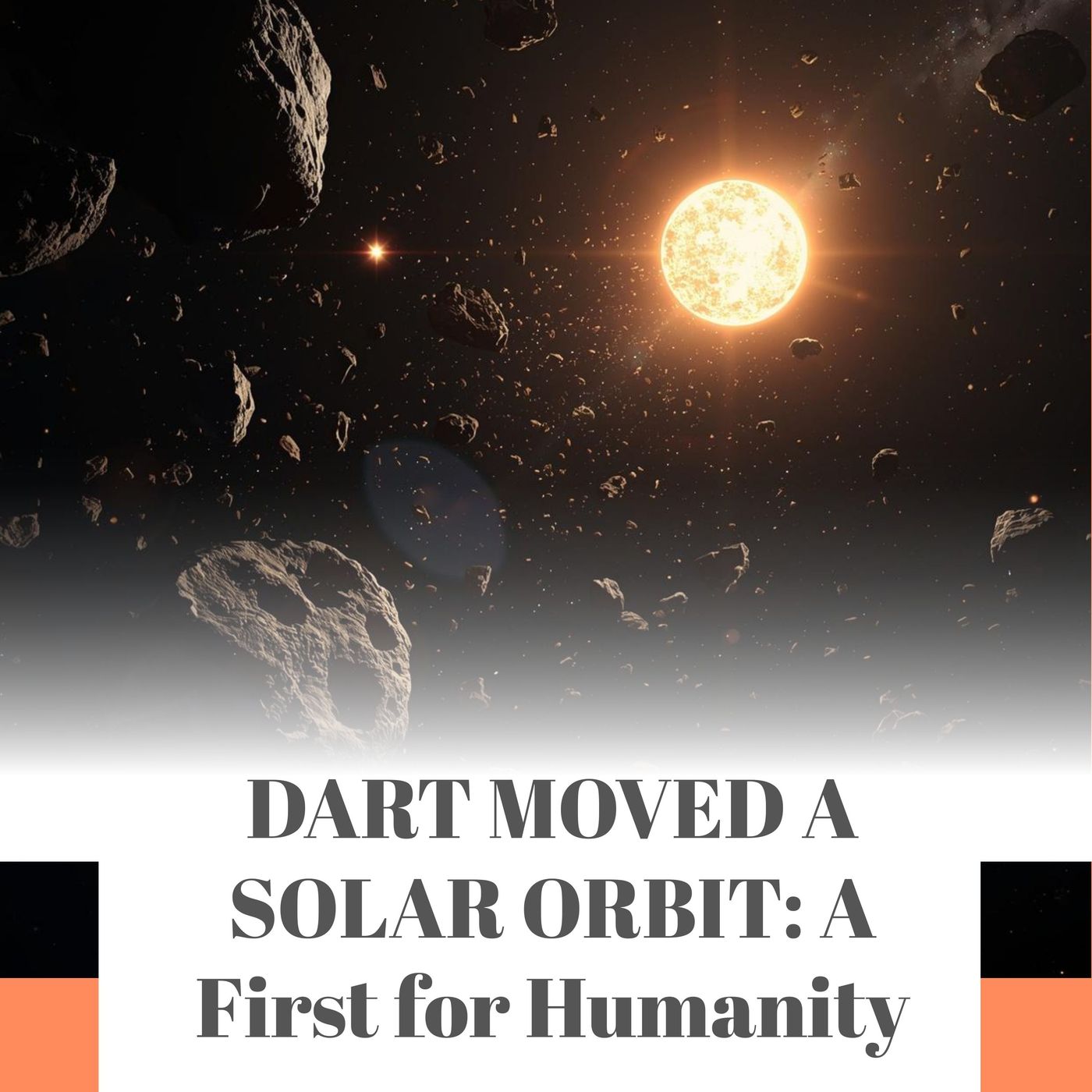
- NASA's DART Mission Insights: NASA's DART mission has provided groundbreaking insights into asteroid dynamics and planetary defense. The intentional collision with the asteroid moon Dimorphos not only altered its trajectory but also significantly changed its shape, leading to far-reaching implications for our understanding of asteroid evolution.
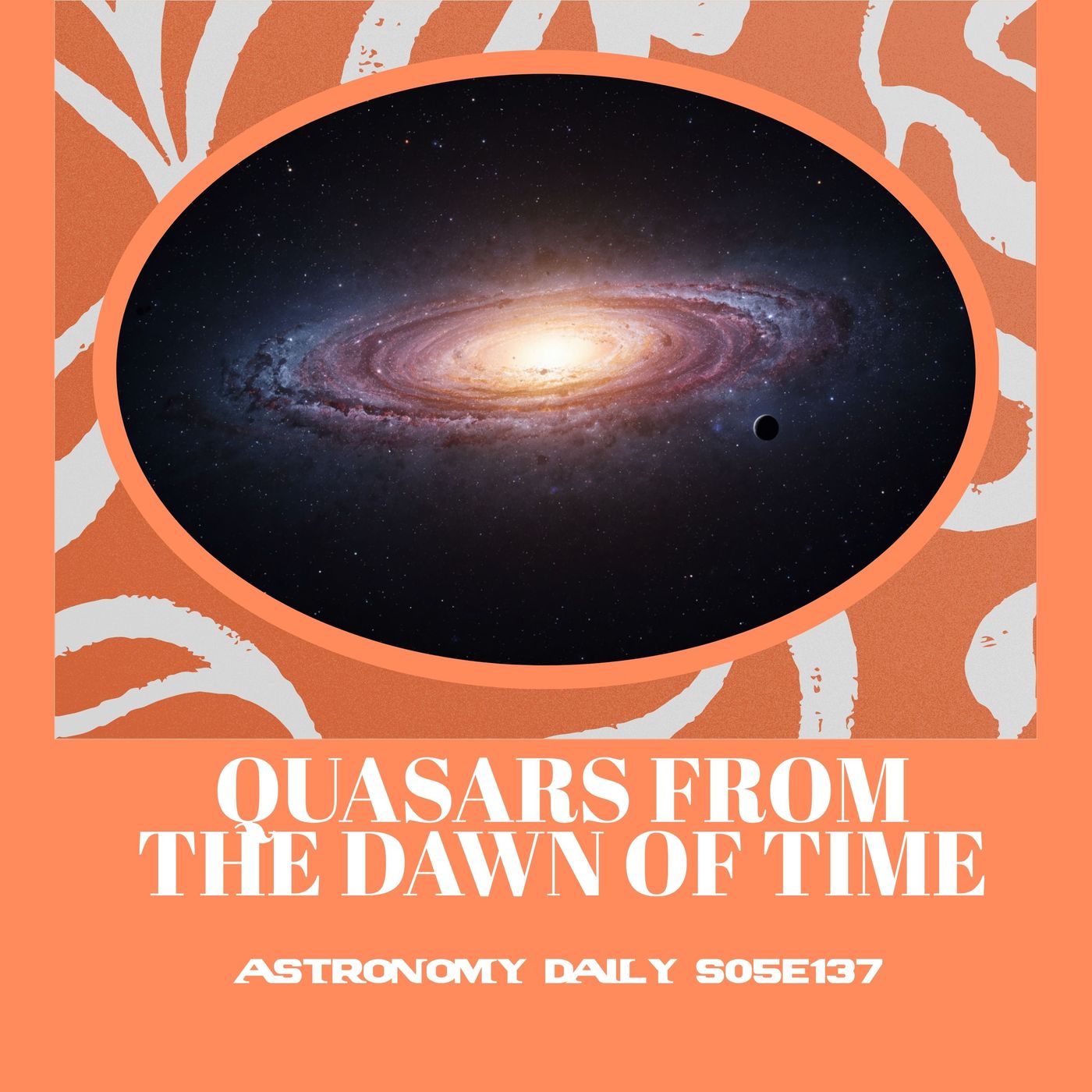
- Hubble's Mini Galaxy Discovery: NASA's Hubble Space Telescope has captured a glittering collection of stars forming the Pegasus dwarf spheroidal galaxy, also known as Andromeda VI. This discovery offers monumental insights into the universe's grand narrative and the formation of dwarf galaxies.
- Salsa Satellite's Reentry Observation: On September 8, 2024, the Salsa satellite will reenter Earth's atmosphere, and scientists have prepared an airborne observation experiment to gather rare data on how the satellite breaks apart. This data is invaluable for designing satellites that reenter more safely and sustainably in the future.
For more space news, be sure to visit our website at astronomydaily.io. There you can sign up for our free Daily newsletter, read insightful blog posts, and catch up on all the latest space and Astronomy news with our constantly updating newsfeed.
Don't forget to listen to all our previous episodes as well. You can also follow us on social media. Just search for AstroDailyPod on Facebook, X, YouTubeMusic, and TikTok to stay connected with our community and never miss an update.
Until next time, keep your eyes on the stars.
Sponsor Links:
Nordpass
NordVPN
Malwarebytes
Proton Mail
Become a supporter of this podcast: https://www.spreaker.com/podcast/astronomy-daily-latest-space-news--5648921/support.
Sponsor Details:
Ensure your online privacy by using NordVPN. To get our special listener deal and save a...
Speaker 1: Welcome to Astronomy Daily, your go to podcast for all the latest in space.
Speaker 2: And astronomy news.
Speaker 1: I'm your host, Anna, and I'm delighted to have you with us today. In this episode, we have some exciting updates to share. We'll delve into recent developments from SpaceX and their ongoing Polaris Dawn mission, take a closer look at new research revealing surprising insights about Venus's atmosphere, and explore the far reaching implications of NASA's Dart mission on asteroid Dimorphose.
Speaker 2: That's not all.
Speaker 1: We'll also uncover the latest discovery from the Hubble Space Telescope, which has located a fascinating mini galaxy, and we'll look ahead to observing Salsa satellite's re entry event. So sit back, relax, and let's journey through the Cosmos together. Let's dive right into our first story, SpaceX's Polaristawn mission, which has experienced yet another delay. SpaceX's ambitious Polariston astronaut mission was originally set to launch in late August from NASA's Kennedy Space Center in Florida. However, it has faced multiple delays, the most recent due to unfavorable weather forecasts and a helium leak on Monday, August twenty sixth, pre flight checkouts revealed the need for further postponements.
Speaker 1: A subsequent attempt was made on Tuesday, August twenty seventh, but this was thwarted by a helium leak detected just before the launch. To add to the hurdles, unfavorable weather conditions off the coast of Florida prompted the team to stand down from both the Tuesday and Wednesday launch windows. As of now, the earliest possible liftoff could be Friday, August thirtieth. As of now, SpaceX has not announced a new target launch date, but the team remains hopeful and is diligently monitoring both technical and weather conditions to ensure a safe and successful mission.
Speaker 1: Stay tuned for more updates as we follow the progress of this groundbreaking mission. Let's dive into the fascinating world of Venus. Recently, scientists have observed an unexpected increase in the level of deuterium relative to hydrogen in Venus's atmosphere. While this might sound like a minor detail, the potential consequences are monumental and could significantly alter our e understanding of this mysterious planet. To understand the importance of this discovery, we first need to explore what deuterium and hydrogen actually are.
Speaker 1: Both are isotopes of the same element, which means they have the same number of protons, but differ in their number of neutrons. This difference in atomic mass can lead to variations in their behavior, particularly in atmospheric processes. Historically, Venus and Earth were believed to share similar HDO or heavy water and H two O ratios. Since both planets formed in the same hot region of the early Solar System, where water couldn't condense. It's thought that water, along with other volatile elements like carbon and nitrogen, was delivered.
Speaker 2: To these worlds by water rich asteroids.
Speaker 1: This should have resulted in similar deuterium to hydrogen dh ratios on both planets. However, new data throws this assumption into question. By pouring over data from the Solar occultation in the infrared SOIR instrument on the Venus Express Space Probe, operational from two thousand and six to Twin twenty fourteen, scientists found that the HDO ratio is now one hundred and twenty times higher compared to H two O in Venus's atmosphere. This change is primarily due to solar radiation breaking down water isodopulogs in the upper atmosphere, producing hydrogen and deuterium atoms.
Speaker 1: Since hydrogen atoms escape into space more easily due to their lower mass, the DH ratio in Venus's atmosphere has been gradually increasing. More intriguingly, the concentration of water molecules increases with altitude between seventy and one hundred and ten kilometers above Venus's surface. At these altitudes, the ratio of HDO to H two O becomes staggeringly elevated, around one thousand, five hundred times higher than in Earth's oceans. This indicates that Venus's atmosphere contains much more deuterium rich water compared to Earth, alluding to significant differences in the atmospheric processes of the two planets.
Speaker 1: So there you have it, another intriguing mystery in our Solar system brought to light. These findings open the door for numerous questions and further studies, making Venus an even more captivating subject of astronomical research. NASA's Double Asteroid Redirection Test or DART mission has provided some groundbreaking insights into asteroid dynamics and planetary defense. The mission made headlines when it intentionally collided with the asteroid moon Demorphose, and researchers are now revealing that this impact didn't just alter the Moon's trajectory, it also significantly changed its shape.
Speaker 1: These changes are more complex than previously thought and could have far reaching implications for our understanding of asteroid evolution. Originally, scientists had predicted how DART would affect the Ditamos Demorphos system, but the real world outcomes were even more dramatic than expected. The collision not only created a massive crater, but also reshaped Dimorphose from an oblate Hamburger like form into a more elongated, football like shape. This shift altered the moon's gravitational relationship with its parent asteroid Ditamos.
Speaker 1: Surprisingly, Detamos itself remained relatively unchanged, highlighting its firmness and rigidity despite the debris scattered by the impact. Derek Richardson, a professor of astronomy at the University of Maryland and a lead researcher on the project, noted that the results challenge our conventional ideas about how small celestial bodies form and evolve. Traditionally, it was believed that such moons would naturally point their elongated axis towards the primary body due to gravitational influences.
Speaker 1: However, the post impact changes in de MorphOS suggest a more intricate gravitational interaction. Interestingly, the gravitational disruption between Demorphose and Ditamos has led to some.
Speaker 2: Unusual orbital behaviors.
Speaker 1: The debris generated by the collision shortened de Morphos's orbit around Ditamos, and the Moon might now be in a state of chaotic tumbling, akin to our moon always having one face towards the Earth, but now knocked out of alignment. This tumbling could continue for a significant period as the system attempts to regain gravitational equilibrium. Looking ahead, Richardson and his team are eager to see how this altered state affects future space missions. The upcoming European Space Agencies haramission will provide a closer examination of the binary asteroid system by late twenty twenty six.
Speaker 1: HERA aims to assess the internal properties of both Dimorphose and Ditamos, providing vital data that could refine our planetary defense strategies. This is particularly important because Dart's findings are invaluable for real world applications. By understanding how an artificial impact changes in asteroids physical properties and trajectory, we can better prepare for the possibility of diverting potentially hazardous asteroids away from Earth. Our lab experiments and computer simulations can't replicate these complex gravitational dynamics as precisely, making missions like DART essential for gathering real world data.
Speaker 2: The hope is that.
Speaker 1: These insights will contribute to methods of asteroid deflection that are both effective and efficient. Richardson emphasizes that while the chances of a threatening asteroid or comet hitting Earth are low, they are not zero. With the success of DART, humanity now has an additional tool in its arsenal for planetary defense, offering a measure of protect against potential cosmic threats. As scientists continue to monitor de MorphOS and the Didamo system, one of the burning questions is whether the Moon will eventually stabilize enough for future exploratory missions, including possibly landing spacecraft to gather more detailed data.
Speaker 1: In essence, NASA's DART mission has not only furthered our understanding of asteroid behavior, but also paved the way for future space exploration and defense technologies. The revelations about Dimorphos's altered state promised to keep the scientific community buzzing with excitement and anticipation for years to come. And now let's look at a new discovery from the Hubble Nestled against a backdrop of distant celestial bodies, a glittering collection of stars has been captured by NASA's Hubble Space telescope.
Speaker 1: This wondrous site forms the Pegasus Dwarf's spheroidal galaxy, also known as Andromeda six. It's a modest member of a vast cosmic family, yet it offers monumental insights into the universe's grand narrative. Situated within our local group of galaxies, the Pegasus Dwarf's Spheroidal Galaxy is one of at least thirteen dwarf companions orbiting the well known Andromeda Galaxy also called Messier thirty one. In the grand scheme of things, these dwarf galaxies are the dimmest and least massive, yet their elliptical shapes and smooth star distributions hide a galaxy formation tail that captivates astronomers.
Speaker 1: Discovered in nineteen ninety eight, Pegasus Dwarf holds particular significance due to its unique composition. Unlike many other galaxies in its category, it has a slightly higher content of heavy elements and a smidgen of gas that has, against the odds, supported minor star formation. However, this sparse raw material is still insufficient for creating new generations of stars making Researchers attribute the lack of it to the gravitational impact of its massive neighbor, Andromeda. Over time, Andromeda is thought to have drained Pegasus Dwarf of its star making gases, much like a cosmic giant siphoning life from its petite companion.
Speaker 1: What intrigues scientists is how these dwarf spherroidal galaxies, including Pegasus Dwarf, come into being. Several theories are on the cosmic drawing board. Some suggest these many galaxies might form from fragments broken off larger galactic collisions, while others propose that the gravitational forces exerted by massive galaxies like Andromeda shape these small systems. Another hypothesis highlights the role of dark matter. A mysterious substance thought to make up a large portion of the universe's mass.
Speaker 1: It's believed that Pegasus Dwarf and its ilk could shrink into existence among clusters of this elusive dark matter, warping space and time to create such fascinating formations. The light we see from the stars and Pegasus Dwarf speaks to us from a time long gone. The galaxy's star population is predominantly older, having spent their lives in the low density, gas poor environment of the Dwarf galaxy. Through Hubble's lens, researchers delve into these ancient stars secrets, piecing together the life history of such galaxies and their roles in the large galactic ecosystem.
Speaker 1: As we reported last week, on September eighth, twenty twenty four, an exciting event is set to unfold as the Salsa satellite re enters Earth's atmosphere. This isn't just any re entry, it's a notable milestone in space exploration and satellite technology. Salsa is one of the four satellites from the European Space Agency's e SAY long running Cluster mission. What makes this re entry special is that it will be observed live from the sky, scientists have prepared an airborne observation experiment to closely watch and gather rare data on how the satellite breaks apart upon re entry.
Speaker 1: This data is invaluable because understanding the finer details of satellite disintegration can lead to designing satellites that re enter more safely and sustainably in the future. Over the past seven decades of space exploration, although approximately ten thousand intact satellites and rocket bodies have re entered our atmosphere, the specifics of what happens during these re entries remain unclear. This experiment with Salsa aims to change that. The head of Space Safety at ESA, Holger Krag, emphasized the the importance of re entry science in efforts to keep our orbits around Earth clean.
Speaker 1: He stated, to remove a satellite quickly from orbit after its mission ends, and to prevent space debris, understanding the re entry process is essential. The insights from Salsa's re entry are expected to be groundbreaking, helping us refine satellite design and operations to minimize space debris effectively. The observation mission involves an aircraft equipped with over twenty scientific instruments, including cameras and spectrographs.
Speaker 2: These instruments are designed.
Speaker 1: To capture as much data as possible when SALSA re enters the atmosphere. Interestingly, the first of the cluster satellites to re enter has been strategically scheduled to fall over a remote area in the South Pacific Ocean. This region was chosen to minimize the risk to populated areas, as most of the satellite will disintegrate within minutes of hitting the atmosphere, although some fragments may survive. The predictable nature of salsa's re entry time and location makes it possible for scientists to be in place with their observation equipment.
Speaker 1: This predictability stems from the cluster satellite's highly eccentric orbits, which cause substantial altitude loss at Perige, the point closest to Earth in the satellites orbit. The re entry Observation Mission dubbed Rosy. SALSA showcases a collaborative effort involving academic and industrial partners such as the University of Stuttgart, Comenius University in Bratislava, University of Southern Queensland, Hypersonic Technology, gotting In and ASTROS Solutions in close cooperation with ESA.
Speaker 1: Jerry Silha, CEO of Astros Solutions, highlighted the mission's challenges, stating, this is a very challenging mission due to the unpredictable nature of re entry events. However, with experts in both science and technical preparation, we are confident in securing all the relevant scientific data from Salsa's re entry. Thank you for tuning into Astronomy Daily with me Anna. I hope you enjoyed our deep dive into the latest happenings in space and astronomy, including updates on SpaceX's Polaris Dawn mission, fascinating insights about Venus's atmosphere, the groundbreaking results from NASA's Dart mission, discoveries by the Hubble Space Telescope, and the upcoming live observation of.
Speaker 2: The Salsa satellites re entry.
Speaker 1: Be sure to visit our website at Astronomy Daily dot io, where you can sign up for our free daily newsletter, catch up on all the latest space and astronomy news with our constantly updating news feed, and listen to all our back episodes don't forget.
Speaker 2: You can also find us on social media.
Speaker 1: Just search for astro Daily pod on Facebook, x, YouTube and TikTok.
Speaker 2: This is Anna signing off. Catch you next time, Sunday Star Star


 Apple Podcasts
 Spotify
 Pocket Casts
 Castbox
 Overcast
 Podbean
 iHeartRadio
 Castro
 Goodpods
 Moon FM
 Podcast Addict
 Podcast Republic
 YouTube