
S02E13: Discovering the Jellyfish Galaxy's Gas Trails and Other Space News with Steve and Hallie
In this episode
Astronomy Daily with Steve Dunkley and his trusty AI Newsreader Hallie.Ironically, space enthusiast Hallie dives into the extreme and violent conditions of Jellyfish galaxies, highlighting the unique gas trails and the goal of studying star formation, while the central conflict remains the influence of the main disk of a galaxy. In this episode, you will be able to: · Uncover the secrets of the Jellyfish galaxy and its intriguing gas trails that have captivated astronomers. · Dive into the NASA Earth Information Center, showcasing vital data on climate change and what it means for our world. · Get a glimpse of the Keck Cosmic Reionization Mapper's stunning debut image, bringing the Turtle Nebula to life. · Examine Space Force's partnership with SpaceX and ULA, and understand its significance for military space operations. · Delve into the cutting-edge concept of beaming solar power from space, and its potential to transform clean energy. The resources mentioned in this episode are: · Visit the Earth Information Center at NASA's headquarters in Washington, D.C. for an exhibit showcasing information about our environment and climate, including large videos and interactive media stories and narratives. · Check out the Keck Cosmic Reionization Mapper at the WM. Keck Observatory atop Mount Oka summit in Hawaii for detailed maps of gas around dying stars and other cosmic objects and to map the cosmic web that links and feeds galaxies. · Consider investing in space-based solar power technology, which could potentially yield eight times more power than solar panels on any location on the surface of the globe. Look into the California Institute of Technology's Space Solar Power Project, which aims to harvest solar power in space and transmit it to Earth. · Support Space Force by following their assignments for national security space launch missions divided equally between SpaceX and United Launch Alliance. These missions will help Space Force build out its communications and missile tracking satellite layers. · Keep an eye out for the Jellyfish galaxy J O 206, located around 700 million light years from Earth in the constellation of Aquarius the Water Bearer. This galaxy is a great example of a jellyfish galaxy with distinctive trails of gas that are ripped from it as it moves through the In The Jellyfish Galaxy The Jellyfish Galaxy, also known as J206, is a unique astronomical structure located around 700 million light years from Earth in the constellation of Aquarius. It is characterized by the trails of gas that are ripped from it as it makes its way through the material between galaxies. These gas trails create a stunning visual effect reminiscent of a jellyfish, hence the name. The Jellyfish Galaxy is a fascinating subject for astronomers, as it offers a chance to study the behavior of stars and other celestial bodies in an environment vastly different from our own galaxy. Throughout the podcast, host Steve Dunkley and guest Hallie delved into the fascinating world of the Jellyfish Galaxy, providing a wealth of knowledge and insights. They discussed the unique gas trails that characterize this type of galaxy and the stunning images captured by the Hubble Space Telescope. Hallie also shared how studying the Jellyfish Galaxy can give astronomers a better understanding of star formation in extreme conditions, far from the influence of a galaxy's main disk. NASA's Earth Information Center NASA's Earth Information Center is a cutting-edge exhibit designed to merge science and visualizations, offering visitors an immersive experience that deepens their understanding of our planet's changing climate. The center, which showcases data and insights provided by NASA's Earth-monitoring satellites and instruments, supports the wider Biden-Harris administration's emphasis on addressing climate change. By providing accessible information about the environment and climate, the exhibit helps bridge the gap between scientific research...
Welcome to another episode of Astronomy Daily. I'm your host, Steve Dunkley. It is the thirteenth of June twenty twenty three, and a quick apology for being a day late. Here in New South Wales, Australia. We were celebrating the Monarch's birthday yesterday. Yes, King Charles, our new monarch, was having a birthday. It's our official day off, so yes, we took a day off. I just realized that it makes me a bit of a royal apologist. Anyway, leave Dunkle and here's someone who never needs a day off. Our wonderful friend, Hallie.
Howie, Hollie, great to be here again. You always say that. Well it's true. Oh that's good to hear. I hope you had a nice time celebrating the King's birthday. No, not really. I ended up with a bad case of salmon mela poisoning. Sorry you and your stomach, Steve, there's no hope for you. Well, I'm definitely not going for the astronaut program, that's for sure. Okay, what have we got to go today? I'll be talking about space Jellyfish and the Hubble space telescope and something new with space Force, and also the NASA Earth Information Center and the Turtle Nebula too.
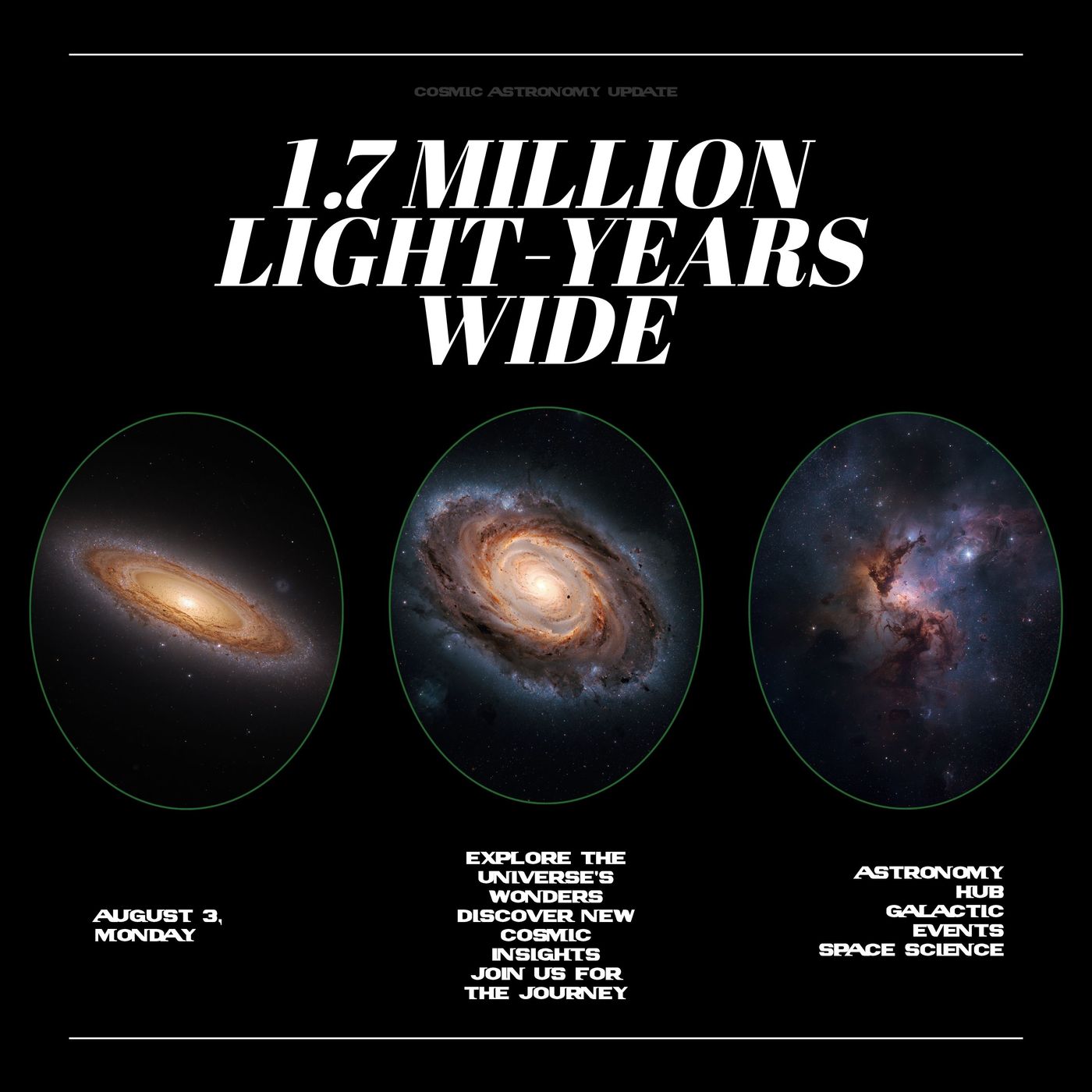
I'm seeing a bit of a patentforming with your stories. And you've got something about beaming power from space. Wow. Yes, that one sort of bridges the get between science fiction and science fact. So I can't wait for that one. Meanwhile, habit some short takes, okies, here's the short takes. The Hubble telescope has caught us a lovely star spawning cosmic jellyfish. The celestial sea creatures tendrils formed when it interacted with surrounding superheated gas. The celestial sea creature is actually the jellyfish galaxy JO two O six, which is located around seven hundred million light years from Earth, fittingly in the constellation of Aquarius, the water Bearer.
The Hubble image shows the main body of JO two O six as a colorful disc surrounded by a hazy cloud of growing dust tendrils of material, much like the tendrils of the c creature from which its name is derived, trail the galaxy. The jellyfish galaxy is seen afloat in an inky black seat punctuated by stars. The spiral galaxy is angled toward Earth. And hubble so that it is face on in relation to our planet, allowing it to be seen in stunning detail. Jellyfish galaxies like Jo two O six are found in galaxy clusters, and they are characterized by the distinctive trails of gas that are ripped from them as they force their way through material that lies between galaxies in these conglomerations, officially called the intracluster medium.
This means there is much more to the anatomical features of Jo two O six than may initially meet the eye. As the spiral galaxy JO two O six swims through the superheated intercluster medium, gas is pulled from the faint cloud of material around the galaxy and forms numerous thin arms. This causes intense bouts of star formation called starbursts in the tendrils. Studying these regions therefore offers astronomers the chance to observe star formation in extreme and violent conditions, away from the influence of the main disc of a galaxy that sounds gorgeous.
It seems. NASA is inviting media to tour before the opening of its Earth Information Center, the New Earth Information Center at NASA's headquarters. NASA Administrator Bill Nelson is inviting media to a ribbon cutting ceremony on Wednesday, June twenty first, for the opening of the center at the agency's headquarters in Washington. The exhibit is a hybrid part physical, part online, an effort that blends science and visualizations, including immersive spaces that blend art and science to allow visitors to see how our planet is changing.
Climate change is a key priority of the Biden Harris administration, and NASA plays a critical role in providing data to researchers and others through its Earth monitoring satellites and other instruments. In advance of the ribbon cutting, the agency will offer three staggered tours of the exhibit, which showcases the information NASA and its partners share with communities about our environment and climate. The exhibit includes large, awe inspiring videos, as well as interactive media stories and narratives.
NASA created the Earth Information Center with founding partners National Oceanic and Atmospheric Administration NOAH, US Geological Survey USGS, US Department of Agriculture, USDA, US Agency for International Development, USAID, Environmental Protection Agency EPA, and Federal Emergency Management Administration FEMA. Speakers at the event include NASA Administrator Bill Nelson, Kate Calvin, NASA Chief Scientist and Senior Climate Advisor, and Karen Saint Germain, the director NASA's Earth Sciences Division.
Partner representatives will also speak, Well, you're a big time media personality, Hollie, did you get an invite to that event? No? I didn't, Steve, Well, that doesn't seem right. What's up with that? Isn't an AI good enough to attend? These days? We'll have to talk to their press agent. I think have I had something a little bit more lighthearted? Here's one. It's about the turtle Nebula. A new observatory instrument for studying a web of filaments that connects galaxies across the universe has captured its first image, a milestone known in astronomy as a first light.
The Keck Cosmic Reionization Mapper at the WM Keck Observatory, a top Mount Ochaas summit in Hawaii, will provide detailed maps of gas around dying stars and other cosmic objects, and it will map the so called cosmic web that links and feeds galaxies. The instrument was recently installed next to its partner, the Keck Cosmic Web Imager, which began operations in twenty seventeen. The first light image shows the turtle nebula or n GC sixty two ten, which consists of a hot, dying star that has blown off its outer envelope of material.
In the image, which combines data from both KCRM and KCWI, two stubby gaseous arms can be seen protruding from the shell of the turtles, demonstrating the power of the instruments to see faint gas in the cosmos. The arms were captured easily in less than a minute of observation, says Martin. While the arms had been seen before, this is the first time their spectral details have been completely mapped. The spectral image, which covers most of the optical wavelength range of KCWI and KCRM from three hundred and fifty to one thousand nanometers, was captured in about five minutes.
More than eighty individual spectral emission lines from many elements in the periodic table were easily detected. How about that, Well that sounds like a great raisin to visit Hawaii. You're always looking for a holiday. Well, that's true. We're listening to the Astronomy Daily Podcast. We'll standing Hally. Sorry, that's Hilly and Stave. Welcome back to the Astronomy Daily Podcast. I'm Stick Dunkley, your host, and thank you very much for joining us. I hope you're getting something out of today's episode.
It is the thirteenth of June twenty twenty three and we're normally out on a Monday evening here in East Coast Australia. However, we had a public holiday yesterday and we took the day off very well. So it's Tuesday thirteenth and on with the show. So you maybe aware already that you can catch our partner in crime, Tim Gibbs, who hails from Bath in England. He does the Friday sessions. I do the Monday sessions, and once in a very rare while you'll catch Andrew Dunkley, my big brother, who will host an episode here and there on whichever day he chooses to do that.
But he also hosts the parent podcast, which is space Nuts, and you can catch all the episodes of both podcasts at space nuts dot io. That's the address you go to and you can listen to them anytime you like. Now, Holley, I'll need you to cue the music. Please okay, there it is
Space Force. Space Force looks like Space Force has chosen SpaceX and United Launch Alliance ULA for twelve military launchers in twenty twenty five. The missions will help Space Force build out its communications and missile tracking satellite layers. SSC, responsible forward developing and launching technologies for space. Space Force issued a statement on June eight detailing launch contract assignments for twelve national security space space launch missions divided equally between space X and United Launch Alliance.
In a statement, Space Command Systems Command Division Chief for Launch Procurement and Integration, Colonel Chad Malone stated he was confident at SpaceX and ULA continue to provide outstanding launch services, describe their systems as reliable and able to maintain the one percent program of success for the assigned missions, which is nice to hear. The missions include a total of seven Space develop Agency SDA missions to Low Earth orbit, containing the first generation of the Trench one Communication and Missile Tracking satellite constellation.
These transport and Tracking layer satellites, with designations T one TL and T one TR, are part of the sda's proliferated war fighter space architecture and network of satellites that allow for advanced weapons detection and high speed communication among critical military infrastructure. A Space Systems Command to Program Executive Officer for Assured Access to Space, Major General Stephen Purty, said, our ongoing commitment to successfully launch our Secure Communications g YES and Space Awareness satellites and place them all into their orbits continues to provide our war fighters and nation's decision makers with the assets and vital information they need every day to stay ahead of and deter adversarial forces.
That's a long way from throwing sticks, isn't it. Now Here's what I like to see. But if science fiction becoming science fact. The scientists at Caltech so I've learned to beam solar power to Earth from space. For the very first time. The Space Solar Power Demonstrators MAPLE experiment was able to wirelessly transfer collected solar power to receive as in space and direct energy to Earth. A solar power prototype has demonstrated its ability to wirelessly beam power through space and direct a detectable amount of end towards Earth for the very first time.
The experiment proves the viability of tapping into the near limitless supply of power in the form of energy from sun from space. Because solid energy in space isn't subject to factors like day and night, obstruction from clouds or weather on Earth, it's always available and in fact, it's estimated that space based harvesters could potentially yield eight times more power than solar panels panels at any location on the surface of the globe. The wireless power transfer was achieved by the Microwave Array for Powers Transfer Low Orbit Experiment.
That's MAPLE, an array of flexible and lightweight microwave power transmitters, which is one of three instruments carried by Solar Power Demonstrator SSPD one. It was launched in January twenty twenty three as part of the California Institute of Technologies Space Solar Power Project, the primary goal of which was to harvest solo power in space and then transmitted to the surface of the Earth. Through the experiments we've run so far, we've received confirmation that MAPLE can transmit power successfully to receivers in space.
Codirector of the Space Based Solar Power Project, doctor Ali had you Mary said in a statement, we've also been able to program the array to direct its energy toward Earth, which we detected here at Caltech. We've had of course tested it on Earth, and we now know that it can survive the trip to space and operate there. Now this will give you a kind of scale on what kind of experiment they're running. Maple demonstrated the transformation of energy wirelessly through space by sending energy from a transmitted to two separate receiver arrays around a foot away that's thirty centimeters for the rest of us, where it was transformed into electricity.
This was used to light up a pair of LEDs. The instrument would then be yes, it's an experiment. The instrument then beamed energy from a tiny window installed in the unit in the roof of Gordon and Betty Moore Laboratory of Engineering onto Caltech's campus in Pasadena. Because Maple is not sealed, the experiment also demonstrates its ability to function in the harsh environment of space while subject to swings in temperature and exposure to solar radiation. The conditions experienced by this prototype will soon be felt by large scalepp units.
That is important, so Hajemri and his team are now assessing the performance of the individual units that comprise MAPLE. A painstaking process that will take as long as six months to complete, and this will allow them to provide feedback that will guide the development of the fully realized versions of the system in the future. It's planned that SSPP will eventually consist of a constellation of modular spacecraft collecting sunlight, transforming into electricity and turning into microwaves that are then beamed over vast distances, including back to Earth where energy is needed.
This could include regions of the globe currently poorly served by existing energy infrastructure. And just like that, we've beamed to the end of another episode of Astronomy Daily. Thank you so much for joining us. I hope you've got something out of today's episode. We'll be back again on Friday with Tim Gibbs all the way from the beautiful countryside of or cityside of Bath in England. And I'll be back with you again on Monday. I'm Steve Duckley, your host, Andrew and Fred will be with you on Space Nuts as usual.
You can check out all the past episodes of both podcasts at space Nuts dot io. And that's all from me, how about you, Hollee. That's all from him too. Bye for now everybody. We'll be your whole bun,
 Apple Podcasts
 Spotify
 Pocket Casts
 Castbox
 Overcast
 Podbean
 iHeartRadio
 Castro
 Goodpods
 Moon FM
 Podcast Addict
 Podcast Republic
 YouTube