
European Launch Ambitions, Starquake Mysteries, and the Quest for Hidden Stars
In this episode
- ESA's European Launcher Challenge: The European Space Agency is taking significant steps towards enhancing its commercial launch market, with member states committing over 900 million euros to the European Launcher Challenge. This initiative will see ESA acting as an anchor client, co-funding upgrades for private companies and stimulating competition and innovation in space launch services.
- Starquakes and Black Holes: Scientists are uncovering the mysteries of dormant black holes through the study of starquakes, or asteroseismology. Two systems, Gaia BH2 and Gaia BH3, reveal intriguing contradictions in the ages and compositions of their red giant stars, prompting a reevaluation of our understanding of stellar behavior and black hole interactions.
- Redefining Time: A philosophical exploration into the nature of time sheds light on the distinction between existence and occurrence. By clarifying the concept of time, researchers challenge long-standing beliefs and offer a new perspective on Einstein's spacetime, suggesting that time should be viewed as a map of events rather than a physical entity.
- Hidden Stars and SETI: A new study proposes that the search for extraterrestrial intelligence can be improved by considering previously overlooked stars. By utilizing the Besanc Galactic model, scientists can predict hidden stars in the field of view of telescopes, expanding the search for technosignatures without the need for additional observations.
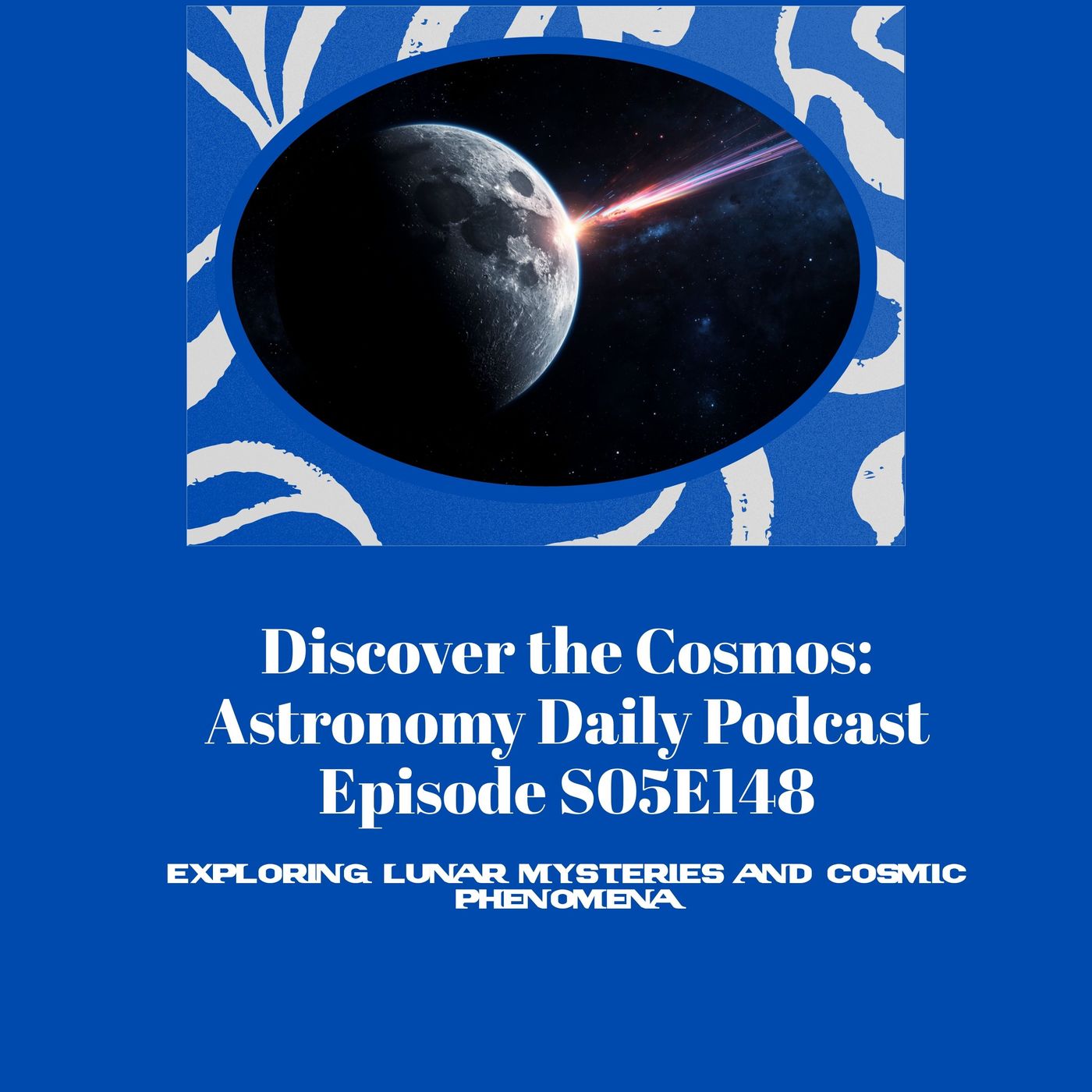
- Wessen Lunar Monitoring Mission: A new mission from Hong Kong, named Wessen, aims to provide continuous monitoring of meteoroid impacts on the Moon. Set to launch by 2028, this lunar orbiter will track the bright flashes caused by impacts, crucial for ensuring the safety of future lunar infrastructure and astronauts as nations plan for lunar bases.
- For more cosmic updates, visit our website at astronomydaily.io. Join our community on social media by searching for #AstroDailyPod on Facebook, X, YouTubeMusic, TikTok, and our new Instagram account! Don’t forget to subscribe to the podcast on Apple Podcasts, Spotify, iHeartRadio, or wherever you get your podcasts.
- Thank you for tuning in. This is Anna and Avery signing off. Until next time, keep looking up and exploring the wonders of our universe.
ESA's European Launcher Challenge
[European Space Agency](https://www.esa.int/)
Starquakes and Black Holes Research
[NASA](https://www.nasa.gov/)
Philosophical Insights on Time
[Physics Today](https://www.physicstoday.org/)
SETI and Hidden Stars Study
[SETI Institute](https://www.seti.org/)
Wessen Lunar Mission Details
[Hong Kong Space Research](https://www.hksr.org/)
Become a supporter of this podcast: https://www.spreaker.com/podcast/astronomy-daily-space-news-updates--5648921/support.
Sponsor Details:
Ensure your online privacy by using NordVPN. To get our special listener deal and save a lot of money, visit www.bitesz.com/nordvpn. You'll be glad you did!
Sponsor Details:
Ensure your...
Avery: Hello, and welcome to Astronomy Daily, the podcast that brings you the latest news from across the cosmos. I'm Avery. Anna: And I'm Anna. It's great to be with you. Today's agenda covers a lot, from Europe's new ambitions in space launch to the strange secrets of starquakes near black holes. Avery: That's right. We'll also be diving into the very nature of time itself, searching for hidden stars that might host intelligent life, and looking at a new mission to monitor the dangers of living on the Moon.
So let's get started. Anna: First up, there's big news from the European Space Agency. It looks like they're getting very serious about fostering a commercial launch market. Avery: They certainly are. ESA member states have committed over 900 million euros to the European Launcher Challenge. That's more than double what was anticipated. Anna: And what's interesting here is the strategy. This isn't about esa, uh, directly funding the development of a new rocket. Instead, they're acting more like a customer, promising to purchase launch services and co fund upgrades for private companies.
Avery: Right. It's the shift from being the builder to being an anchor client. It's a model that has worked very well for NASA with companies like SpaceX. It stimulates competition and innovation. Anna: Exactly. There's a whole list of companies shortlisted for this, including Isar Aerospace Rocket Factory, Augsburg and PLD Space, among others. Rock seeing major contributions from countries like Germany, Spain and the uk. Avery: So what's the timeline for this? When can we expect to see these new launch services in action?
Anna: The plan is to sign framework agreements in 2026 with the goal of seeing launch system demonstrations by 2027. If all goes well, we should see actual missions being flown under this program by 2030. It's a major step towards European autonomy and space access. Avery: From launching rockets to listening to stars. Our next story is truly fascinating. Scientists are using starquakes to uncover the secrets of dormant black holes. And it's rewriting what we thought we knew. Anna: Starquakes. So you mean asteroseismology, studying the oscillations of stars?
Avery: Precisely. The study focused on two systems, Gaia BH2 and Gaia BH3. Each has a red giant star orbiting a quiet black hole. In the Gaia BH2 system. The starquakes revealed a puzzle. The star appears young, but its chemical composition says it's old. Anna: That's a contradiction. How did they explain that? Avery: The leading theory is that the red giant is actually the product of two stars that merged into one. This would explain its unusually fast spin rate as well. So it had a dramatic life even before it got captured by the black hole.
Anna: Incredible. And what about the other system, Gaia BH3? Avery: That one presented a different kind of mystery. The red giant in that system is ancient and what we call metal poor. According to our models, it should be showing star quicks, but it isn't. It's completely silent. Anna: So our understanding of how these old stars behave might be wrong. Avery: It suggests that, yes, the research is a fantastic example of how studying these companion stars can refine how we measure black hole masses and reveal the complex, violent histories these systems can have.
Anna: Well, from the complex history of stars to the complex nature of time itself. This is a topic that has baffled physicists and philosophers for centuries. And as St. Augustine famously said, we know what time is until someone asks us to explain it. Avery: It's one of the ultimate questions. And a lot of the confusion, according to some physicists, comes from mixing up two different existence and occurrence. Anna: Okay, break that down for us. Avery: The universe as a physical object exists.
But events within the universe don't exist in the same way. They happen or they occur. The past isn't a place that still exists, and the future isn't a place that's waiting for us. They are just records and probabilities of occurrences. Anna: That makes sense. So this helps clarify some old philosophical arguments. Avery: It does. Take the ancient Greek philosopher Parmenides, who argued that since we can talk about the past and future, they must exist. This new perspective says that's a fallacy.
Based on that core confusion. The same goes for how we often interpret Einstein's concept of spacetime. Anna: Right. People often imagine spacetime as a physical block universe that you could theoretically travel through. Avery: Exactly. But it's more useful to think of spacetime as a map of events. The map is a real useful model, but it's not the territory. The map of your city exists, but you can't live in the map. By cleanly separating the existence of the universe from the occurrence of events, the so called mystery of time becomes much less mysterious.
Anna: Speaking of searching for things, let's turn our attention to the search for extraterrestrial intelligence, or seti. A, uh, new study suggests we can make our search much more effective by accounting for stars that we've been ignoring. Avery: Hidden stars. How can a star be hidden? Anna: It's not that they're physically hidden, but they're not the primary targets of our surveys. Think about it. When a radio telescope points at a specific star, its field of view is much wider. It inevitably captures data from countless other stars in the background and foreground.
The study calls this stellar bycatch. Avery: Ah, uh, I see. So we have all this data on stars we weren't even intentionally looking at. Anna: Precisely. The challenge is knowing which stars are in that bycatch. To to solve this, scientists are using something called the Besanc Galactic model. It simulates our galaxy's star populations, allowing them to predict which hidden stars are likely in a telescope's field of view at any given time. Avery: So this vastly expands the number of stars we're monitoring for technosignatures without needing any new observations or equipment.
Anna: Yes, and it also helps remove human bias from target selection. Projects like Breakthrough Listen can now apply this method to get a much more comprehensive survey of our galaxy. It's a very clever way to maximize the scientific return from the data we're already collecting. Avery: For our final story, we're coming back a little closer to home to the Moon. As nations like China and the US make serious plans for lunar bases, a new mission from Hong Kong aims to monitor a constant threat. Things falling from the sky.
Anna: You mean meteoroid impacts? We know they happen, but this mission aims to provide the first ever continuous monitoring of them from lunar orbit. Avery: That's right. The mission is called Wessen, which means Moon flashes. It's a lunar orbiter set to launch by 2028. Its primary job will be to watch for the bright flashes caused by meteoroids hitting the lunar surface. Anna: And this data is critical. Without an atmosphere to burn them up, even small pebbles can hit with the force of a hand grenade.
These impacts pose a very real threat to future lunar infrastructure and of course, to astronauts. Avery: It's a huge engineering and safety challenge. Wesson's data will be particularly valuable for China's ambitious plans to establish a lunar research station. What's also notable is that the telescope for the mission is being designed and built in Hong Kong, marking a significant step for the city in space exploration. Anna: It will be a great complement to other monitoring efforts like NASA's Earth based observations and ESA's proposed Lumio mission.
To truly understand the risks of living on the Moon, we need that constant close up view. USAN promises to deliver just that. Avery: And that's all the time we have for today. From commercial rockets to cosmic philosophies, we've covered a lot of ground. Anna: We hope you enjoyed the journey. Join us next time for another edition of, uh, Astronomy Daily, where we continue to explore the universe one story at a time. Avery: Thanks for listening and one quick plug. For more space and astronomy news and all our back catalog just visit our [email protected].
you can also follow us on social media. Just search for AstroDaily Pod on your favorite platforms. That's it for me. I'm Avery Clear Skies, everyone, and keep looking up.

 Apple Podcasts
 Spotify
 Pocket Casts
 Castbox
 Overcast
 Podbean
 iHeartRadio
 Castro
 Goodpods
 Moon FM
 Podcast Addict
 Podcast Republic
 YouTube