In this episode
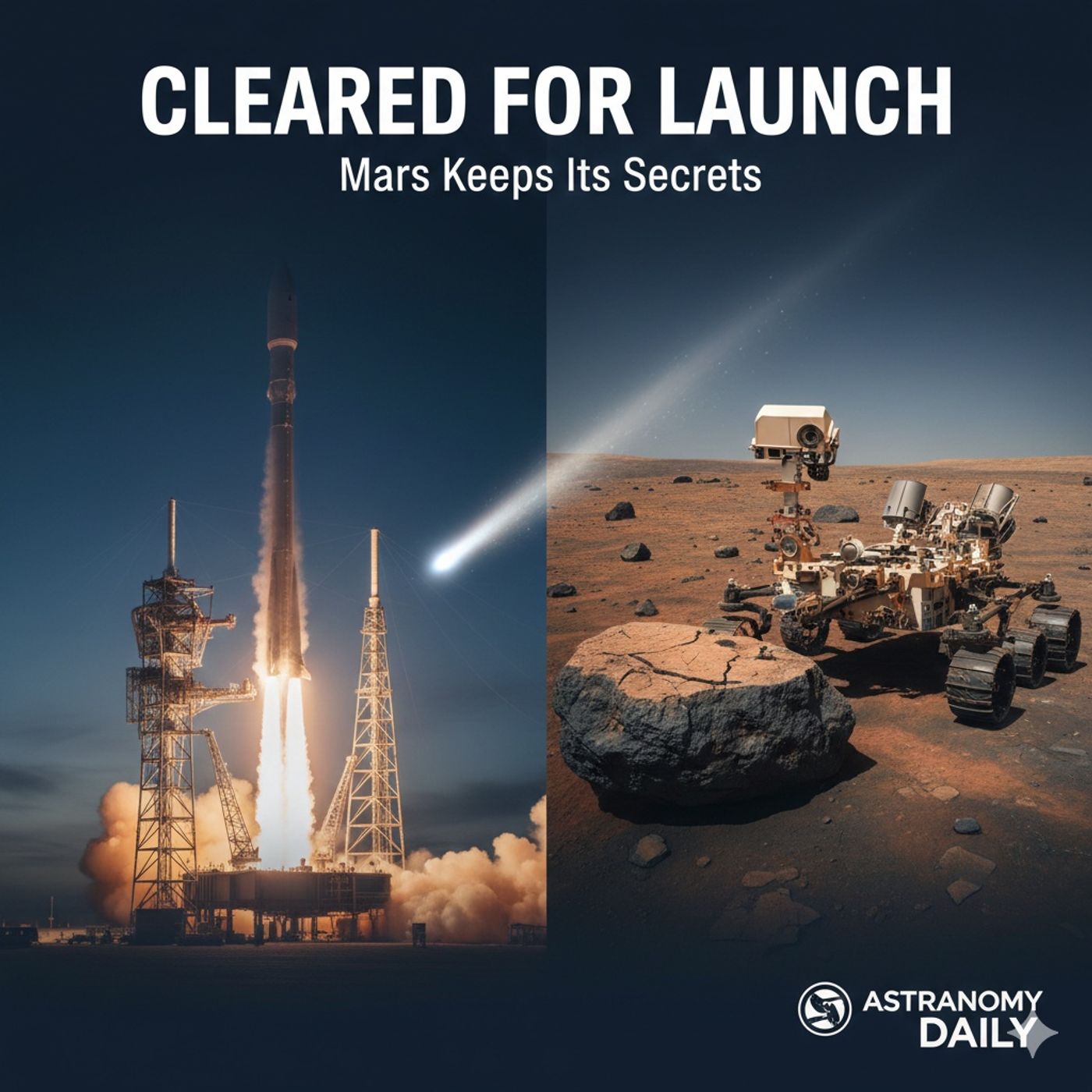
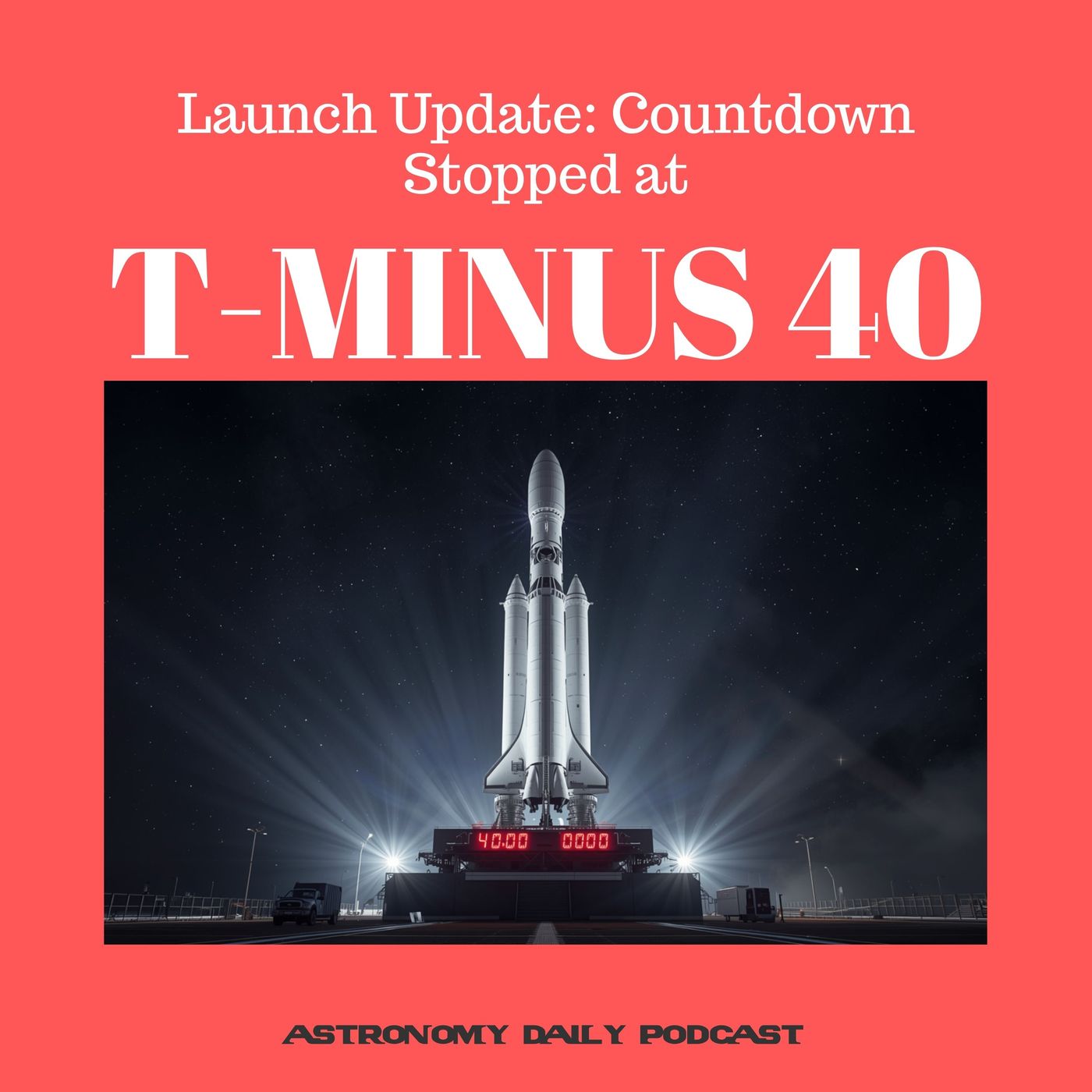
## In Today's Episode:- **FAA clears Falcon 9 — Crew-12 launch set for February 11** — The four-day grounding ends after SpaceX identifies and addresses the upper stage engine ignition failure. Fourth upper stage issue in 19 months.
- **NASA study: Non-biological sources can't fully explain Mars organics** — Researchers find that known non-biological processes don't account for the abundance of organic compounds discovered by Curiosity in Gale Crater. The team modelled 80 million years of cosmic radiation exposure.
- **Interstellar comet 3I/ATLAS flares while exiting the solar system** — NASA's SPHEREx captures the comet dramatically brightening, releasing water vapour, CO₂, methane, methanol, and organic compounds from beneath its cosmic-ray-hardened crust.
- **UK proposes 30% cut to astronomy and physics research** — The deepest funding cut in a generation threatens early-career researchers and the UK's role in major international projects including the Square Kilometre Array and ESO.
- **New Glenn second stage reuse debate reignites** — Blue Origin's Project Jarvis faces the question: can a reusable upper stage beat expendable manufacturing costs? Bezos calls it a "horse race."
- **Fraggles land at Kennedy Space Center** — Jim Henson's beloved characters star in "Fraggle Rock: A Space-y Adventure," a new live show blending comedy, music, and NASA science.
---
## Links & Sources:
- space.com — FAA clears Falcon 9, Crew-12 launch confirmed
- science.nasa.gov — NASA study on Mars organics
- space.com — SPHEREx observations of comet 3I/ATLAS
- space.com — UK astronomy funding cuts
- arstechnica.com — New Glenn second stage reuse debate
- arstechnica.com / kennedyspacecenter.com — Fraggle Rock: A Space-y Adventure
---
## Connect With Us:
🌐 Website: https://astronomydaily.io
📱 Social: @AstroDailyPod (all platforms)
⭐ Subscribe and leave a review to help other space fans find us!
Become a supporter of this podcast: https://www.spreaker.com/podcast/astronomy-daily-latest-space-news--5648921/support.
Sponsor Details:
Ensure your online privacy by using NordVPN. To get our special listener deal and save a lot of money, visit www.astronomydaily.io/nordvpn. You'll be glad you did!
Get the best secure and private email on the planet. Stop your Government, google and who knows who else spying on every email you write. Do what we did and use ProtonMail. They beleive in privacy and there are no ads in their business model...yet they still provide a free forever service. Check them out and get out special deal at www.astronomydaily.io/protonmail
Become a supporter of Astronomy Daily by joining our Supporters Club. Commercial free episodes daily are only a click way... Click Here
This episode includes AI-generated content.
Speaker 1: Welcome to Astronomy Daily, your go to source for the latest space news. I'm Anna and I'm Avery.
Speaker 2: Happy Saturday, everyone, We've got great stories for you today. The FAA has given SpaceX the green light to fly Falcon nine again, which means NASA's Crew twelve mission is officially a go for next week.
Speaker 1: We've also got a fascinating NASA study that's raising some very intriguing questions about organic molecules on Mars. Plus our Interstellar Visitor comment three i ATLS is putting on one last spectacular show on its way out of the Solar System.
Speaker 2: And some less cheerful news from across the Atlantic, where the UK government is proposing massive cuts to astronomy funding. We'll also look at the renewed debate over making new Glens second stage reusable, and we'll wrap up with a story that'll make you smile. The fraggles have arrived at Kennedy Space Center. Let's get into it, so our top story. Great news for anyone who's been watching the Crew twelve mission calendar nervously. The FAA has officially cleared SpaceX's Falcon nine to return to flight after a four day grounding.
Speaker 1: Right this all stemmed from a starlink launch on February second, where the upper stage deployed the satellites just fine, but then failed to perform its de orbit burn. The rocket body ended up re entering the atmosphere uncontrolled.
Speaker 2: And here's the thing that jumps out. This was the fourth Falcon nine upper stage issue in just nineteen months. That's a pattern that's hard to ignore, but the FAA wrapped up its review remarkably quickly. This time. The probable root cause was a failure of the engine to ignite before the de orbit burn, and SpaceX has identified preventative measures.
Speaker 1: So with that resolved, Crew twelve is now targeting launch at six h one am Eastern on February eleventh, that's next Tuesday. The crew includes NASA astronauts Jessica Meir and Jack Hathaway, cosmonaut Andre Fedyev, and ESA Sophie Adenaut flying aboard the Dragon capsule freedom.
Speaker 2: This mission is especially critical because the ISS has been running with a skeleton crew of just three since January fifteenth, when Crewe eleven departed in the first ever medical evacuation from the station. Getting Crew twelve up there will bring the station back to its normal complement of seven. We'll be watching that launch closely now.
Speaker 1: This next story is one of those that makes you sit up a little straighter. A new NASA study has found that non biological processes can't fully account for the abundance of organic compounds found in a rock sample from Mars's Gale crater.
Speaker 2: Okay, before anyone gets too excited, this is not a we found life on Mars announcement, but it is genuinely significant. Back in March twenty twenty five, Curiosity's chemistry lab identified small amounts of decane, undecane, and dough decane in a rock sample. These are the largest organic molecules ever found on Mars, and they could be fragments of fatty acids.
Speaker 1: Now on Earth. Fatty acids are mostly produced by life, though they can also form through geological processes. The follow up study looked at no non biological sources like delivery by meteorites, and tried to see if those could explain the amounts found. The team essentially rewound the clock about eighty million years, estimating how much organic material would have been there before cosmic radiation destroyed much of it.
Speaker 2: And the result far more organic material than non biological processes could typically produce, So the researchers say it's reasonable to hypothesize that living things could have formed these molecules. They're very clear that more study is needed, but this keeps the door open in a really tantalizing way.
Speaker 1: It's exactly the kind of incremental science that could one day lead to a truly historic finding. Mars keeps teasing us, and we love it.
Speaker 2: Speaking of tantalizing science, our interstellar visitor comet three eye dash at Liss has been putting on 's white the Farewell Show. Aassphere X space telescope caught the comet dramatically brightening in December, well after its closest approach to the Sun.
Speaker 1: That's really unusual. You'd normally expect a comet to be fading as it heads away from the Sun, not flaring up. The sph e er Ex data shows three I slash atls erupting with water, vapor, carbon dioxide, and organic compounds, along with a beautiful pear shaped dust tail.
Speaker 2: The leading theory is that sunlight slowly penetrated beneath the comet's crust, which had been hardened by billions of years of cosmic rapeombardment in interstellar space. Once the heat reached the pristine ices buried deeper down, they erupted, releasing a cocktail of ancient chemicals that hadn't been exposed for billions of years.
Speaker 1: And remember, this is only the third confirmed interstellar object we've ever seen, after Omua Mua in twenty seventeen and borisof in twenty nineteen. The chemical fingerprint from three I slash at ls gives us our best look yet at material formed around another star. The similarities to our own comets could tell us whether the raw ingredients for planets and potentially life are common across the galaxy.
Speaker 2: What a way to say goodbye save travels three iatls.
Speaker 1: Now for a story that's causing real alarm in the scientific community, The UK government is proposing a thirty percent cut to its funding for astronomy, particle physics and nuclear physics research. The Royal Astronomical Society's Robert Massey has called it the worst outcome for the field in decades.
Speaker 2: This comes through the Science and Technology Facilities Council, which distributes funds and runs major research facilities in the UK. The cut are being justified by the need to focus on fewer priorities and by the right and costs of running existing labs. But this follows a fifteen percent reduction in grants just last year, so these cuts are really compounding.
Speaker 1: What makes it particularly painful is that the UK has historically been a global astronomy powerhouse, third in the world by research citations. They're major contributors to the Square Kilometer Array and the European Southern Observatory. The worry is that they'll invest in building these world class facilities but then not fund the researchers needed to actually use them, and its.
Speaker 2: Early career researchers who will bear the brunt. PhD students and postdocs are the most vulnerable when funding disappears. The Institute of Physics called it a devastating blow. When you combine this with the UK's recent eleven percent cut to its ESA contributions, it paints a worrying picture for British science at a time when other countries are investing more.
Speaker 1: Gifting to the launch industry. Now, the question of whether Blue Origin should make new glens second stage reusable is back in the spotlight. They've been studying this under a program called Project Jarvis, and it's one of those fascinating engineering dilemmas.
Speaker 2: Jeff Bezos himself has described it as a horse race. The expendable team's goal is to make the second stage so cheap to manufacture that reusability never makes sense. Meanwhile, the reusable team's goal is to make it so operationally efficient that throwing one away never makes sense. They're still deciding between aluminum and stainless steel for the reusable version.
Speaker 1: With New Glen's first stage now proven they successfully landed it on the second flight last November, and SpaceX pushing towards full starship reusability, there's real competitive pressure, and companies like Stoke Space are working on fully reusable systems.
Speaker 2: The stakes are high. Full reusability could be the key to making space access truly of F one, but it's also enormously technically challenging. We'll be watching how this debate plays out as Blue Origin ramps up its launch cadence In twenty twenty six, And.
Speaker 1: Finally, our feel good story of the day, Jim Henson's beloved Fraggles have arrived at the Kennedy Space Center visitor Complex.
Speaker 2: That's right, Fraggle Rock, a Spacey Adventure is a new Life stage show that debuted in December. It features Gobo, Red Uncle, traveling Matt and cotterr Upinduzer exploring NASA's Kennedy Space Center and learning about the Artemis missions. They even get to chat with the real astronaut on the ISS.
Speaker 1: I love the connection they've made here. In the original show, the Fraggles always called the human world outer space, so having them explore actual outer space at Kennedy's Space Center is a really clever fit. The show is directed by John Tartaglia, who is the Jim Henson Company's creative supervisor for Fraggle Rock.
Speaker 2: The characters appear as full body walk around costumes craft by the Jim Henson Creature Shop, and the show blends comedy, music, and real space science. It's included with regular admission and place twice daily. If you're visiting Florida. That sounds like a brilliant way to inspire the next generation dance.
Speaker 1: Your care is away all the Way to the Moon, And.
Speaker 2: That's our show for today. If you enjoyed the episode, please leave us a review on your favorite podcast platform. It really helps other space fans find us.
Speaker 1: You can find us online at astronomy Daily dot io, and you can follow us on social media at astro Daily Pod for all the latest updates. We'll be back on Monday with more space news. Until then, keep looking up.
Speaker 2: See you next week. Sunday Stars start story is Control

 Apple Podcasts
 Spotify
 Pocket Casts
 Castbox
 Overcast
 Podbean
 iHeartRadio
 Castro
 Goodpods
 Moon FM
 Podcast Addict
 Podcast Republic
 YouTube