
In this episode
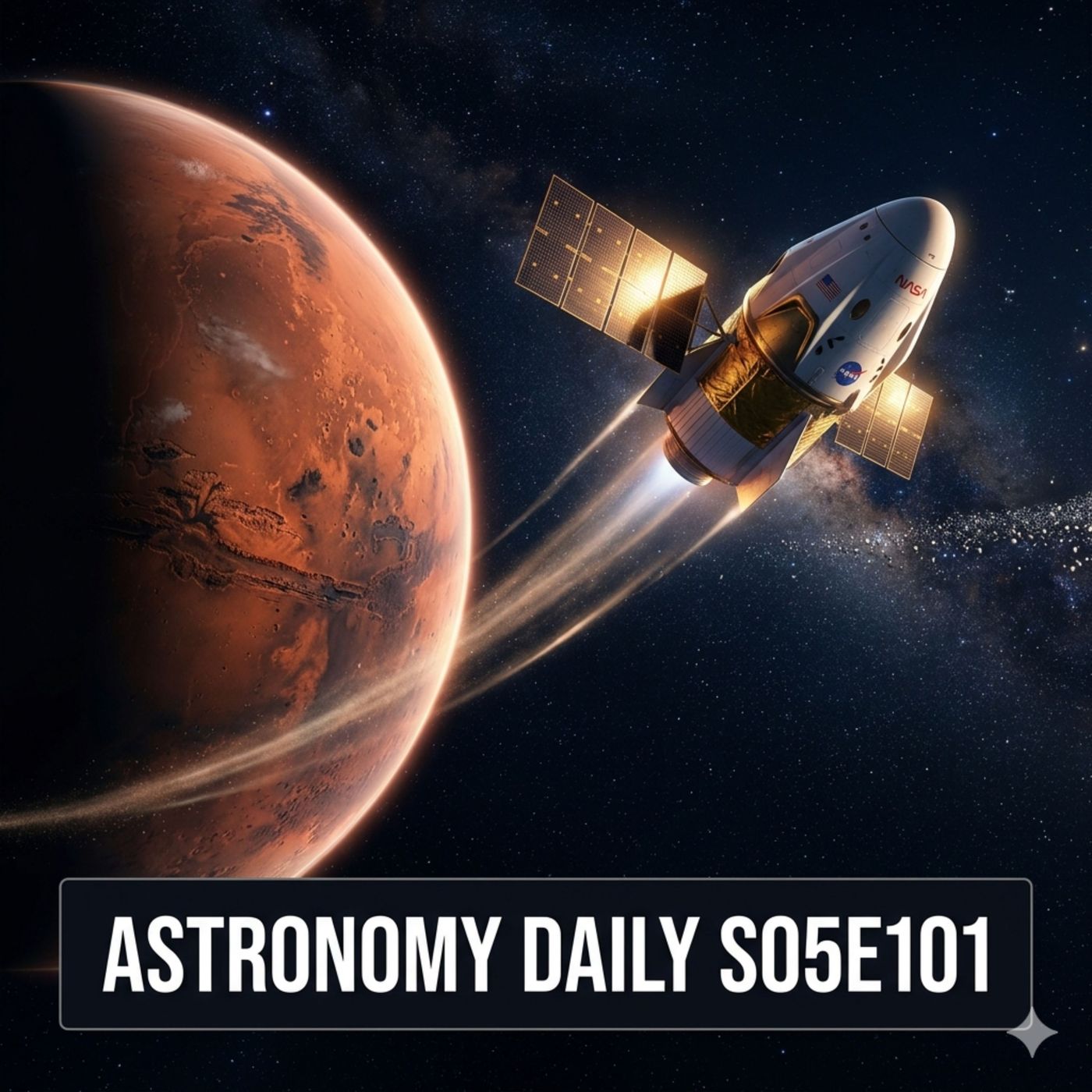
- Boeing's Starliner Mission Shift: A significant change has been announced for Boeing's Starliner 1 mission, now transitioning to a cargo-only mission to the ISS, scheduled for no earlier than April 2026. This decision follows a challenging crew flight test earlier this year, emphasizing safety and the need for further analysis and fixes related to thruster issues. The number of required flights for Boeing has also been reduced from six to four, reflecting the success of SpaceX's Crew Dragon.
- China's Shenzhou 22 Lifeboat Launch: In a remarkable display of operational maturity, China successfully launched the uncrewed Shenzhou 22 mission to its Tiangong Space Station as a lifeboat for the crew aboard Shenzhou 20, which sustained damage. This swift response showcases China's capability to handle emergencies, marking a significant milestone in their human spaceflight program.
- International Space Station's Busy Schedule: The ISS is a hive of activity as a Soyuz rocket prepares for a Thanksgiving Day launch carrying three new crew members. The station's crew is engaged in logistical operations, including moving the Cygnus XL cargo spacecraft and offloading supplies from the Japanese HTV X1 spacecraft, all while conducting vital science experiments.
- Mysterious Cosmic Sphere: Astronomers have discovered a strange red sphere, cataloged as CY J1249, racing through the Milky Way at over 1 million miles per hour. This extraordinary speed raises questions about its origin, with two theories suggesting it could be a fragment of a white dwarf or a failed star, necessitating further observations to uncover its true nature.
- ESA Student Internship Opportunity: The European Space Agency has issued a final call for applications for its 2026 student internship program, with a deadline of November 30th. This program offers students hands-on experience in various fields, contributing to real missions alongside top space experts, making it an excellent opportunity for aspiring space professionals. https://www.esa.int/About_Us/Careers_at_ESA/Final_call_to_apply_for_ESA_Internships_2026
- For more cosmic updates, visit our website at astronomydaily.io. Join our community on social media by searching for #AstroDailyPod on Facebook, X, YouTubeMusic, TikTok, and our new Instagram account! Don’t forget to subscribe to the podcast on Apple Podcasts, Spotify, iHeartRadio, or wherever you get your podcasts.
- Thank you for tuning in. This is Anna and Avery signing off. Until next time, keep looking up and exploring the wonders of our universe.
Boeing's Starliner Updates
[NASA](https://www.nasa.gov/)
Shenzhou 22 Mission Details
[China National Space Administration](http://www.cnsa.gov.cn/)
International Space Station Operations
[NASA](https://www.nasa.gov/)
CY J1249 Discovery
[NASA](https://www.nasa.gov/)
ESA Internship Program Information
[European Space Agency] https://www.esa.int/About_Us/Careers_at_ESA/Final_call_to_apply_for_ESA_Internships_2026
Become a supporter of this podcast: <a...
Avery: Hello and welcome to Astronomy Daily, your essential guide to the latest happenings in space exploration and discovery. I'm Avery. Anna: And I'm Anna. It's great to be with you today. We're covering everything from mission updates for NASA and Boeing to a rapid launch from China. Avery: That's right. We'll also be looking at the busy schedule aboard the International Space Station. And then we'll dive into a cosmic mystery, a strange red sphere hurtling through our galaxy. Plus a great opportunity for students from the European Space Agency.
Anna: So let's get started. Avery. Our first story is a significant pivot for a major commercial crew partner. Avery: Indeed. We're talking about Boeing's Starliner. NASA and Boeing have announced a major change for the Starliner 1 mission. Instead of carrying a crew of four astronauts as planned, it will now be a cargo only mission to the iss. Anna: And this mission has been pushed back, now scheduled for no earlier than April 2026. This follows a series of setbacks, doesn't it? Avery: Exactly.
The decision comes after the challenging crew flight test earlier this year. During that mission with astronauts Butch Wilmore and Suni Williams, the spacecraft experienced multiple problems with its thrusters. Anna: Right. Safety is paramount, of course. So NASA and Boeing are taking time to analyze the data and implement fix. The shift to a cargo mission seems like a way to still utilize the spacecraft and fulfill contractual obligations while they work on getting it fully crew rated. Avery: It does.
And speaking of contracts, there's another update there. The number of required flights for Boeing has been reduced from six down to four. This reflects the long delays and the success of SpaceX's Crew Dragon, which has been reliably flying astronauts since 2020. Anna: Mm mhm. So NASA has a dependable ride with SpaceX, which gives them the flexibility to be more cautious with Starliner. Avery: Precisely. The big question now is about the human element. What does this mean for the astronauts who were assigned to future Starliner missions?
Anna: That's m a key point. The future crew assignments are now uncertain. Several astronauts, including Scott Tingle and Mike Think, who were slated for Starliner 1, have already been reassigned to other flights, likely on Crew Dragon. It's a tough situation for the astronauts who have trained for years on this specific vehicle. Avery: Absolutely. It underscores the challenges of developing new human rated spacecraft. We'll be watching closely to see how Boeing addresses the thruster issues and what the future holds for Starliner's role in crewed missions.
Anna: From one nation's space program to another. Our next story takes us to China, which just demonstrated a remarkable capability. Avery: Yes, this is Quite impressive. China successfully launched the uncrewed Shenzhou 22 mission to its Tiangong Space Station. But this wasn't a routine supply run.
Anna: Not at all. The launch was expedited to serve as a launch on need mission. Essentially, it's a lifeboat. The Shenzhou 20 spacecraft currently docked at Tiangong sustained some form of damage and mission controllers decided it was necessary to send up a replacement to ensure a safe return vehicle. Vehicle for the crew. Avery: A lifeboat. That's the perfect term. And this is a first for China's human spaceflight program. Having a vehicle ready to go on short notice for a rescue scenario is a level of operational maturity that only a few space programs have ever achieved.
Anna: It really is. It mirrors the capability that Russia has long maintained for the ISS with its Soyuz spacecraft and that NASA now has with SpaceX. It means you can handle unforeseen emergencies like a, uh, micrometeoroid strike without having to decrew the station. Avery: Details on the damage to Shenzhou 20 are still sparse, but the swift and successful launch of Shenzhou 22 shows a significant confidence and robustness in their systems. Anna: MM A M major milestone. It signals that the Tiangong Space Station is intended to be a permanently occupied outpost with all the necessary safety and redundancy measures in place.
A very clear statement of their long term ambitions in space. Avery: Speaking of permanently occupied outposts, let's shift our focus to the International Space Station, where it's been a busy week of logistics and preparation. Anna: That's right. The Baikonodrome Cosmodrome is buzzing. A Soyuz rocket has been rolled out to the launch pad for a Thanksgiving Day launch. It will be carrying three new crew members up to the station. Avery: And to get ready for that arrival, the station crew had to play a bit of musical chairs with the spacecraft docked there.
Anna: They did. The Northrop Grumman's Cygnus XL cargo spacecraft had to be temporarily moved from its docking port. The station's robotic arm, Canadarm2, was used to unberth the Cygnus and maneuver it to a different location to free up the port needed for the incoming Soyuz. Avery: It's like a complex orbital ballet, all while traveling at over 17,000 miles per hour. Anna: Exactly. And as if that wasn't enough, the crew is also in the middle of offloading cargo from another recently arrived vehicle, the Japanese HTV X1 spacecraft.
So it's all hands on deck, right? Avery: Unpacking supplies, stowing them away, and all the while continuing their primary mission of conducting science experiments in microgravity. It's a constant Juggling act. Anna: It certainly is. These logistical operations are crucial for the long term functioning of the station, ensuring the crew has everything they need to live and work in orbit. A reminder that for every glamorous spacewalk, there are countless hours of meticulous planning and hard work.
Avery: Well said. Now Anna, from the meticulous work in near Earth orbit, let's venture out into the deeper cosmos for a genuine mystery. Anna: This is a fascinating one. Astronomers using data from the WISE telescope, have discovered something truly a, uh, mysterious red Sphere cataloged as CY J1249 that is tearing through the Milky Way at an incredible speed. Avery: And, um, when you say incredible, what are we talking about? Anna: Over 1 million miles per hour. It's one of the fastest objects of its kind ever detected.
Its velocity is so high that it's on a path to eventually escape the gravitational pull of our galaxy entirely. Avery: Wow. A million miles per hour. So what is it? And, um, where did it get that kind of speed? Anna: That's the mystery. Its high speed and its unusual composition are challenging our existing theories of how cosmic objects form and behave. Scientists are currently weighing two main theories for its origin. Okay, let's hear them. The first theory is that CY's J1249 could be a fragment of a white dwarf star.
In this scenario, a white dwarf in a binary system with another star would have siphoned off too much material from its companion, triggering a specific type of supernova explosion. Avery: Right, A, uh, type one. A supernova. Anna: Exactly. But instead of completely obliterating the white dwarf, this explosion might have been incomplete, leaving behind a super dense fragment and flinging it across the galaxy at immense speed. The red color could be due to an unusual mix of elements left over from that partial explosion.
Avery: That makes sense. Uh, a cosmic cannonball. What's the second theory? Anna: The other possibility is that it's a failed star, also known as a brown dwarf, or perhaps a rogue planet. In this case, it would have been born in a star system and then violently ejected through gravitational interactions with other more massive objects. Avery: Like a slingshot effect. Anna: Precisely. This could explain the speed, but the composition is still a bit of a puzzle for this theory. Further observations, probably with the James Webb Space Telescope, will be needed to analyze its light spectrum and figure out what it's made of.
Either way, it's a fascinating detective story. Avery: It really is a great reminder that the universe is filled with strange and unexpected objects. Finally today we have an important announcement for any students listening who dream of a career in space. Anna: Yes, this is a fantastic Opportunity. The European Space Agency, or esa, has issued issued a final call for applications for its 2026 student internship program. Avery: And that deadline is coming up very soon. Applications must be in by November 30th.
This program is an amazing gateway into the industry. Anna: It is. It offers students in a wide variety of fields, not just science and engineering, the chance to get hands on experience working alongside Europe's top space experts. Avery: Interns get to contribute to real missions, whether that's developing technology for future space probes, analyzing satellite data, or working on the administrative side of one of the world's leading space agencies. Anna: So if you are a student and you're passionate about space, this is a call to action.
Check out the ESA website for details on how to apply and qualifications needed. It could be the first step in an incredible career journey. The deadline again is November 30th and we'll put a link in the show notes for you. Avery: An excellent opportunity indeed. And on that note, that brings us to the end of our news roundup for this episode. Anna: It's been quite a journey. We covered the strategic shift for Boeing's Starliner to a cargo mission as they work through technical hurdles. Avery: We saw China's growing capabilities with their first ever launch on need rescue mission to the Tiangong Space Station.
Anna: We checked in on the busy traffic at the ISS with Soyuz on its way and cargo being shuffled around and. Avery: A, uh, strange something speeding through our galaxy. And of course, a chance to join ESA as an intern. Anna: Thank you for joining us on Astronomy Daily. We hope you'll tune in tomorrow for another look at the wonders of the cosmos. Until then, I'm Anna. Avery: And I'm Avery. Clear skies and keep looking up.


 Apple Podcasts
 Spotify
 Pocket Casts
 Castbox
 Overcast
 Podbean
 iHeartRadio
 Castro
 Goodpods
 Moon FM
 Podcast Addict
 Podcast Republic
 YouTube