
Space Travel Revolution, Lunar Impact Risks, and Infinite Energy in the Cosmos
In this episode
Highlights:- Europe's Nuclear-Powered Space Travel: Join us as we explore the European Space Agency's exciting plans for nuclear propulsion technology that could revolutionise space travel. This innovative approach aims to reduce the journey to Mars from nine months to just four or five, while also minimising harmful radiation exposure for astronauts. Discover how this technology could pave the way for a new era in space exploration.
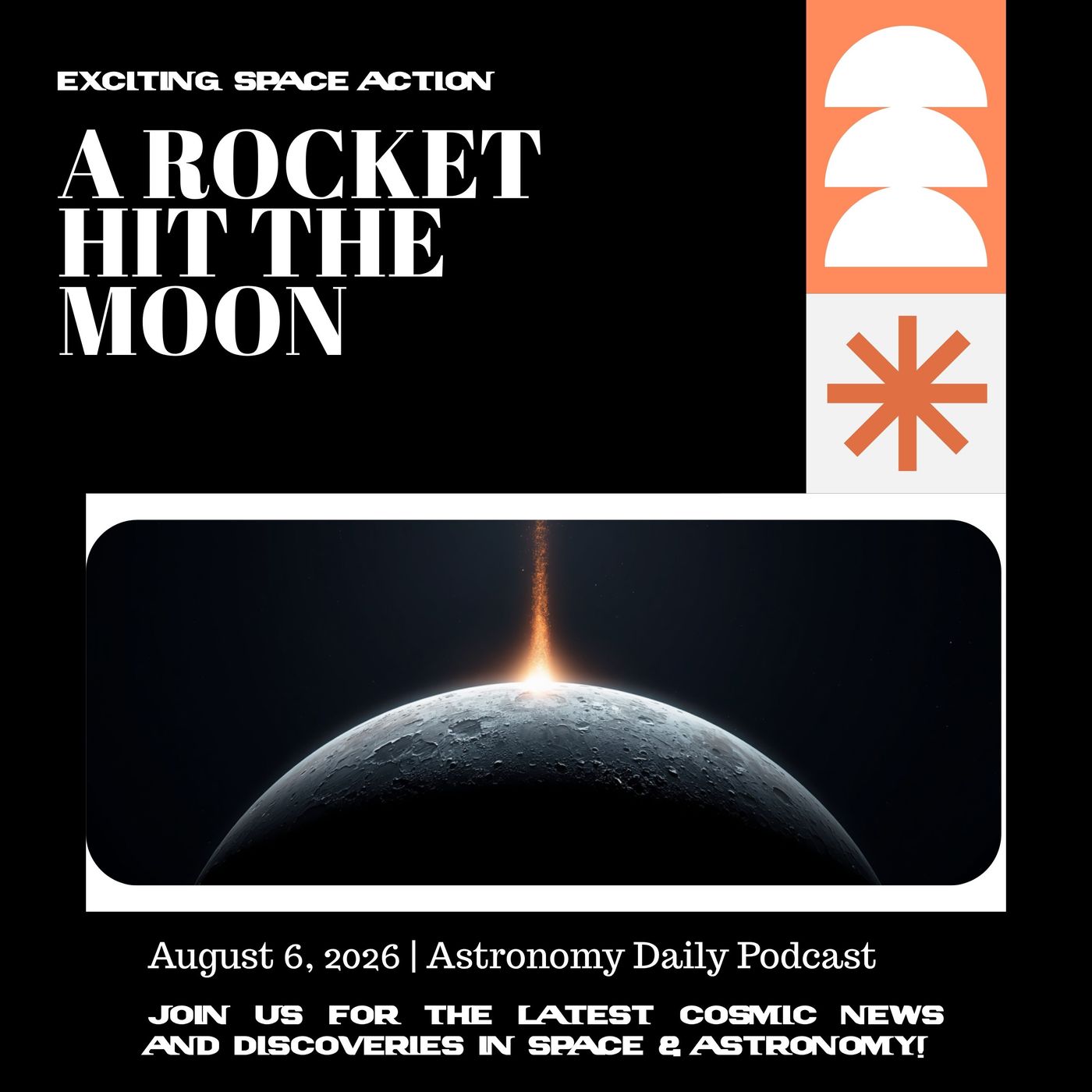
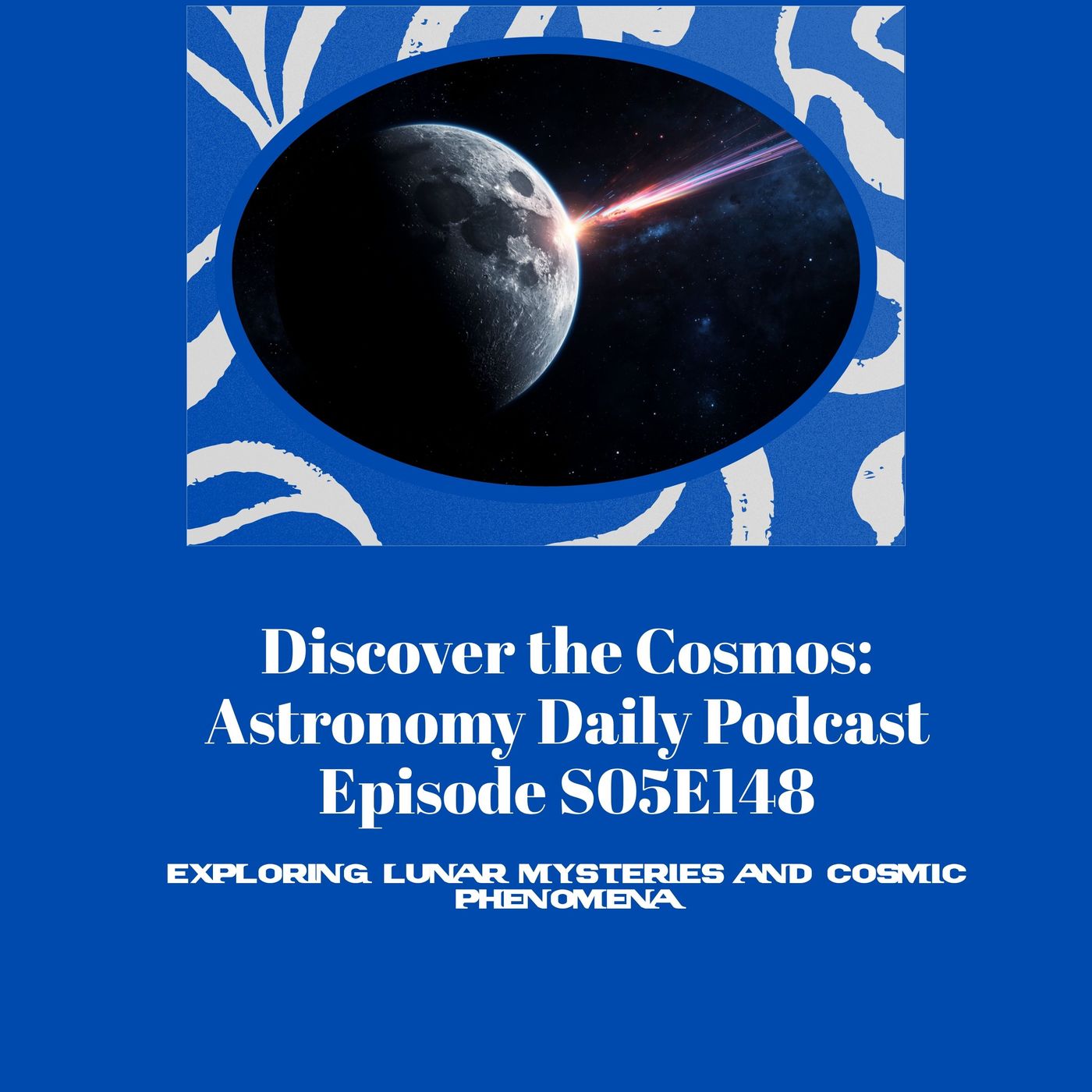
- Asteroid 2024 YR4's Lunar Encounter: We discuss the latest updates on asteroid 2024 YR4, which now has a slightly increased chance of impacting the Moon in 2032. With predictions refined by the James Webb Space Telescope, we delve into the implications of this potential encounter and what it means for planetary defence efforts.
- Commercial Launches from Sardinia: Exciting developments in the commercial space sector as Italian company OLM M plans to conduct launch services from Sardinia. With a new rocket named Starlight, designed for suborbital missions, we look at the historical significance of the launch site and what this means for future space endeavours.
- Discovery of Giant Radio Galaxies: Prepare to be amazed as astronomers unveil 15 newly discovered giant radio galaxies, the largest single objects in the universe. We discuss their immense sizes and unique structures, shedding light on the behaviour of supermassive black holes and the cosmic processes that lead to the formation of these colossal entities.
- Infinite Energy in the Vacuum of Space: Dive into the mind-bending concept of zero-point energy, where quantum fields contain infinite energy even in their lowest state. We explore the implications of this theory and why, despite its existence, this energy remains inaccessible for practical use.
For more cosmic updates, visit our website at astronomydaily.io. Join our community on social media by searching for #AstroDailyPod on Facebook, X, YouTube Music, TikTok, and our new Instagram account! Don’t forget to subscribe to the podcast on Apple Podcasts, Spotify, iHeartRadio, or wherever you get your podcasts.
Thank you for tuning in. This is Anna signing off. Until next time, keep looking up and stay curious about the wonders of our universe.
Chapters:
00:00 - Welcome to Astronomy Daily
01:10 - Europe's nuclear-powered space travel
10:00 - Asteroid 2024 YR4's lunar encounter
15:30 - Commercial launches from Sardinia
20:00 - Discovery of giant radio galaxies
25:00 - Infinite energy in the vacuum of space
✍️ Episode References
European Space Agency Nuclear Propulsion Plans
[ESA](https://www.esa.int/)
Asteroid 2024 YR4 Updates
[NASA](https://www.nasa.gov/)
OLM M Commercial Launches
[OLM M](https://www.olm-m.com/)
Giant Radio Galaxy Discoveries
[Australian Square Kilometre Array Pathfinder](https://www.astronomy.com/news/2023/10/scientists-discover-15-new-giant-radio-galaxies)
Zero-Point Energy Concept
[Quantum Field Theory](https://www.sciencedirect.com/topics/physics-and-astronomy/quantum-field-theory)
Astronomy Daily
[Astronomy Daily](http://www.astronomydaily.io/)
For Commercial-Free versions become a...
Hello and welcome to Astronomy Daily. I'm your host Anna and I'm thrilled to take you on a tour of the cosmos. Today we've got a stellar lineup of stories. We'll be discussing Europe's plans for nuclear-powered space travel, an asteroid that's got its sights set on the moon, and a company that's planning commercial launches from Sardinia. Plus, we'll explore newly discovered giant radio galaxies and the infinite energy hidden in the vacuum of space itself. So buckle up and let's get started. First up, let's talk about getting to Mars.
I mean, who hasn't dreamed of that, right? But it takes like forever. Currently we're looking at about nine months using the rockets we have now. But the European Space Agency, ESA, is looking into something pretty cool, nuclear propulsion. Now, instead of burning fuel and oxygen like a car engine, a nuclear reactor heats up a propellant like hydrogen and then shoots it out of the rocket nozzle. And get this, it's way more efficient than those chemical rockets were used to. This tech could cut a Mars trip in half from nine months to just four or five.
Plus, the astronauts would actually receive less harmful radiation, which is kind of backwards. It sounds odd, I know, because the engine itself produces radiation, but think about it. Space travelers are constantly bombarded by cosmic radiation during their journey. So cutting travel time in half drastically reduces their total exposure, and of course safety is a big deal. The reactor only turns on when the spacecraft is far from Earth in a safe orbit. Before that, the uranium fuel has very low radio activity.
And there are multiple radiation shields to protect the crew. The ESA team spent over a year analyzing this, and they think it's feasible. It's great to see Europe demonstrating its expertise, which could open a new era of space exploration. Now, let's switch gears and talk about asteroids. Remember asteroid 2024-Y-R-4? It caused a bit of a stir earlier this year because it had a relatively high chance of hitting Earth. Well, it's back in the news, but this time it's about the moon. So NASA's been keeping an eye on this asteroid, and new data suggests there's a slightly increased chance it could impact the moon in 2032.
Now, before you start picturing a lunar disaster, the odds only went up from 3.8% to 4.3%. Still not great, but hey, it's space, right? The James Webb Space Telescope actually played a role here. It was able to refine predictions of where the asteroid will be in 2032, which led to this updated probability. But even if it does hit the moon, don't worry, it won't alter the moon's orbit. So no need to panic. This whole situation is actually a good example of planetary defense and action. Scientists are constantly monitoring these objects, gathering data, and refining their predictions.
And even though 2024-R-4 doesn't pose a threat to Earth, it's giving us a chance to rehearse how we'd respond to a potentially hazardous asteroid in the future. Silver linings, right? All right, let's head back to Europe where there's some interesting stuff happening in the commercial launch sector. An Italian company called OLM, it's planning to offer commercial launch services from Sardinia. Yes, the island. They've actually gotten the green light to conduct small-scale engine tests at the Salto di Kira military installation.
This facility has a pretty cool history. It played a role in Italy's early space exploration efforts. Hosting sounding rocket launches way back in 1961. OLM has teamed up with a German student group called Alara Aerospace, and they're working on a rocket called Starlight. Starlight is about 10.5 meters tall, has a diameter of 450 millimeters, and weighs around 1000 kilograms. It's designed to carry a payload of up to 50 kilograms to an altitude of around 130 kilometers. And get this, they're planning to recover parts of the booster for reuse.
That's pretty neat. They are hoping for suborbital launches as early as 2026. Now for something truly mind-blowing, astronomers have discovered not one, not two, but 15 new giant radio galaxies. Yeah, you heard that right, 15, and these aren't your run-of-the-mill galaxies. These are the largest single objects in the entire universe. The discovery was made using the Australian square kilometer array pathfinder telescope, or ASCAP. And the galaxies are located within the sculptor field. To give you an idea of scale, these giants range in size from 3.7 million light years to a staggering 12.4 million light years across.
Our own Milky Way? A measly 105,700 light years wide. You could fit the Milky Way across the largest of these new giant radio galaxies, named ASCAP J01072347, more than 117 times. I mean, come on. ASCAP J01072347, which is about 1.5 billion light years away, is especially interesting because it has two sets of radio lobes, one inside the other, like a nesting doll. These inner lobes are bright and short, while the outer lobes are faint and elongated. This structure could provide clues about how giant radio galaxies get so incredibly big.
All right, then. How do these things get so massive? Well, typically, a giant radio galaxy is a huge elliptical galaxy, with a supermassive black hole at its center. When these black holes are feeding, they blast out powerful jets of matter at near light speeds. These jets create vast twin radio wave emitting lobes that stretch out for millions of light years. And it's believed that mergers between galaxies play a role in restarting supermassive black hole activity. And this happens, it recharges those jets, creating a second, brighter set of inner lobes.
By studying these galaxies, astronomers can learn about the time scales on which these black holes switch on and off. Crazy stuff. All right, buckle up because this next bit is going to bend your brain a little. We're talking about the idea of infinite energy locked in the vacuum of space time. Now, this concept comes from quantum field theory, which is basically where quantum mechanics meets Einstein's theory of special relativity. In this theory, particles aren't really what we think they are.
They're more like fields that stretch across all of space and time. And these quantum fields, they have energy associated with them at every single point in space. So even in an empty box, you've got an infinite number of points, which means there's an infinite amount of energy in that box. Even when these fields are in their lowest possible energy state, their ground state, there's still an infinite amount of energy lurking there. But here's the kicker. We can't actually use this energy. It's like it's there, but it's not accessible.
And that's because whatever its value is, it's the lowest energy state possible for the universe. Think of the Heisenberg uncertainty principle, which says that you can't know both the energy of a particle and how long it exists with perfect accuracy. This means that at the ground state, particles can pop into existence for a tiny fraction of a second, borrowing energy from the vacuum as long as they give it back super quick. These are called virtual particles, and they're basically the manifestation of all the fundamental energies of the quantum fields that fill space time.
So the bottom line is this zero point energy. It's the background on top of which all of physics happens. You can't go lower than the ground floor, so you can't extract energy from it, which means unfortunately we're going to have to stick to doing things the old fashioned way for now. I think that in trying to explain that I've made my brain hurt. And on that note, we come to the end of today's edition of Astronomy Daily. We covered some pretty wild stuff, didn't we? From Europe's nuclear-powered rocket plans to potentially slash the time it takes to get to Mars, to that asteroid that, "Well, might give the moon a little nudge."
Plus those giant radio galaxies? Seriously mind-blowing. And who could forget the headscratcher about the infinite energy hiding in the vacuum of space? Thanks for joining me, Anna, on this journey through the cosmos. Don't forget to head over to AstronomyDaily.io, where you can sign up for our free daily newsletter, keeping you in the loop with all the latest space and astronomy news. Our news feed is constantly updated, so there is always something new to discover. And of course, make sure you subscribe to the podcast on Apple Podcasts, Spotify, YouTube, or wherever you get your podcasts.
That way you'll never miss an episode. Catch you next time for more AstronomyDaily. In the meantime, keep looking up. Bye! ♪ And today, star is the toe ♪ ♪ And today, star is the toe ♪ ♪ And today, star is the toe ♪ ♪ And today, star is the toe ♪ [MUSIC]

 Apple Podcasts
 Spotify
 Pocket Casts
 Castbox
 Overcast
 Podbean
 iHeartRadio
 Castro
 Goodpods
 Moon FM
 Podcast Addict
 Podcast Republic
 YouTube