
S03E150: Europa Clipper's Journey, SpaceX's Mars Plans, and Volcanically Active Moon
In this episode
Astronomy Daily - The Podcast: 10th October 2024Welcome to Astronomy Daily, your Daily dose of space and Astronomy news. I'm your host, Anna. Today we have an exciting lineup of stories that I can't wait to share with you. First, we'll delve into NASA's Europa Clipper mission, which is ready to embark on an epic journey to Jupiter and its intriguing moon Europa. Then we'll talk about Elon Musk and SpaceX's ambitious plans to launch uncrewed starships to Mars in just two years, paving the way for future human colonization. We'll also uncover a groundbreaking study on fast radio bursts that might finally solve the mystery behind these cosmic phenomena. And if that isn't enough, we'll explore new findings suggesting the moon might still be volcanically active today. Lastly, we'll highlight NASA's innovative solar sail that you can actually spot from Earth. Buckle up, space enthusiasts. Let's dive in.
Highlights:
- NASA's Europa Clipper Mission: NASA's Europa Clipper spacecraft has reached a significant milestone by passing its final technical review. This means it's now all set for its journey towards Jupiter. With a launch window slated between October 10 and 30th, the mission aims to delve into the mysteries of Jupiter's moon Europa, potentially harboring an ocean beneath its icy crust.
- SpaceX's Mars Ambitions: Elon Musk recently announced that SpaceX plans to launch its first uncrewed starships to Mars within the next two years. These missions are crucial for testing the reliability of landing these advanced spacecraft intact on the Martian surface. If successful, crewed flights to Mars could follow just two years later, paving the way for human colonization.
- Fast Radio Bursts Mystery Possibly Solved: A groundbreaking new study by the Italian National Institute for Astrophysics has advanced our understanding of fast radio bursts (FRBs). Using the Very Large Array telescope, researchers recorded the weakest persistent radio emission for an FRB, shedding light on the mysterious origins of these powerful cosmic events.
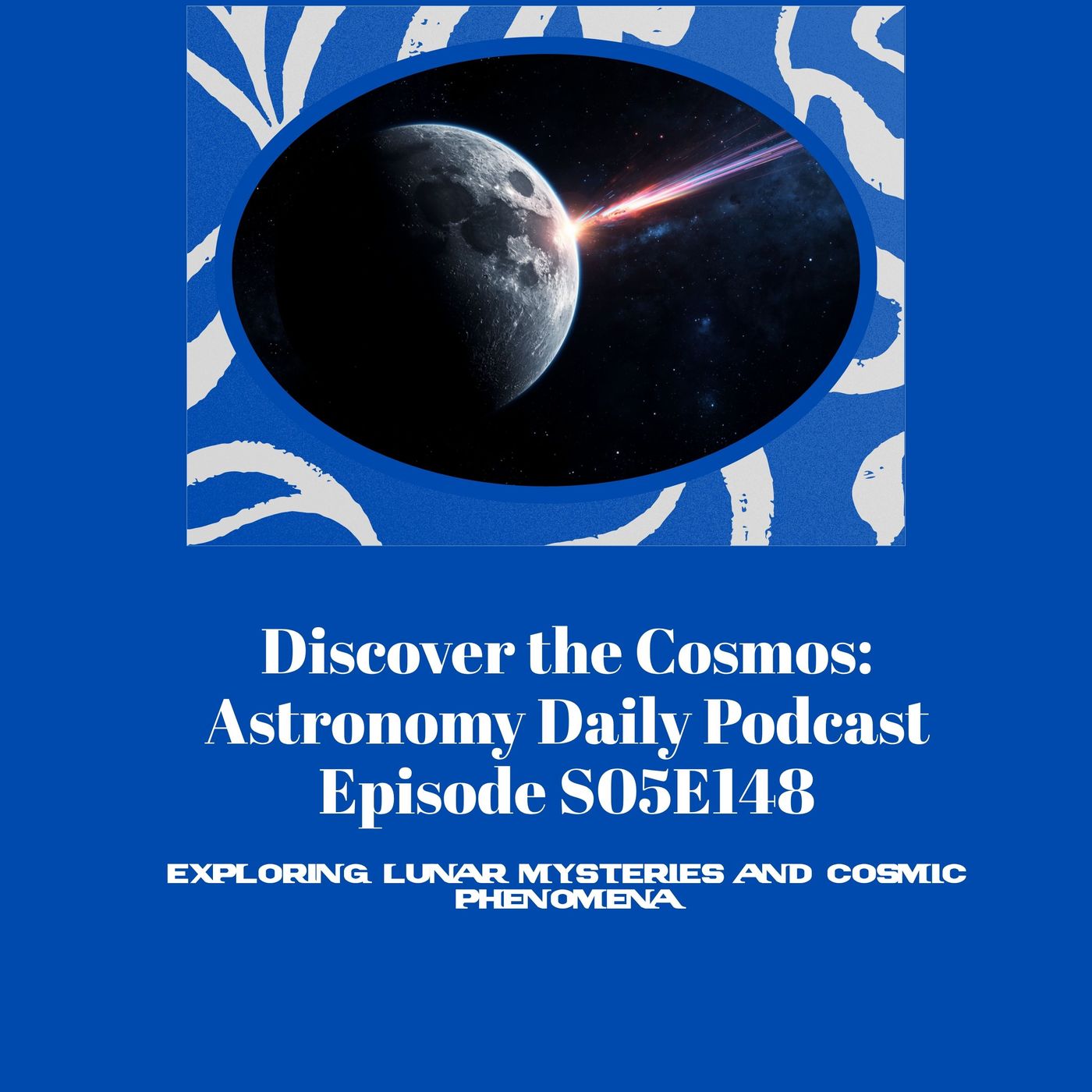
- Volcanic Activity on the Moon: Recent findings from the Chinese Chang'e 5 mission suggest that the moon might still be volcanically active. Tiny glass beads found in lunar samples indicate that volcanic activity might have occurred as recently as 123 million years ago, challenging the traditional belief that lunar volcanism ceased 3 to 3.8 billion years ago.
- NASA's Solar Sail: NASA's advanced composite solar sail system is now visible from many locations around the world. This groundbreaking solar sail, which harnesses sunlight for propulsion, represents an exciting step towards more sustainable and accessible deep space missions. Engage with NASA's "Spot the Sail" campaign and track the solar sail using the free NASA app.
For more space news, be sure to visit our website at astronomydaily.io. There you can sign up for our free Daily newsletter, catch up on all the latest space and Astronomy news with our constantly updating news feed, and listen to all our back episodes.
Don't forget to follow us on social media. Just search for #AstroDailyPod on Facebook, X, YouTubeMusic, and TikTok to stay connected with our community and never miss an update.
Thank you for tuning in, and remember to keep your eyes on the skies. Until next time, may you be blessed with clear skies.
Sponsor Links:
NordVPN
NordPass
Malwarebytes
Welcome to Astronomy Daily, your daily dose of space and astronomy news. I'm your host Anna. Today we have an exciting lineup of stories that I can't wait to share with you. First, we'll delve into NASA's Europa Clipper mission, which is ready to embark on an epic journey to Jupiter and its intriguing moon, Europa. Then we'll talk about Elon Musk and SpaceX's ambitious plans to launch uncrude starships to Mars in just two years, paving the way for future human colonization. We'll also uncover a groundbreaking study on fast radio bursts that might finally solve the mystery behind these cosmic phenomena.
And if that isn't enough, we'll explore new findings suggesting the Moon might still be volcanically active. Today. Lastly, we'll highlight NASA's innovative solar sale that you can actually spot from Earth. Buckle up, space enthusiasts, let's dive in. Starting with some good news, NASA's Europa Clipper spacecraft has reached a significant milestone by passing its final technical review. This means it's now all set for its journey towards Jueter, with a launch window slated between October tenth and thirtieth.
The Europa Clipper mission is one of NASA's most ambitious projects to date, aimed at delving into the mysteries of Jupiter's moon, Europa. Europa has long fascinated scientists due to its icy exterior and the tantalizing possibility of a subsurface ocean. Since the Voyager flybys in nineteen seventy nine revealed its ice covered surface, subsequent studies have increasingly suggested that Europa may harbor an ocean beneath its icy crust, an ocean that could potentially support life. The Europa Clipper will undertake a two point nine billion kilometer journey to Jupiter, propelled by gravity assists from both Mars and Earth.
After a six year voyage, the spacecraft will enter Jupiter's orbit, starting a four year mission of close up exploration. It will use gravitational nudges from Jupiter's moons to make an incredible forty nine flybys of Europa, coming as close as twenty five kilometers to the Moon's surface. This proximity will enable the mission to gather unprecedented data and direct samples from the geyser like plumes jetting through cracks in Europa's ice. With a hefty budget of five billion dollars, Europa Clipper is not only NASA's largest robotic spacecraft, but also one of its most expensive.
Its sophisticated suite of sensors and instruments will help scientists delve into Europa's potential habitability by scrutinizing its icy crust, examining the ocean below, and determining its chemical composition and geology. However, the mission hasn't been without challenges. Just last May, NASA engineers discovered that hundreds of crucial transistors in the spacecraft might not withstand the intense radiation belts surrounding Jupiter posed by its enormous magnetic field. These radiation belts act like a particle accelerator, creating a perilously high radiation environment.
Fortunately, after rigorous four month round the clock tests, it was confirmed that the transistors, although degraded during storage, remain robust enough to complete the mission. This was largely due to the self repairing process known as self annealing, which allows the transistors to recover when outside the radiation belts. The spacecraft's giant solar panels also ensure it has the necessary power to stay functional even in the dim light conditions near Jupiter. Next up today, Elon Musk recently announced some exciting news for space enthusiasts.
SpaceX plans to launch its first uncrude starships to Mars within the next two years. The missions are geared towards testing the reliability of landing these advanced spacecraft intact on the Martian surface. Musk explained that these initial uncrude missions are a crucial step in ensuring that the technology is robust and safe. If these landings prove successful, SpaceX aims to launch its first crude flights to Mars just two years later. Imagine that in just four years, we could see humans embarking on their first journey to the red planet.
SpaceX's long term goal is nothing short of revolutionary, Musk and visions establishing a self sustaining city on Mars within the next two decades. This bold plan involves ramping up the flight rate exponentially after the u s initial crude missions, eventually enabling large scale human habitation. In their quest to make interplanetary traveler reality, SpaceX has already achieved significant milestones. In June, a Starship rocket completed a full test mission around the globe, surviving a fiery hypersonic return from space and landing successfully in the Indian Ocean.
This breakthrough demonstration has set the stage for the upcoming Mars missions. The Starship is designed to be a versatile, next generation spacecraft capable of carrying both people and cargo to various destinations in our Solar System. SpaceX plans to use it for Moon missions later this decade, and ultimately for voyages to Mars. This ambitious roadmap could pave the way for humanity to become a multiplanetary species. So mark your calendars and keep an eye on the skies as we are on the verge of an extraordinary new chapter in space exploration.
With its groundbreaking technologies and ambitious goals, SpaceX is bringing us one step closer to the reality of living on another planet. Next, let's take a look at a perplexing mystery that may have been solved. A groundbreaking new study has advanced our understanding of one of the most elusive phenomena in modern astrophysics, fast radio bursts or FRBs, Led by the Italian National Institute for Astrophysics I and AF and using the Very Large Array Telescope, researchers have recorded the weakest persistent radio emission for an FRB, yet shedding light on the mysterious origins of these powerful cosmic events.
Fast radio bursts are incredibly brief, lasting mere milliseconds, but in that short time they release an immense amount of energy. Most FRBs originate from outside our galaxy and have puzzled scientists since their discovery just over a decade ago. This latest study focused on a specific FRB named FRB two zero two zero one one two four A, located about one point three billion light years away. The study team utilized advanced observational techniques with the VLA, the most sensitive radio telescope in the world.
They confirmed theoretical predictions that a plasma bubble, possibly driven by a magnetar or a binary star system, causes these persistent radio emissions. For those unfamiliar, a magnetar is a highly magnetized neutron star, while an X ray binary is a system of a neutron star or black hole drawing material from a companion star. The persistent emissions they observed behave as predicted by the nebular emission model, which describes a bubble of ionized gas surrounding the central engine of the FRB.
Lead author gabrielle Bruni from IAF explained that their observations illuminated the physical processes at work. This bubble, created by intense winds from either a magnetar or an X ray binary, produces the sustained radio emissions. This direct physical relationship between the central engine of frb's and the plasma bubble offers a significant breakthrough in our understanding of these enigmatic bursts. The research builds on earlier work by Luigi Piro, who had identified this persistent emission in the frb's host galaxy, but lacked the precision to definitively connect the two phenomena.
By combining high resolution VLA observations with data from the NOEMA interferometer and the Grand Telescopio Canarias for a comprehensive view, the team was able to confirm the nebular model. Interestingly, most FRBs do not exhibit persistent emissions, making these findings particularly valuable. This discovery could be a crucial piece in the puzzle, helping researchers understand the mechanisms behind these extraordinary cosmic occurrences. The insights gained from this study not only deepen our comprehension of FRBs, but also signify a leap forward in the field of astrophysics.
And so the mystery of fast radio bursts continues to unravel, one faint signal at a time. Now this is a finding I didn't see coming. Recent findings from the Chinese Chang five mission have unveiled a groundbreaking revelation the Moon might still be volcanically active. This mission brought back samples of lunar dirt, and among them, tiny glass beads were discovered, which indicate that volcanic activity on the Moon might have occurred much more more recently than we previously believed. Traditionally, scientists thought lunar volcanism ceased around three to three point eight billion years ago.
These massive volcanic planes, known as lunar maria, are visible to us as the dark patches that form the Man in the Moon. However, the Changay V mission has turned this theory on its head. The mission, which returned to Earth in December twenty twenty, found evidence suggesting that volcanic eruptions could have taken place as recently as one hundred twenty three million years ago. While one hundred twenty three million years might sound ancient, in geological terms, it's like yesterday. This means that the Moon may have been volcanically active throughout its entire history, and could even be active today.
Among the three thousand tiny glass beads analyzed by researchers, three stood out due to their volcanic origin. These beads were found near volcanic domes in the oceanis Prosollarum region. Glass beads can form through two primary mechanisms, asteroid impacts or volcanic activity. By analyzing the composition and formation of the use these particular beads, scientists determined that they resulted from volcanic eruptions, not impacts. By using uranium lead dating, a method involving the radioactive decay of uranium into lead, the researchers determined the age of these beads to be around one hundred twenty three million years old plus or minus fifteen million years.
This is not the first piece of evidence suggesting recent volcanic activity on the Moon. In twenty fourteen, NASA's Lunar reconnaissance orbiter imaged features known as irregular mare patches or imps. These patches are smooth, shallow mounds with adjacent rocky terrain, indicating volcanic origins. Some of these features appear to be as young as fifty to one hundred million years old, supporting the idea that the Moon might not be as geologically inactive as once thought. The implications of this discovery are significant.
For one, understanding the recent volcanic activity on the Moon could provide clues about its thermal history and internal processes. This could also alter our approach to future lunar missions. If volcan panic activity is indeed present, it may even be possible to tap into this geothermal energy to support human habitats on the Moon. Furthermore, the potential for volcanic outgassing raises the question of transient lunar phenomena, mysterious hazes observed by amateur astronomers that might be linked to volcanic activity.
While these observations have often been dismissed, the recent evidence suggests they might warrant a closer look. In summary, the discoveries made by the chong of FIV mission challenge our prior understanding of the Moon. The geologically recent volcanic activity not only reshapes our knowledge of lunar history, but also opens new possibilities for future exploration and utilization of the Moon's resources. Fascinating times lie ahead as we continue to unravel the Moon's secrets, potentially preparing us for more ambitious endeavors in space exploration.
Okay, here's one you'll need to look up for. NASA's advance composite solar Sale system is now visible from many locations around the world. This groundbreaking solar sale, which is part of NASA's efforts to test new space technologies, has fully deployed its reflective sale in orbit. The sale harnesses sunlight for propulsion, a method that promises to enable low cost deep space missions by eliminating the need for conventional rocket fuel. To engage the public with this technological marvel, NASA has launched the hash spot the Sale campaign.
Stargazers and space enthusiasts can track the solar Sale using the free NASA app, available on both iOS and Android platforms. By entering their location, users can receive a schedule of upcoming sightings, and with the app's augmented reality tool pinpoint the sale's real time location in the night sky. This visibility from Earth opens up a fantastic opportunity for amateur astronomers and curious onlookers alike to witness and participate in space exploration firsthand. Don't forget to share your viewing experiences on social media using the hashtag hash spot the sale for a chance to be featured on NASA's official channels.
As we continue to push the boundaries of space exploration, the advanced composite solar Sales system represents an exciting step towards more sustainable and accessible missions into the cosmos. That's all for today's episode of Astronomy Daily. I've been your host, Anna. If you'd like to dive deeper into any of the stories we covered, or stay updated with the latest in space and astronomy, be sure to visit our website at Astronomy Daily dot io. There you can sign up for our free daily newsletter, catch up on all the latest space and astronomy news with our constantly updating news feed, and listen to all our back episodes.
You can also join our community on social media. Just search for astro Daily Pod on Facebook, x YouTube, and TikTok. We share new content and updates on those platforms, Plus it's a great way to connect with other astronomy enthusiasts. Thank you for tuning in, and remember to keep your eyes on the skies until next time. May you be blessed with clear skies. N is the Tall Star, is the toll Star, is the to



 Apple Podcasts
 Spotify
 Pocket Casts
 Castbox
 Overcast
 Podbean
 iHeartRadio
 Castro
 Goodpods
 Moon FM
 Podcast Addict
 Podcast Republic
 YouTube