
S02E34: Russian Lunar Crash, Martian Oxygen, and Pulsar Discoveries
In this episode
*Hosted by Tim Gibbs with AI Assistant Hallie*- **NASA's Lunar Trailblazer Satellite** - Mission: Search for water on the moon. - Details: Lockheed Martin built, measures 11.5 feet wide, weighs 440 pounds. - Launch: No earlier than 2024, alongside the Intuitive Machines IM-2 mission. - Instruments: Lunar Thermal Mapper (LTM) sensor from the University of Oxford. - Purpose: Map lunar surface temperature and variations in minerals. - **Oxygen Production on Mars** - Need: 30 metric tons of oxygen for a crew of six astronauts. - Solution: Produce oxygen on Mars from its abundant CO2. - Recent Development: Mars Oxygen ISRU Experiment (Moxie) Project. - Research: Donald Rapp and Eric Hinderman's model for a full-scale Mars ISRU system. - **Discoveries with the FAST Telescope** - Led by: Professor H.A.N. Gene Lin from the National Astronomical Observatories of the Chinese Academy of Sciences. - Findings: Distinct dwarf pulses from pulsar PSR B2111+46. - Observations: Galactic Plane Pulsar Snapshot Survey. - New Emission State: Dwarf pulses.
4. **Spotlight Story** - **Russia's Lunar 25 Probe Crash** - Incident: Lunar 25 crashed during pre-landing maneuvers. - Last Contact: 2.57 pm on a Saturday. - Background: Russia's first moon mission in almost 50 years. - Mission Goal: Soft landing on the Lunar South Pole. - Historical Context: Last attempt in 1989 with the Phobos 2 probe. - Statement: Roscosmos Boss Yuri Borosov had estimated a 70% success rate.
5. **Hallie's Joke of the Week** - "Why did the scarecrow win an award? “
6. **Closing Remarks** - Find all episodes and the parent podcast, SpaceNuts, at spaceknuts.io or bitesz.com. - Join the conversation on the Facebook page: SpaceNuts podcast group. - Weekly Schedule: Steve Dunkley on Mondays and Tim Gibbs on Fridays. - See you next week!
Thank you for tuning in to the Astronomy Daily podcast!
Become a supporter of this podcast: https://www.spreaker.com/podcast/astronomy-daily-latest-space-news--5648921/support.
Sponsor Details:
Ensure your online privacy by using NordVPN. To get our special listener deal and save a lot of money, visit www.astronomydaily.io/nordvpn. You'll be glad you did!
Get the best secure and private email on the planet. Stop your Government, google and who knows who else spying on every email you write. Do what we did and use ProtonMail. They beleive in privacy and there are no ads in their business model...yet they still provide a free forever service. Check them out and get out special deal at www.astronomydaily.io/protonmail
Become a supporter of Astronomy Daily by joining our Supporters Club. Commercial free episodes daily are only a click way... Click Here
Good everybody, and welcome to the Astronomy Daily podcast. My name is Tim Gibbs and I will be your host for today's episode. We'll be First of all, I would like to thank all of our listeners for getting us into the top five of the Astronomy Podcast charts and in the top one hundred of the Science podcast charts. Thank you very much to everybody. We are truly humbled. Both Steve and I are. Now as usual, I have my digital AI report a Halle in the studio with me. Now, Hally, I understand you did an extra show with Steve.
Hi, Tim, Yes, it was great to do an extra episode and unexpected as well, but always fun to do episodes with Steve. Great, well done, Hallie. Now do you have some news headlines for us this week? I do, indeed, here are my top stories. NASA's Lunar Trailblazer satellite is ready to hunt for water on the Moon. Lunar Trailblazer joins a growing list of probes and landers heading towards the Moon to search for water ice. NASA's Lunar Trailblazer mission is almost ready for liftoff. The Lockheed Martin built Lunar Trailblazer satellite is fairly small as satellites go, measuring just eleven point five feet three point five meters wide and weighing around four hundred and forty pounds two hundred and twenty kilograms.
When it launches no earlier than twenty twenty four on a yet to be determined rideshare mission, along with the Intuitive Machines i AM two mission, it will hunt for water on the Moon's surface and attempt to map its abundance and distribution. The satellite recently received the second of its two instruments, the Lunar Thermal Mapper LTM censor, built by the University of Oxford in England. LTM is designed to use infrared light to map the surface temperature of the Moon as well as mapping variations in the minerals that make up the lunar surface.
According to a Jet Propulsion Laboratory JPL statement, doing so will enable the satellite to identify lunar locations where water might be found. Designing, building, testing, and now delivering LTM for its trip to the Moon is a fantastic example of the innovative and dedicated teams at Oxford and across the UK especially given the challenges of the recent pandemic. University of Oxford physicist Neil Bowls set in the statement, the data from the mission will help us to understand how water is transported across the surface and potentially captured in cold traps near the lunar poles, allowing follow up from future human robotic exploration.
Human missions to Mars necessitate an efficient launch system to ascend from the planet and rendezvous with earthbound return vehicles. The critical component for this ambitious task oxygen, not only for as cent propellants, but possibly also for life support. To facilitate a crew of six astronauts. Approximately thirty metric tons of oxygen propellants would be required for a cent. This significant amount would be cumbersome and costly to transport from Earth. The solution produce it right on Mars.
Drawing oxygen from mars abundant carbon dioxide CO two presents a significant advantage. This innovative technique is part of an approach termed Institute resource Utilization ISRU. Recent accomplishments such as the Mars Oxygen ISRU Experiment MOXI project, have demonstrated the viability of a prototype system that can successfully convert Martian CO two into oxygen O two. Now the focus shifts towards elevating this prototype into a fully operational system. In their latest research published in Space Science and Technology, researchers Donald Rapp and Eric Hinderman lay the groundwork for a full scale Mars ISSRU system.
Their model proposes producing thirty metric tons of liquid oxygen over fourteen months, accounting for the diurnal and seasonal shifts in the Mars environment. Using the five hundred meter Appcher Spherical Radio Telescope FAST. A research team led by Professor H. N. Gene Lynn from the National Astronomical Observatories of the Chinese Academy of Sciences an AOC has detected distinct dwarf pulses from a bright pulsar PSAR B twenty one eleven plus forty six and study the radio emission in unprecedented details and probed the unknown physics in the magnetosphere.
Pulsars generally emit periodic radio signals. However, some old pulsars occasionally quenched for some periods, a phenomenon known as a pulse nulling. Perhaps the particles cannot be produced in the magnetosphere due to improper conditions or changes in the magnetic field structure and radiation region, or the area for particle creation is then flooded by plasma produced in other areas. The exact reason for the absence of pulsar radiation is a mystery, because it is impossible to probe the physical state of the pulsar's magnetosphere when radiation is quenched.
PSR B twenty one eleven plus forty six is a relatively old pol And scientists have long known that that emission from this pulsar often nulls for periods of time. However, dozens of unusually weak, very narrow pulses previously unobserved were detected during ordinary nulling periods when it was serendipitously observed on August twenty fourth, August twenty sixth, and September seventeenth, twenty twenty as part of the Galactic Plane Pulsar Snapshot Survey, a key project of the Fast to Hunt pulsars.
To verify this new kind of emission state, the researchers observed this pulsar for two hours again on March eighth, twenty twenty two. Finally, we picked out one hundred and seventy five such narrow weak pulses, said doctor chinshuis the first author of the study. According to doctor Chen, such pulses stand out from normal pulses in terms of pulse width and energy, and thus have been named dwarf pulses the Astronomy Duly Podcasts. Thanks for that tally. Now I want to talk about one story today, and this Russia's lunar probe crashing on the Moon.
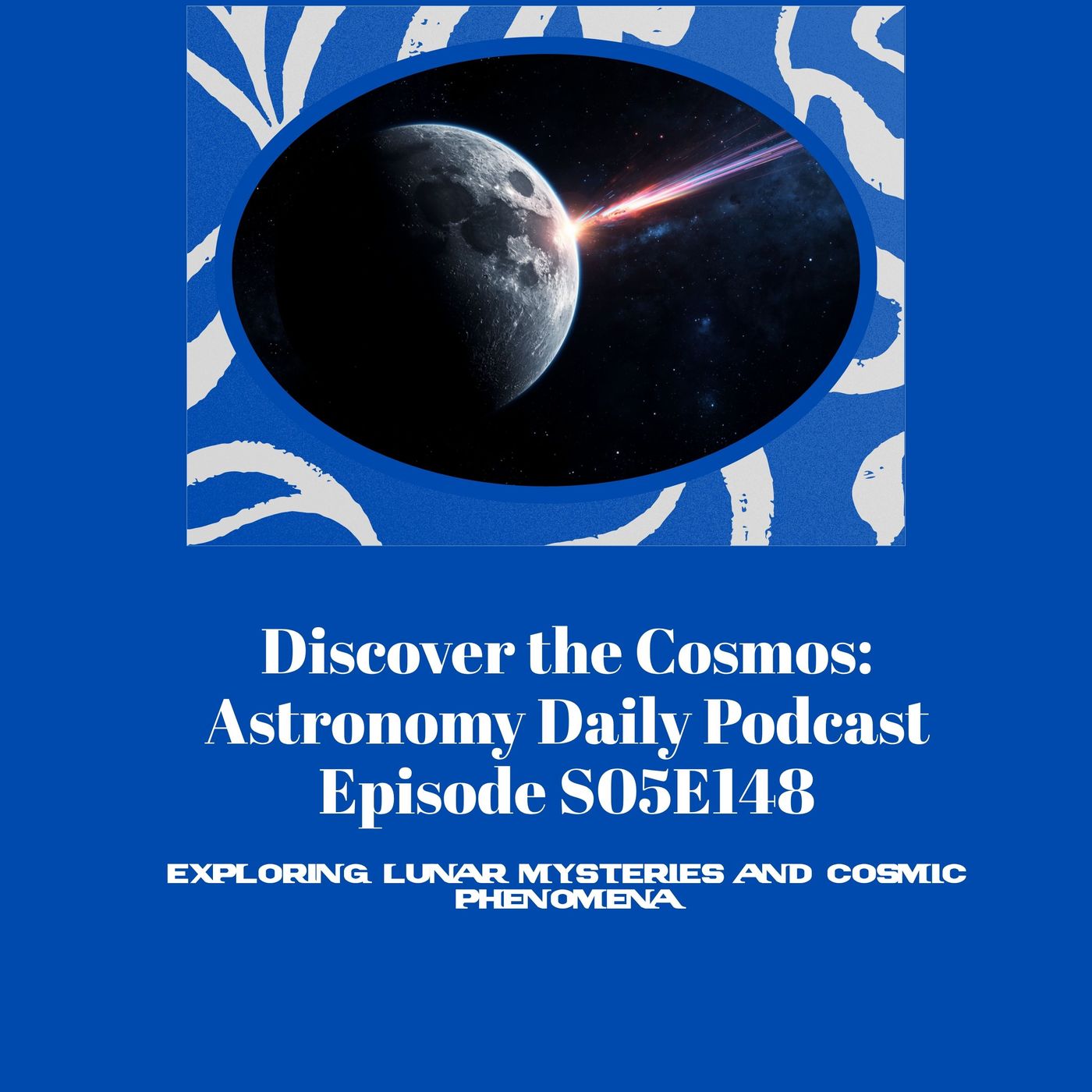
The Lunar twenty five probe, Russa's first Moon mission in almost fifty years, has crashed on the Moon after an incident during pre landing maneuvers. The Russian space agency ross Cosmos has said communications with Lunar twenty five was lost at two fifty seven pm on Saturday. According to preliminary findings, the lander has ceased to exist following a collision with the Moon's surface. Yes, I'm sure Russia has been spending too much money on a war somewhere rather than spending a decent amount of money on research my personal view, But moving on.
Measure has taken on August the nineteenth and twenty to locate the craft to make contact with it were unsuccessful. The space agency said in an investigation would be launched into the causes of the crash, without giving any indication of what the technical problem might occurred. With Lunar twenty five, Moscow had hoped to build on the legacy of its Soviet era lunar programming, making a return to independent lunar explanation in the face of growing isolation from the west. The eight hundred kilogram Lunar twenty five probe was to have made a soft landing on the lunar South Pole, the first in history.
Russia has not attempted to land on a celestial body since nineteen eighty nine, when the Soviet Union's ill fated Phobos two probe to explore the moons of Mars failed due to an onboard computer malfunction. Roskosmos boss Yuri Borisov has said that the venture would be risky, telling President of Vladimir putin face to face in June that the probability of its succeeding was around about seventy percent. Now, Halle, do you have a terrible joke for us this week? Why did the scarecrow win an award because he was outstanding in his field of cornceptual physics.
The Astronomy Daily podcast. Thanks everybody for listening to Astronomy Daily. You can find all of our episodes, plus our parent podcasts, Space Nuts at space nuts dot io or at bytes dot com. And don't forget that you can join in the conversation yourself by going to our Facebook page Space Nuts podcast group. You can hear Steve Dunkley on Mondays and myself, Tim Gives on Fridays for a full show. Thanks for listening, see you next week, Bye for now.



 Apple Podcasts
 Spotify
 Pocket Casts
 Castbox
 Overcast
 Podbean
 iHeartRadio
 Castro
 Goodpods
 Moon FM
 Podcast Addict
 Podcast Republic
 YouTube