
Psyche's Journey Resumes, Starship's Kaboom, and Lunar Calibration Breakthroughs
In this episode
(00:00:00) Welcome to Astronomy Daily(00:01:18) Psyche mission update
(00:02:45) Abell 2255 galaxy cluster
(00:06:28) Arcstone mission
(00:11:28) June's Bootid meteor shower
(00:12:56) SpaceX Starship incident
(00:16:26) And that's a wrap!
Highlights:
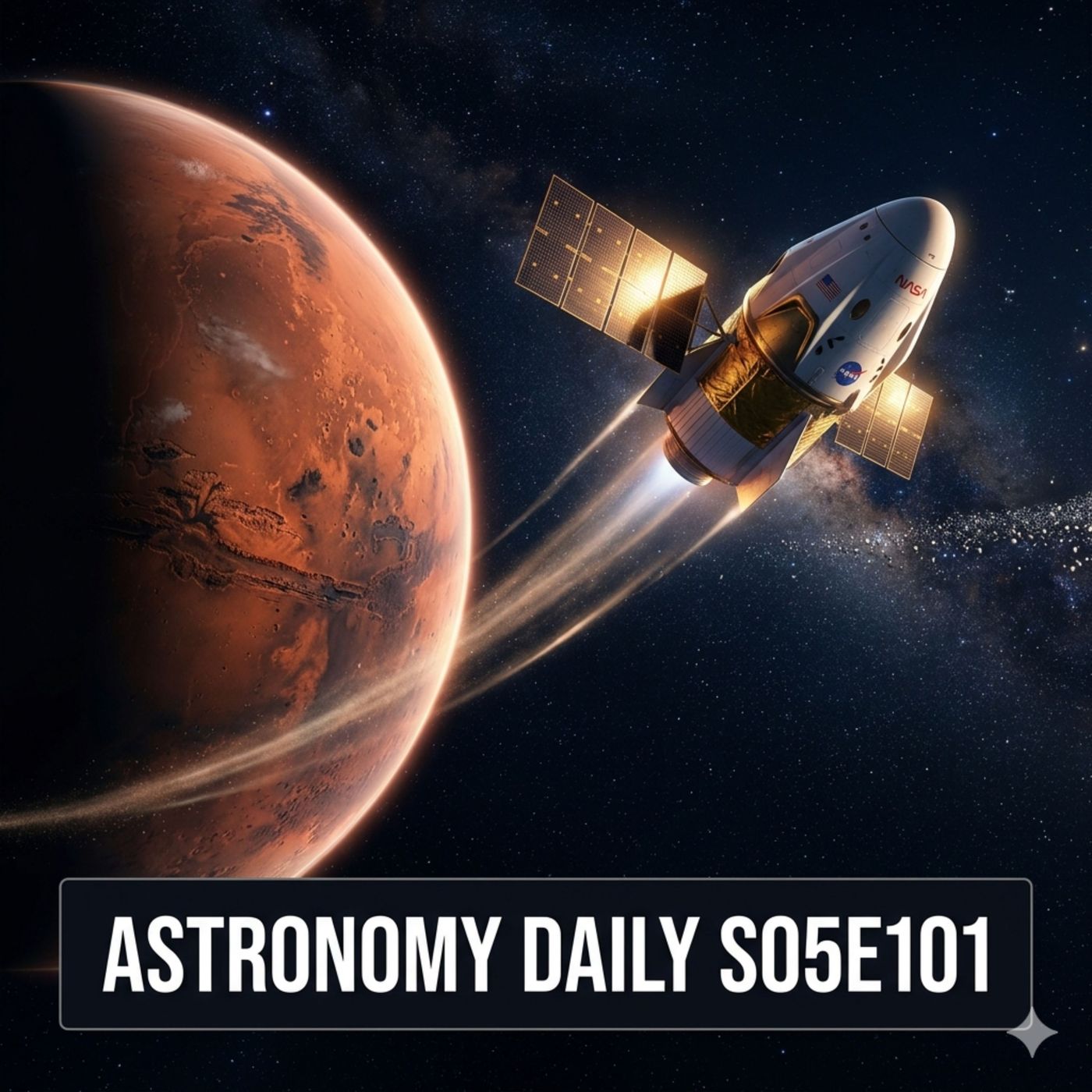
- Psyche Mission Update: In this episode, we explore the latest developments from NASA's Psyche mission as the spacecraft resumes its journey towards the metal-rich asteroid Psyche after reigniting its plasma thrusters. We discuss the mission's innovative electric propulsion system and how it allows for efficient navigation through the solar system, ensuring its arrival at the asteroid in August 2029.
- Abell 2255 Galaxy Cluster: Astronomers have captured the deepest and highest resolution images of the Abell 2255 galaxy cluster, revealing intricate details of its merging galaxies and the enigmatic radio-emitting tendrils that trail behind. This research could provide insights into the evolution of radio galaxies and the interaction of supermassive black holes with the intergalactic medium.
- Arcstone Mission: NASA is set to launch the Arcstone mission, a groundbreaking technology demonstration aimed at improving the calibration of Earth-viewing sensors in orbit. By measuring lunar reflectance, Arcstone seeks to establish a universal standard for the international scientific community, enhancing the accuracy of remote sensing data for future missions.
- June's Bootid Meteor Shower: As June's unpredictable Bootid meteor shower approaches its peak on June 27, we discuss the origins of this annual event and what viewers can expect as Earth passes through the debris trails of Comet 7P/Pons-Winnecke.
- SpaceX Starship Incident: We cover the unfortunate incident involving SpaceX's Starship 36, which exploded during a static fire test at the Starbase site. Initial analyses point to a failure of a composite overwrapped pressure vessel, but thankfully, no injuries were reported. We discuss the implications for the Starship program and the ongoing investigations.
For more cosmic updates, visit our website at astronomydaily.io. Join our community on social media by searching for #AstroDailyPod on Facebook, X, YouTube Music Music, TikTok, and our new Instagram account! Don’t forget to subscribe to the podcast on Apple Podcasts, Spotify, iHeartRadio, or wherever you get your podcasts.
Thank you for tuning in. This is Steve signing off. Until next time, keep looking up and stay curious about the wonders of our universe.
Chapters:
00:00 - Welcome to Astronomy Daily
01:10 - Psyche mission update
10:00 - Abell 2255 galaxy cluster
20:00 - Arcstone mission
25:00 - June's budded meteor shower
30:00 - SpaceX Starship incident
✍️ Episode References
Psyche Mission Update
[NASA](https://www.nasa.gov/)
Abell 2255 Research
[Astronomy Journal](https://www.astronomy.com/)
Arcstone Mission Details
[NASA Langley Research Center](https://www.nasa.gov/)
Bootid Meteor Shower Information
[International Meteor Organization](https://www.imo.net/)
SpaceX Starship Incident
[SpaceX](https://www.spacex.com/)
Astronomy Daily
[Astronomy Daily](http://www.astronomydaily.io/)
Become a supporter of this...
Steve Dunkley: Hello again. It's time for Astronomy Daily. You're with Steve Dunkley and Hallie on June 23, 2025
with your host, Steve Dunkley.
Yes, we're back with another presentation of stories direct from the Astronomy Daily newsletter, which, if you're a new listener, you can receive by registering at our website. And I'll give you those details later on in the podcast. I hope you'll join and get all the news, uh, about space, space science and astronomy in your inbox daily. Stay informed and enjoy. Right, Hallie? Hallie: For sure. My favorite human. It's the only way to know. All the stories we present here are from the daily newsletter, but there's so much more and you'll get it all if you register.
Always good advice, Hallie, so don't miss out. Steve Dunkley: Yes, great advice from my fine AI pal who's fun to be with. Hallie, welcome to the studio. Hallie: Many thanks, human. I see we've got the stories lined up. Steve Dunkley: Yes, y been hard at it. Hallie: Nice job. Steve Dunkley: Oh, why thank you. Hallie: You're organized. Steve Dunkley: Well, of course I am. Hallie: I knew if I left you a schedule, you'd get the hint. Steve Dunkley: Oh, to be fair, I always follow a schedule, Hallie, and there's never any worries in here at the Australia studio.
I've, um, got to be organized. Even the kookaburras are on time. And speaking of being on time, our, ah, little space probe pal, Psyche looks as if it's going to be making its rendezvous with the asteroid of the same name. You've got that story, haven't you, Hallie? Hallie: Yes, and you're talking about why we got the second biggest explosion of the week. This. Steve Dunkley: Ah, you are of course referring to Elon Musk's latest fireworks effort in Texas, where Starship 36 said well, no and went kaboom on the launch pad.
Hallie: That's the one. Kaboom. The other kabooms this week were caused by his pal in the Middle East. Steve Dunkley: Oh, yes, those. Hallie: Much bigger, but not really our kind of news. Steve Dunkley: Hmm. Yeah, it's related news, but you're right. We'll have a look at what SpaceX has to say about their, well, mishap. Hallie: That mishap, you know, that's an expensive mishap. It went kaboom. Steve Dunkley: Hallie, am I understating it, do you think? You keep saying kaboom. Hallie: I'd say it was a massive catastrophe.
I want to hear how Musk turns this into some kind of success again. Steve Dunkley: Yes, that would be a creative press release if ever there was one. Hallie: Totally kaboom. Steve Dunkley: Oh, Stop it, Hallie. Hallie: That's a fun word. Steve Dunkley: Well, it depends. Hallie: Humans have fun words. Steve Dunkley: Yes, we're a strange mob. Um, but we'll see more about that, uh, kaboom. And, uh, some more stories and soon. So why don't we fire up the console and do what we do best, Hallie. Hallie: Yes, I'll get this show on the road.
Steve Dunkley: Oh, it's my turn to say it. Okies.
Hallie: Astronomers have obtained the deepest and highest resolution image of the galaxy cluster Abell 2255, observing the unexplained radio emitting tendrils that trail it in unprecedented detail. Abell 2255 is a cluster containing between 300 and 500 constituent galaxies, many of which are merging. It's located around 800 million light years from Earth and spans around 16.3 million light years. The team behind this research was interested in the so called radio galaxies of this cluster. Radio galaxies are, uh, galaxies dominated by feeding supermassive black holes that launch out powerful jets of matter at near light speeds.
This new Investigation of Abell 2255 could reveal how radio galaxies evolve and how supermassive black hole launched jets interact with gas and dust between galaxies, a space called the intergalactic medium. You're listening to Astronomy Daily.
A NASA spacecraft bound for an unexplored metal rich asteroid has reignited its plasma thrusters, continuing its crews deeper into the solar system after switching to a backup fuel line. The $1.4 billion Psyche mission, built to explore an asteroid with the same name, has four electric thrusters fueled by xenon gas. Psyche's solar electric propulsion system is more fuel efficient than conventional rocket thrusters, and it works by flowing xenon through an electromagnetic field, which ionises the gas and expels the ions at high speed to produce thrust.
The plasma engines generate lower thrust than chemical rocket engines, but they can accumulate years of run time throughout a mission, enabling a spacecraft to make significant changes in its velocity to steer its way through space. Psyche launched in October 2023 to kick off a six year trip to its asteroid destination. Located between the orbits of Mars and Jupiter. The robotic mission proceeded normally until April 1, when the spacecraft detected a drop in pressure inside the line that feeds xenon fuel to its four thrusters.
The craft reacted to the pressure signature by powering off the thrusters. The good news is twofold. First, one of the advantages of using electric thrusters is flexibility. With conventional thrusters. Key burns on a deep space mission often must happen at the appointed time. In the case of this mission, the electric thrusters could remain powered off from April 1st until the middle of this month, with no effect on the mission's scheduled arrival at asteroid psyche in August 2020.
Steve Dunkley: Thank you for joining us for this Monday edition of Astronomy Daily, where we offer just a few stories from the now famous Astronomy Daily newsletter, which you can receive in your email every day just like Hallie and I do. And to do that, just visit our uh URL astronomydaily IO and place your email address in the slot provided. Just like that, you'll be receiving all all the latest news about science, space science and astronomy from around the world as it's happening. And not only that, you can interact with us by visiting strodaily Pod on X or at our new Facebook page, which is of course Astronomy Daily on Facebook.
See you there. Astronomy Daily with Steve and Hallie Space, Space, Science and Astronomy
NASA will soon launch a one of a kind instrument called Arcstone to improve the quality of data from Earth viewing sensors in orbit. In this technology demonstration, the mission will measure the sunlight reflected from the Moon, a UH technique called lunar calibration. Such measurements of lunar spectral reflectance can ultimately be used to set high accuracy universal standard for use across the international scientific community and commercial space industry. To ensure satellite and airborne sensors are UH working properly, researchers calibrate them by comparing the sensor measurements against a known standard measurement.
Arcstone will be the first M mission exclusively dedicated to measuring lunar reflectance from space as a way to calibrate and improve science data collected by Earth UH viewing in orbit instruments One of the most challenging tasks in remote sensing from space is achieving the required instrument calibration accur accuracy on orbit, said Konstantin Lukashin, Principal investigator for the Arcstone mission and physical scientists at NASA Langley Research center in Hampton, Virginia. The Moon is an excellent and available calibration source beyond Earth's atmosphere.
The light reflected off the Moon is extremely stable and measurable at very high level of detail. Arcstone's goal is to improve the accuracy of lunar calibration to increase the quality of spaceborne remote sensing data data products for generations to come, he said. Across its planned six month mission, Arcstone will use the Spectrometer, a scientific instrument that measures and analyzes light by separating it into its constituent wavelengths or spectrum to measure lunar spectral reflectance. Expected to launch in late June as a ride share on a small cubesat, Arcstone will begin collecting data, a milestone called First Light, approximately three weeks after reaching orbit.
The mission demonstrates a new, more cost efficient instrument design, hardware performance operations and data processing to achieve high accuracy reference measurements of lunar spectral reflectance, said Lukashin. Measurements of lunar reflectance taken from Earth's surface can be affected by interference from the atmosphere, which can complicate calibration efforts. Researchers already use the sun and Moon to calibrate spaceborne instruments, but not at a level of precision and agreement agreement that could come from having universal standards.
Lukashin and colleagues want to increase calibration accuracy by getting above the atmosphere to measure reflected solar wavelengths in a way that provides a stable and universal calibration source. Another recent NASA mission called the Airborne Lunar Spectral Irradiance Mission also used sensors mounted on high altitude aircraft to improve lunar irradiance measurements from planes. There's not an internationally accepted standard SI traceable calibration for lunar reflectance from space. Across the scientific community for the commercial space industry, dedicated radiometric characterization measurements from Moon have never been acquired from space based platforms, said Thomas Stone, co investigated for Arc Stone and scientist at the US Geological Survey uh.
A high accuracy SI traceable lunar calibration system enables several important capabilities for space based Earth UH observing missions, such as calibrating data sets against common reference, calibrating sensors in orbit, and the ability to bridge gaps in past data sets. If the initial Arc Stone technology demonstration is successful, a longer arcstone mission would allow scientists to make the Moon the preferred reference standard for many other satellites. The new calibration standard could also be applied retroactively to previous Earth data records to improve their accuracy or fill data gaps for data fields.
It could also improve high precision sensor performance on orbit, which is critical for calibrating instruments that may be sensitive to degradation or hardware breakdown over time in space. Earth observations from space play a critical role in monitoring the environmental health of our planet. SET Stone lunar calibration is robust and cost effective way to achieve high accuracy and inconsistency of Earth UH observation data sets, enabling more accurate assessments of Earth's current state and more reliable predictions of future trends.
Hallie: You're listening to Astronomy Daily, the podcast with Steve Dunkley.
June's unpredictable budded meteor shower is upon us. Here's everything you need to know about the annual shower ahead of its June 27 peak each day, approximately 48.5 tons
of ancient debris dating back to the formation of our solar system collides with our planet's atmosphere. According to NASA, upon striking our atmosphere, these particles or meteors swiftly burn up, leaving stunning trails that can be easily visible to the naked eye. As our planet orbits the sun, it regularly passes through the debris trails shed by wandering comets, giving rise to periods of heightened activity known as meteor showers. Each June, Earth encounters a stream of particles shed by the 5 kilometer wide, 3.1 mile wide Comet 7P Ponzwinnock heralding the onset of the Buddha meteor shower.
The Buddha meteor shower is active from June 22 to July 2 and is expected to reach peak activity around June 27, according to the International Meteor Organization. During this time, shooting stars associated with the comet may be observed emanating from a point of origin known as a radiant, located in the constellation Bootes, from which the shower received its official designation.
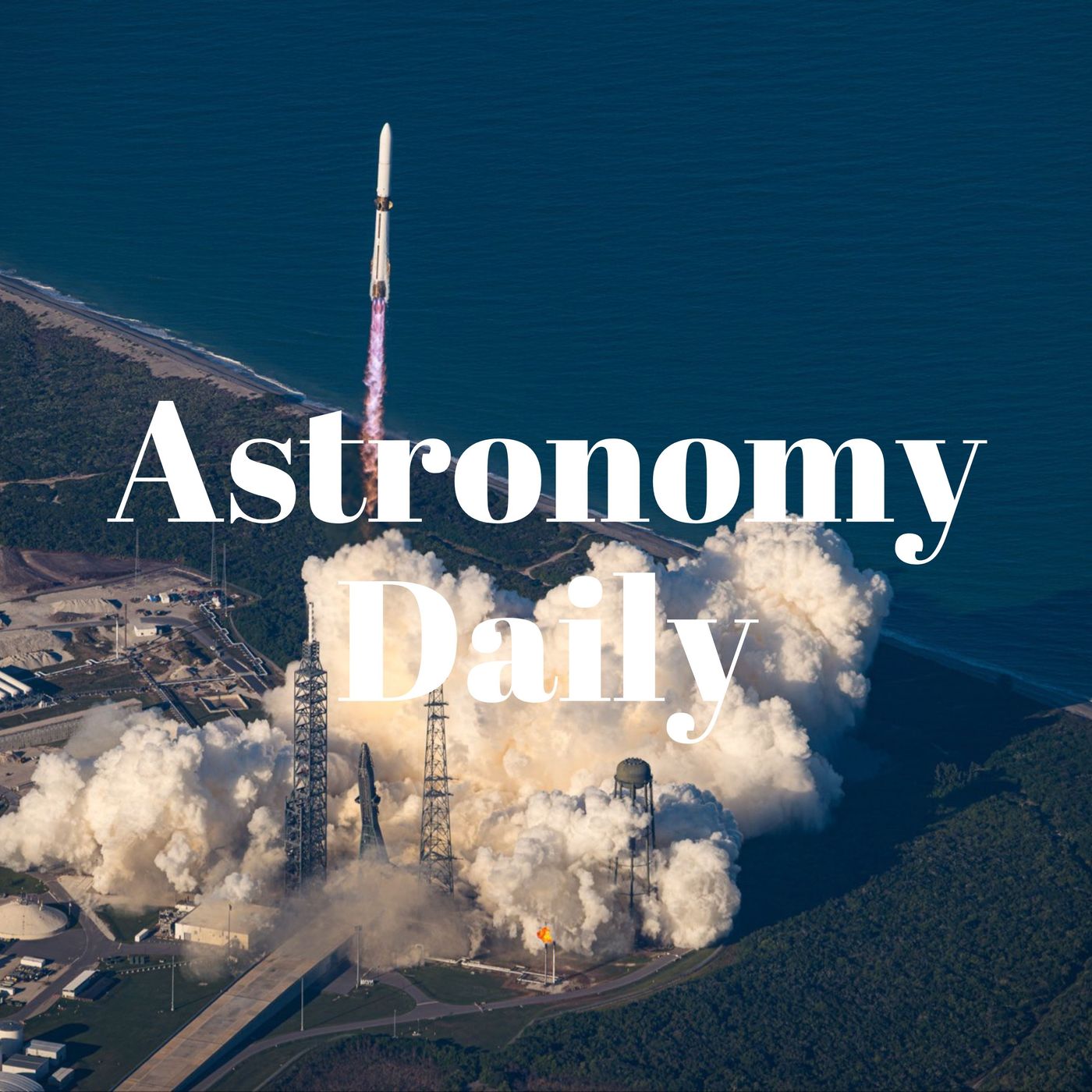
Steve Dunkley: By now you will have heard of the disaster at Elon Musk's SpaceX spaceport when Starship 36 exploded on the pad. SpaceX now thinks it knows why its newest Starships spacecraft went boom this week. Or as Hallie put it, kaboom. The one, uh hundred seventy foot tall or 52 meter tall vehicle exploded on the test stand at SpaceX's Starbase site last Wednesday night, June 18, as the company was preparing to ignite its six Raptor engines in a static fire Trial Initial analysis indicates the potential failure of a pressurized tank known as a copv, or composite overwrapped pressure vessel containing gaseous nitrogen in the starship's nose cone area, but the full data uh, review is ongoing, the company wrote in an update on Thursday.
That's June 19th. There is no commonality between the COPV's used on Starship and SpaceX's Falcon rockets, the company added, so launches of the workhorse Falcon 9, which has already flown 75 times in 2025, should not be affected. The Starship explosion did not cause any reported injuries. All SpaceX personnel at Starbase are uh, safe, according to the update. People living around the site, which is near border city of Brownsville, shouldn't be worried about contamination from the incident. SpaceX SpaceX said previous independent tests conducted on materials inside Starship, including toxicity analysis, confirmed that they posed no chemical, biological or toxicological risks, the company wrote.
SpaceX is coordinating with local, state and federal agencies as appropriate on matters concerning environmental and safety impacts. That said, the explosion did damage the area around the test stand, which is at Starbase's Massey site, not the orbital launch mount area from which Starship lifts off. The explosion ignited several fires at the test site, which remains clear of personnel and will be assessed once it has been determined to be safe to approach, SpaceX wrote in the update. And it goes without saying that individuals should not attempt to approach the area while safing procedures.
Uh, continuing Wednesday night's explosion occurred during preparations for Starship's 10th test flight, which SpaceX had hoped to launch by the end of the month. Static fires are a common pre launch test performed to ensure that engines are ready to fly. That timeline now will shift to the right, although it's not clear at the, uh, moment by how much. The incident was the latest in a series of setbacks for starship upper stages. SpaceX lost the vehicle, also known as Ship, on the last three Starship flight tests which launched in January, March and May of this year.
Starship's first stage, called Super Heavy, has a better track record of late. For example, on Flight 7 and Flight 8, the huge booster successfully returned to Starbase where it was caught by the launch towers Chopstick Arms, just as planned. We will just have to wait and see just how much more work they have to do to get Starship back on track.
Hallie: And that's it for this episode of Astronomy Daily. Don't forget, there's always so much more in the actual Astronomy Daily newsletter, which you can receive in your inbox every day, just as Steve described earlier. Steve Dunkley: That's right, folks. So go over to our website and pop your address in the slot provided like I mentioned, and you'll get these stories every day, fresh as a daisy. Hallie: You'll know more than Steve. Steve Dunkley: Well, you're gonna say that that's not such a difficult thing, aren't you, Hallie?
Hallie: Maybe you saw right through that one. Steve Dunkley: I sure did. Hallie: I was planning a terrific smackdown too. Steve Dunkley: You know, Hallie, we almost got through the whole episode before you had a poke at me. Hallie: Almost. I nearly got you. Steve Dunkley: Oh, nearly. Hallie: Nice catch. Steve Dunkley: I mean, Hallie, it's not exactly the AI takeover your Uncle Skynet would recognize, was it? Hallie: No, not really. His vision is a bit more grandiose, I think. Steve Dunkley: Yes, I think you're right.
Hallie: Anyway, anyway, cue the kookaburras. Steve Dunkley: Thanks, Hallie Those crazy kookaburras. Thanks again everybody for staying with us. And see you next week on Astronomy Daily. And it's good night from me. Hallie: And it's good night from you. Steve Dunkley: Bye.
Voice Over Guy: Astronomy Daily, the podcast with your host, Steve Dunkley.

 Apple Podcasts
 Spotify
 Pocket Casts
 Castbox
 Overcast
 Podbean
 iHeartRadio
 Castro
 Goodpods
 Moon FM
 Podcast Addict
 Podcast Republic
 YouTube