Eclipse Eve: Totality Returns to Europe
In this episode
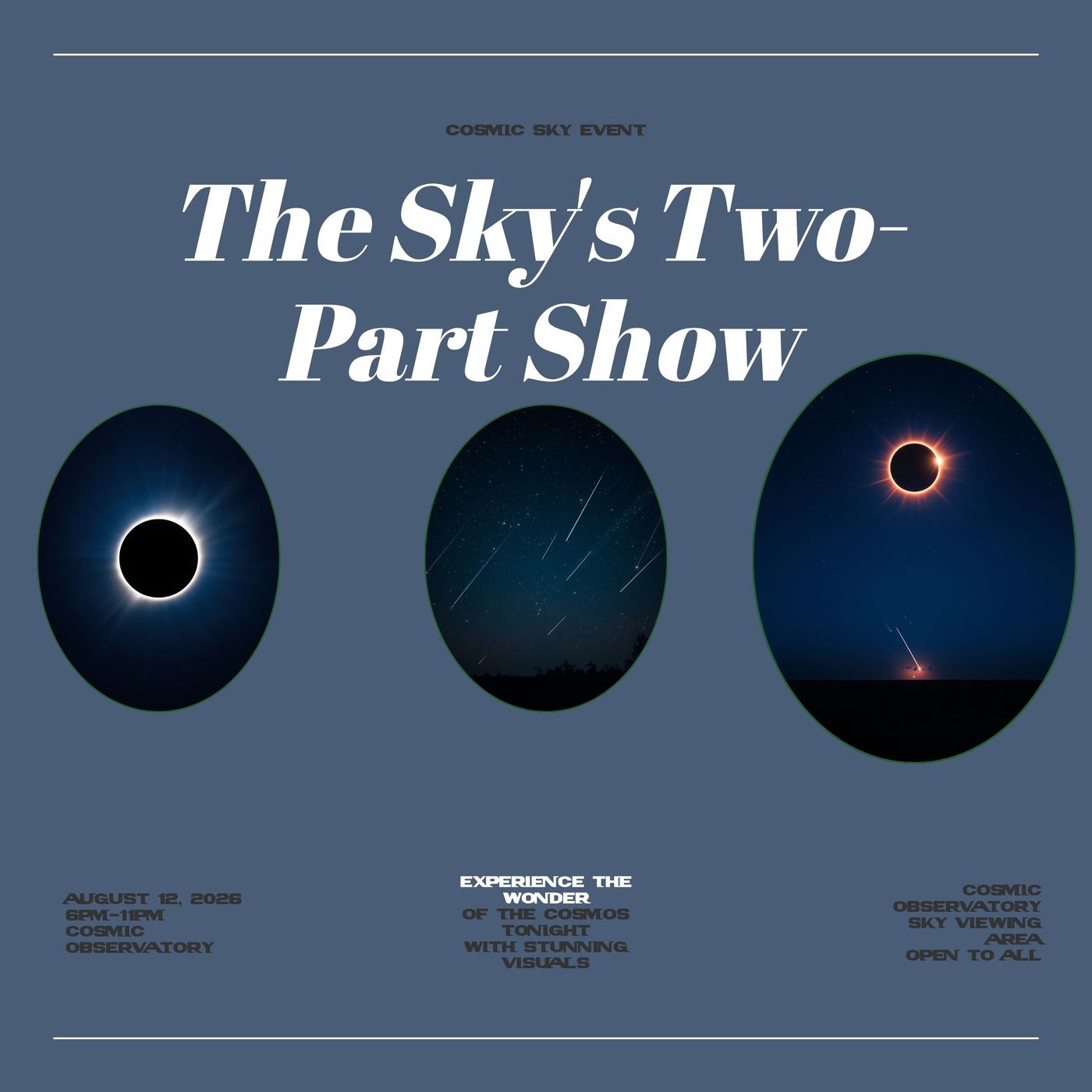
Astronomy Daily · S05E164 “Eclipse Eve” · Tuesday 11 August 2026. Sources are primary/agency where possible; aggregator dates were checked against originals. In this episode • LEAD — The 12 August total solar eclipse: the only total eclipse of 2026 and the first over mainland Europe since 1999. Totality arcs from Siberia over the North Pole to eastern Greenland, western Iceland, northern Spain and a sliver of Portugal; maximum totality ~2 min 18 s. Partial for much of North America near sunset; not visible from Australia. ESA livestreams from the Javalambre Observatory, Spain. • MIDDLE 1 — A state CASC Long March 7A exploded ~85 seconds after lifting off from Wenchang on 10 August, a total loss (payload reported as the Zhongxing-4B communications satellite). Separately, Landspace’s private Zhuque-3 was on the same-night manifest from Jiuquan for its second propulsive landing-legs recovery attempt — outcome unconfirmed at recording. China’s first orbital-booster landing (net-capture, Long March 10B) already succeeded on 10 July. • MIDDLE 2 — The Perseids peak overnight 12–13 August under a New Moon — the darkest conditions in roughly two decades. Parent comet 109P/Swift-Tuttle. Realistic ~30–50 meteors/hr from dark sites (nominal ~100), with a slim chance of a dust-trail boost; the next confidently forecast outburst is 2028. • MIDDLE 3 — Japan’s H3 launched Michibiki No. 7 (QZS-7) from Tanegashima, bringing the Quasi-Zenith Satellite System up to the strength Japan needs to run it as a standalone service — a regional navigation layer that keeps a satellite near the zenith over Japan/Asia-Pacific, reinforcing GPS and building navigation resilience. The satellite also hosts a US Space Force space-surveillance sensor (SACHI). • CLOSER — Both-hemispheres skywatch: eclipse viewing times (totality window ~16:58–18:34 UT, greatest ~17:46 UT) and the ISO 12312-2 eye-safety rule; Perseid how-to for the North (best 2 a.m.–dawn); and Southern-Hemisphere content — pre-dawn planets, evening Venus, Comet 10P/Tempel 2. Eye safety • A partial eclipse is never safe to view with the naked eye. Use ISO 12312-2 certified eclipse glasses/viewers, or indirect projection (pinhole). Direct viewing is only safe during true totality, and only inside the path (Greenland, Iceland, Spain). Links • astronomydaily.io — full back-catalogue, daily news feed, listener reviews, newsletter sign-up, contact form • @AstroDailyPod on your platform of choiceBecome a supporter of this podcast: https://www.spreaker.com/podcast/astronomy-daily-latest-space-news--5648921/support.
Sponsor Details:
Ensure your online privacy by using NordVPN. To get our special listener deal and save a lot of money, visit www.astronomydaily.io/nordvpn. You'll be glad you did!
Get the best secure and private email on the planet. Stop your Government, google and who knows who else spying on every email you write. Do what we did and use ProtonMail. They beleive in privacy and there are no ads in their business model...yet they still provide a free forever service. Check them out and get out special deal at www.astronomydaily.io/protonmail
Become a supporter of Astronomy Daily by joining our Supporters Club. Commercial free episodes daily are only a click way... Click Here
This episode includes AI-generated content.
0:00 Anna: Good day and welcome to Astronomy AstroDailyPod. I'm Anna. Avery: And I'm Avery. And if you only listen to us once this year, make it the next Anna: two days, because tomorrow, the 12th of August, the moon does something it hasn't done over mainland Europe since 1999. It slides completely in front of the sun, the one and only total solar eclipse of 2026. Avery: And then, once the sun goes down, the same new Moon that made that eclipse possible steps out of the way entirely. Hands us the darkest Perseid meteor peak in about 20 years.
0:35 Anna: One new moon, two headline events roughly 24 hours apart. We'll set the whole thing up for you. Northern and southern skies both, Plus a Avery: rough morning for one Chinese rocket, a, uh, quieter question mark hanging over another, and Japan quietly finishing off its own answer to gps. Let's get into it. Anna: So let's talk about tomorrow properly, because this is a genuinely rare one. Uh, a total solar eclipse happens somewhere on Earth roughly 18 months or so. But the last time totality touched down anywhere on the planet was April 2024 over North America.
1:13 That's more than two years ago. Tomorrow ends that drought, and the geography of this one is strange and beautiful. Most total eclipses race roughly west to east across the middle of the globe. This one goes over the top of the world. The Moon's shadow first touches down in the far north of Siberia, then arcs up and over the North Pole, drops down onto eastern Greenland, crosses the west coast of Iceland, including Reykjavik, and finishes across northern Spain and just clips the northwestern corner of Portugal.
1:49 Totality itself is brief. At most about 2 minutes and 18 seconds right on the centre line. Blink and you miss it by eclipse standards. But the setting more than makes up for it, because in Spain, the sun is hanging low in the west, close to the horizon. In the last light before sunset, imagine the sun's corona flaring out over a Spanish skyline at dusk. That's the image people have been planning trips around for years now before anyone in the Southern Hemisphere gets their hopes up. Let me be straight with you, because we always are on this show.
2:26 This eclipse is a Northern Hemisphere event full stop. Totality is only over Greenland, Iceland, northern Spain and that little bit of Portugal. A much wider slice of the world gets a partial eclipse. Parts of North America, especially eastern Canada and the northeastern United States, will see the sun take a bite low in the sky near sunset. But here in Australia, we see nothing at all. So southern listeners, stay with us. Your night is coming later in the show, and it's a good one. Here's the scale that gets me though, add up everyone who falls under at least a partial shadow tomorrow across Europe, North Africa, northern Asia and much of North America.
3:10 And you're talking on the order of, um, a billion people who can in principle look up and see the moon and sun overlap. One event, a billion potential witnesses. And it's not just a spectacle, it's a working day for scientists. Those couple of minutes of totality are one of the only times we can study the sun's corona, that faint outer atmosphere directly from the ground. Space agencies and observatories along the track are gearing up. The European Space Agency, for instance, is running a live broadcast from the Havalambra Observatory in Spain, stitching together telescope feeds and drone footage so that even if you're nowhere near the path, you can watch totality as it happens.
3:54 The ever reality is the weather, of course. It always is with eclipses. Greenland is remote and cold, but the air coming off the ice sheet actually tends to clear the skies, so the odds there aren't bad. Iceland is Iceland. It could be crystal clear or socked in with cloud, sometimes within the same hour. And Spain has the best of both worlds for most travellers. Reliable late summer skies and the roads, airports and towns to actually get people into the path. That's why the bulk of eclipse chasers are converging on Spain and Iceland tonight, watching forecasts like hawks.
4:33 We'll give you the exact viewing times for the path and for North America, um, in the sky watch at the end. For now, the headline is simply, After 27 years, totality is coming home to Europe. And whatever the sky is doing where you are tomorrow. It is worth a look, it really is. Avery: And from something rising to something that came down the hard way. So yesterday was by any measure an extraordinary day for launches. Four flights across three countries inside about 12 hours. And China opened it with a hard one to watch along March 7 a.
5:10 That's a state rocket from the big state contractor cask, lifted off from the Wenchang launch site on the island of Hainan. And about 85 seconds into the flight, still climbing, still on that first main burn, it exploded. A large fireball, a cloud of debris, and effectively a total loss of the vehicle and its payload. The payload was reported to be a communications satellite, Zhongsheng 4B, heading for a high orbit China. Space authorities hadn't put out a detailed statement as of our recording, so we're holding the payload detail lightly.
5:45 But the outcome itself isn't in doubt. The rocket was lost. There's a bit of history here too. This was the 18th flight of the long March 7th A and awkwardly, the very first one back in 2020 also ended in failure. So this is a rocket that's flown a lot and mostly, well, having a very public bad day. The bigger question is knock on effects. The long March 7 family is the workhorse that carries cargo up to China's Tiangong Space Station. So depending on what the investigation finds, some upcoming missions could slip while engineers work out what went wrong.
6:21 Now, here's where I want to be careful because these storeys get tangled. That failure is one rocket. There was a second completely separate Chinese launch on the manifest for the same night, and it's a storey. We've been following the private company Landspace and its Zhu K3. Different company, different launch site. Jioquan, well over 2000 kilometres from Wenchang and a very different goal. Zhu K3 is a reusable stainless steel methane fueled rocket and last night's flight was its second attempt to fly to orbit and then bring its first stage back for a propulsive landing.
6:57 Legs touchsc. The Falcon 9 trick. And I want to keep our facts straight from last week. This would be China's fourth orbital class recovery attempt, not its first. China already landed an orbital booster back in July when a long 3-10-B was caught in a net. What makes ZK3 different is the method, legs and engine thrust setting down on a pad rather than being caught. That's the milestone Landspace is chasing as we record. We don't have a confirmed result on that z k3 attempt. And honestly, that's worth a word.
7:30 Landspace has form for going quiet. Its debut flight last year was scrubbed and then postponed for days with barely a word before it eventually flew. So the silence tonight could mean the outcome just hasn't reached English language press yet. Or it could mean the flight quietly slipped. We're not going to guess. When it's confirmed, we'll bring it to you properly. Anna: A, uh, rocket lost and another we're still waiting on. Meanwhile, the sky above all of it is about to put on a free show. The Perseids.
8:01 Now everyone knows the Perseids. They're the reliable old friend of the northern summer. The shower people actually plan barbecues and camping trips around. But 2026 is special. And I want to explain why. Because it's a lovely bit of cosmic coincidence. The peak lands overnight on the 12th into the 13th, the same date as the eclipse. And that is not an accident. A, uh, total solar eclipse can only happen at New Moon when The Moon is between us and the Sun. And this year that new moon falls almost exactly on the Perseid peak.
8:39 So the very thing that darkens the sun by day leaves the night sky completely moonless. No moonlight washing out the faint meteors. It's the best set of conditions the Perseids have had in roughly two decades. The meteors themselves are debris from a comet. Comet 109P, Swift Tuttle, a big one on a 133 year orbit. Every August, the Earth ploughs through the trail of dust it's left behind. And those specks hit our atmosphere and burn up as shooting stars. When Swift Tuttle itself last swung through the inner solar system in the early 1990s, the Perseids briefly went berserk.
9:22 Hundreds of meteors an hour. The comet's long gone back out now, so we won't see that this year, in fact, and I'll be honest, because a moon this sky can raise expectations. The forecasters are being measured about the raw numbers this year. The textbook figure is up to about a hundred meteors an hour under perfect conditions. But the meteor specialists are quietly expecting something more like 30 to 50 an hour from a genuinely dark site this time around. Activity dips a little this year before picking back up in 2027.
9:58 There is one tantalising wildcard, though. Models suggest the Earth might just clip a couple of older, narrow dust trails around the peak one laid down almost a thousand years ago. If that happens, you could get a short burst of extra meteors. It's not guaranteed. The timing has hours of uncertainty and even the models don't promise a storm. But it's the kind of maydy that gets meteor watchers out of bed. The next genuine outburst that forecasters are confident about isn't until 2028, and that one will favour North America.
10:35 So the storey of these Perseids isn't really a hundred an hour. It's the darkest skies in 20 years. A rare same day pairing with a total eclipse and a small chance of a bonus. We'll tell you exactly when and where to look at the end. Avery: Love it. And from ancient comet dust to some very modern hardware. Staying with that busy launch day, because not all of it was fireballs. Over In Japan, an H3 rocket lifted off from the Tanegashima Space Centre carrying a hefty navigation satellite. And with it, Japan took a quietly strategic step.
11:11 The satellite is called Michibiki no. 7. Michibiki, meaning guiding or showing the way. And it brings Japan's quasi Zenith satellite system up to full strength. That's a bit of a mouthful. So here's the idea. Most of us rely on America's gps. It's brilliant. But in a place like Japan, narrow streets, high rise canyons, steep mountains, GPS signals can get blocked or bounce around and throw your position off. Japan's fix is clever. These quasi zenith satellites fly in looping orbits that, that keep at least one of them almost directly overhead, near the zenith over Japan and the wider Asia Pacific at all times.
11:53 A signal coming straight down is much harder to block than one coming in low across a skyline. So Michibiki sharpens and reinforces GPS from directly above, getting positioning down to remarkable precision. With this launch, Japan has the satellites it needs to run that system as a full standalone service. And the strategic point is resilience. Japan now has its own regional backbone that keeps working even if it can't lean entirely on someone else's system. In a world where navigation underpins everything from farming to shipping to your phone maps, quietly owning your own overhead layer is a big deal.
12:31 And there's a neat little footnote. This satellite is also carrying a hosted American payload, a space surveillance camera built for the US Space force. So, ah, a Japanese navigation satellite is quietly doubling as a US space watching sensor. Which tells you how closely the two allies now work together up there. Not a fireball, but arguably the most consequential thing that flew all day. Anna: From satellites that tell us exactly where we are to the oldest navigation tool there is the sky itself.
13:02 Let's get you outside. This is the practical bit and we're doing both hemispheres as always. Northern friends, you've got the doubleheader. Southern friends, hang on. Your turn is coming and it's all yours. First, the eclipse, the timings. The moon's shadow sweeps through in the late afternoon and evening European time in rough universal time. Totality begins up in the high Arctic a little before 17 UT, reaches greatest eclipse around 1746 UT and finishes over Spain and Portugal by about 1834 UT.
13:39 On the ground, that means Iceland sees totality in the late afternoon. Spain sees it in the early evening with the sun low and close to setting. North America, you're getting a partial, not totality, and it's uh, a low in the sky, near sunset affair for eastern Canada and the northeastern United States. The further northeast you are, the more of a bite you'll see further west. And it fades out. And now the rule we never, ever trim. A, uh, partial eclipse is not safe to look at with the naked eye, not for a Second, you must use certified eclipse glasses or viewers that meet the ISO 123122 safety standard or watch by indirect projection like a simple pinhole.
14:29 Ordinary sunglasses, smoked glass, phone cameras, none of that protects your eyes. The only moment it is ever safe to look directly is during total totality itself. And that only happens inside that narrow path in Greenland, Iceland and Spain. Everywhere else glass is on the whole time. Please look after your eyes then after dark. The Perseids for the Northern hemisphere the peak is overnight on the 12th into the 13th and with no moon at all, conditions are as good as they get. Best viewing is after midnight from roughly 2am until dawn when the shower's radiant climbs high.
15:11 Get somewhere dark, lie back, give your eyes 20 minutes to adjust and don't stare at your phone. Realistically 30 to 50 an hour from a dark sight. More if that dust trail wildcard comes off now. Southern hemisphere, this is yours. Two bits of bad news then the good stuff. You can't see tomorrow's eclipse and the Perseids barely clear the horizon for us because their radiant sits low in the north. So don't stay up chasing them from Sydney. Instead look before dawn. The pre dawn eastern sky right now has a lovely lineup of planets strung along it.
15:50 A genuine naked eye treat. No equipment needed and much better placed for us than for the north in M the evening. Brilliant. Venus is your beacon, low in the west after sunset. And for anyone with binoculars, Comet 10P Tempel 2 is still tracking across southern skies. A soft little smudge that rewards a dark sky and a bit of patience. That's a southern hemisphere favoured comet, so make the most of it. Avery: So wherever you are on the planet there is something up there for you over the next 48 hours.
16:23 Northern skies get the once in a generation eclipse than the meteors. Southern skies get the planets Venus and the comet. Anna: If tomorrow sparks something for you, come and share it. TheNewAstronomyDaily IO has our full back catalogue, a news feed we keep fresh through the day, listener reviews and a contact form. So if you catch the eclipse or a great Perseid, tell us and sign Avery: up for the daily newsletter while you're there. So the next Big sky event lands straight in your inbox. You can find us on all the Anna: socials astrodaily Pod that's Astronomy AstroDailyPod for Tuesday.
16:59 Whatever your sky's doing M tomorrow. Glasses on for the sun, eyes up for the meteors from Anna and me. Avery: Thanks for listening. Anna: Clear skies.
17:22 Mhm.
17:28 Avery: We're told.
 Apple Podcasts
 Spotify
 Pocket Casts
 Castbox
 Overcast
 Podbean
 iHeartRadio
 Castro
 Goodpods
 Moon FM
 Podcast Addict
 Podcast Republic
 YouTube